
Amazon Expands Logistics Platform to Third-Party Businesses

Amazon opens its logistics network to external companies. Major brands like P&G, 3M, Lands' End and American Eagle become early adopters.
In a significant shift in its business strategy, Amazon logistics has announced a major initiative to open its expansive fulfillment and distribution infrastructure to third-party businesses beyond its traditional marketplace ecosystem. This groundbreaking move represents a pivotal moment in the e-commerce and logistics industry, as Amazon leverages its decades of operational expertise and technological innovation to serve as a comprehensive logistics provider for companies across multiple sectors and industries.
The program has already attracted considerable attention from major corporations, with several Fortune 500 companies joining as founding partners. Among the initial wave of businesses to embrace this opportunity are consumer goods giant Procter & Gamble (P&G), diversified manufacturer 3M, apparel retailer Lands' End, and fashion retailer American Eagle. These industry leaders recognize the strategic value of accessing Amazon's unparalleled network of warehouses, sorting facilities, and last-mile delivery capabilities without needing to build or maintain their own infrastructure.
This expansion of Amazon's supply chain solutions signals a fundamental transformation in how the company monetizes its operational advantages. Rather than limiting its logistics capabilities to internal use or exclusive partnerships, Amazon is now positioning itself as a comprehensive third-party logistics provider capable of handling the fulfillment needs of virtually any business size or industry vertical. The move reflects a broader industry trend toward logistics outsourcing, as companies increasingly recognize that managing complex supply chains diverts resources from their core business operations.
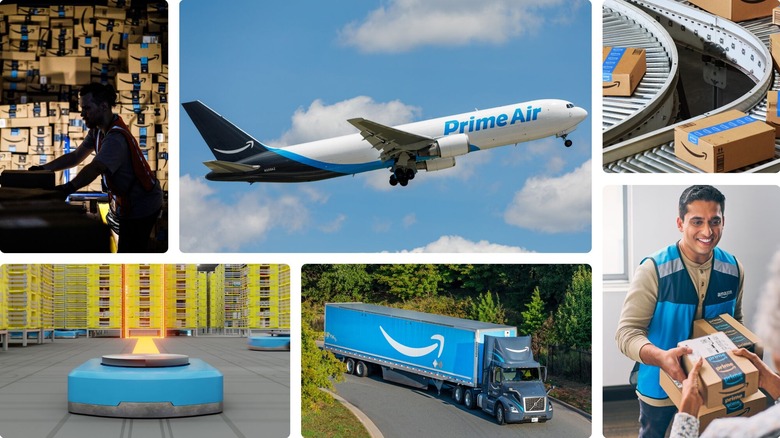
The implications of this strategy extend far beyond simple convenience for partner companies. By opening its network, Amazon gains access to new revenue streams and deepens relationships with businesses that might otherwise remain competitors or neutral parties. This diversification of revenue sources provides Amazon with greater financial stability and resilience, particularly as it navigates competitive pressures in various markets. Additionally, by handling logistics for established brands, Amazon collects valuable data about supply chain patterns, consumer demand signals, and market trends across industries.
P&G, one of the world's largest consumer packaged goods manufacturers, brings particular significance to this partnership. With its vast portfolio spanning everything from personal care to household products, P&G's involvement demonstrates that even companies with sophisticated existing supply chains can benefit from Amazon's fulfillment services. The partnership allows P&G to potentially reduce operational overhead while gaining access to Amazon's advanced technology infrastructure, including its artificial intelligence-powered demand forecasting and inventory management systems.
3M, a conglomerate with operations spanning industrial goods, healthcare products, and consumer items, similarly benefits from this arrangement. The company manufactures hundreds of thousands of products across diverse categories, making supply chain optimization particularly complex and costly. By leveraging Amazon's logistics network, 3M can reduce capital expenditures on warehouse facilities and transportation fleets while improving delivery speeds to customers through Amazon's extensive distribution infrastructure.
For Lands' End, a heritage apparel company known for its direct-to-consumer business model, partnering with Amazon's logistics infrastructure offers an opportunity to enhance customer experience through faster shipping and improved order accuracy. The retailer can now focus its internal resources on design, merchandising, and customer service rather than managing complex inventory and fulfillment operations. This aligns with a broader industry pattern where retail companies increasingly outsource logistics to specialists.
American Eagle's participation underscores the attractiveness of Amazon's offer to fashion and apparel retailers specifically. The fast-paced nature of retail fashion, with its seasonal variations and need for rapid inventory turnover, places enormous demands on supply chain operations. By accessing Amazon's flexible, scalable logistics capabilities, American Eagle can respond more quickly to market trends and customer preferences without being constrained by its own fulfillment infrastructure.
The technical infrastructure supporting this expansion is particularly noteworthy. Amazon has invested billions of dollars over nearly two decades in building proprietary systems for warehouse automation, robotics, and logistics optimization. These capabilities, developed initially to serve Amazon's own e-commerce operations, are now being packaged and offered to external companies. The Amazon logistics platform leverages machine learning algorithms to optimize routing, predict inventory needs, and coordinate fulfillment across its network of over 175 fulfillment centers globally.
This initiative also reflects Amazon's response to changing market dynamics and competitive pressures. While Amazon's core retail business remains robust, growth in that sector has moderated compared to earlier years. By monetizing its logistics infrastructure separately, Amazon creates a new growth avenue that complements rather than competes with its existing businesses. This approach mirrors successful technology companies that leverage internal innovations to serve external customers.
Industry analysts suggest that Amazon's logistics expansion could fundamentally reshape competitive dynamics in the logistics and supply chain management industry. Traditional third-party logistics providers (3PLs) and contract manufacturers now face competition from a company with virtually unlimited resources and technological sophistication. Amazon's entry into this space with established relationships and proven capabilities could accelerate industry consolidation and force competitors to innovate or specialize in niche segments.
The pricing and commercial terms of these partnerships remain proprietary, but industry observers expect Amazon to price its services competitively while maintaining attractive margins. Given Amazon's scale and operational efficiency, the company can likely undercut traditional logistics providers on price while offering superior service levels and technological integration. This competitive advantage stems from Amazon's ability to leverage fixed costs across its enormous customer base, achieving unit economics that smaller competitors cannot match.
Looking forward, this expansion of Amazon's logistics offerings represents just the beginning of a potentially massive business transformation. The company has indicated its intention to continue recruiting additional partners across various industries and geographies. As more companies adopt Amazon's fulfillment solutions, network effects should strengthen, making the platform increasingly valuable to all participants. This virtuous cycle could position Amazon as the dominant logistics infrastructure provider for decades to come.
The strategic implications for Amazon's competitors are profound. Traditional retailers, marketplace operators, and logistics companies now must grapple with the reality that Amazon can serve as a partner, competitor, or both simultaneously. This ambiguity creates both opportunities and risks for companies considering whether to embrace Amazon's logistics platform. Nevertheless, the early success with major brands like P&G, 3M, Lands' End, and American Eagle suggests that the market sees significant value in what Amazon is offering, despite these competitive considerations.
Source: Engadget


