
AMD FSR 4.1 Upscaling Now Available for Older GPUs

AMD expands FSR 4.1 upscaling technology to RDNA 3 GPUs, offering enhanced gaming performance across 300+ titles starting this July.
AMD's next-generation FSR 4.1 upscaling technology is set to reach a broader audience of gamers, with the company confirming that the advanced graphics enhancement tool will become compatible with older-generation RDNA 3 graphics processors. This significant expansion represents AMD's commitment to democratizing high-performance gaming across its GPU lineup, allowing players with previous-generation hardware to experience the visual and performance benefits that were previously reserved for the latest graphics cards.
The announcement marks a strategic shift in AMD's approach to upscaling technology compatibility, as the company recognizes the substantial installed base of RDNA 3 GPU owners who deserve access to cutting-edge visual enhancements. Rather than limiting FSR 4.1 to only the newest hardware, AMD has optimized the technology to work seamlessly with the older architecture, demonstrating the company's understanding that not all gamers can immediately upgrade to the latest generation of graphics processors.
According to AMD's timeline, the rollout will begin this July, with over 300 games expected to support FSR 4.1 on RDNA 3 cards right from the launch window. This impressive game library ensures that early adopters with compatible hardware will have plenty of titles to experience the enhanced upscaling capabilities, making the upgrade a practical choice for those looking to improve their gaming performance without purchasing entirely new graphics hardware.
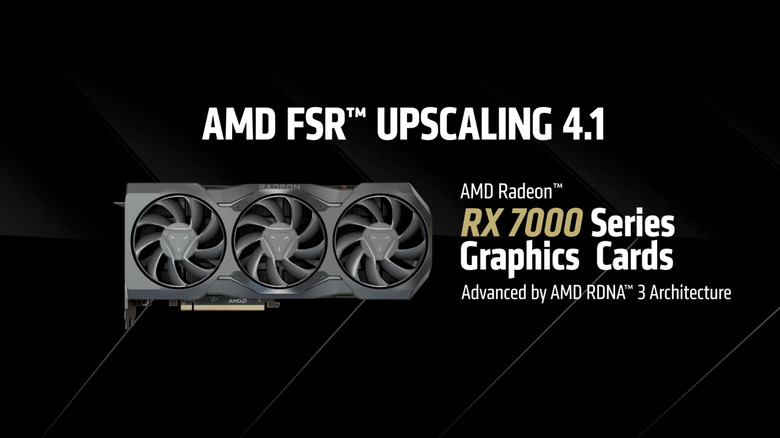
FSR 4.1 represents a substantial leap forward in AMD upscaling technology, building upon the foundations established by previous iterations while introducing refined algorithms designed to deliver superior image quality alongside performance improvements. The technology leverages machine learning and advanced temporal sampling techniques to reconstruct high-resolution images from lower-resolution sources, effectively reducing the computational burden on graphics processors while maintaining visual fidelity.
The RDNA 3 architecture compatibility announcement comes after months of speculation within the gaming community about when AMD would expand support beyond initial hardware requirements. By extending FSR 4.1 to older GPUs, AMD demonstrates confidence in the technology's scalability and its ability to provide meaningful benefits across a wider range of hardware configurations. This approach contrasts with some competitors who have been more selective about which GPU generations receive access to their latest features.
For gamers currently using RDNA 3 graphics cards, the implications are substantial and multifaceted. The enhanced upscaling capabilities will enable smoother gameplay at higher resolutions, improved frame rates in demanding titles, and better overall visual quality compared to traditional rasterization methods. Additionally, the technology opens new possibilities for enthusiasts who wish to maximize their existing hardware's potential rather than immediately pursuing costly upgrades to newer generation components.
The availability of FSR 4.1 across such a large library of over 300 games upon launch represents an unprecedented level of industry support for AMD's upscaling initiative. Game developers have clearly embraced the technology, recognizing that it provides their players with tangible performance and visual quality enhancements. This widespread adoption suggests that FSR 4.1 is poised to become a standard feature in modern gaming, similar to how ray tracing has become commonplace across contemporary titles.
AMD's strategy to make next-generation upscaling technology available to RDNA 3 users reflects broader industry trends toward accessibility and inclusivity in gaming technology. Rather than creating artificial hardware barriers that would force users to upgrade prematurely, AMD has chosen to ensure that its innovations benefit the maximum number of players. This approach builds customer loyalty and goodwill among the gaming community, which increasingly expects backward compatibility and feature parity across product generations.
The technical implementation of FSR 4.1 on RDNA 3 hardware required careful optimization by AMD's engineering teams. The company had to ensure that the algorithm could perform efficiently on the older architecture while still delivering the performance gains and image quality improvements that characterize the new technology. These optimizations were non-trivial, as FSR 4.1 introduces several new features and improvements that required architectural considerations during development.
The July 2024 timeline provides AMD with adequate time to finalize driver updates, conduct extensive testing, and coordinate with game developers to ensure smooth implementation across the 300+ supporting titles. This deliberate schedule also allows players time to update their graphics drivers and prepare their systems for the rollout. The staggered approach demonstrates AMD's commitment to delivering a polished, thoroughly tested product rather than rushing an incomplete or buggy implementation.
From a competitive standpoint, this announcement positions AMD in the upscaling market as a player focused on customer value and inclusive technology distribution. While competitors have sometimes taken a more restrictive approach to feature availability, AMD's willingness to extend FSR 4.1 to RDNA 3 GPUs suggests confidence in both the technology's quality and the market's readiness for widespread adoption. This positioning could provide AMD with strategic advantages as gamers evaluate which platform offers the best value for their hardware investments.
The expansion of FSR 4.1 to older GPU generations also highlights the maturation of upscaling technology as a whole. What was once considered a cutting-edge, specialized feature available only to early adopters is now becoming a mainstream expectation. This democratization of advanced graphics technology benefits the entire gaming ecosystem, as more players gain access to tools that enhance their gaming experiences without requiring expensive hardware upgrades.
Looking ahead, AMD's commitment to backward compatibility with FSR 4.1 sets a precedent that could influence how the industry approaches feature distribution in the future. If the RDNA 3 implementation proves successful and delivers the promised benefits to a wide audience, we may see similar expansion patterns adopted by competing companies. This potential shift toward more inclusive technology deployment could ultimately benefit all gamers, regardless of which hardware manufacturer they choose to support.
The announcement serves as a reminder that innovation in gaming technology isn't always about the newest hardware, but sometimes about making powerful tools available to the widest possible audience. AMD's decision to bring FSR 4.1 to RDNA 3 GPUs reflects this philosophy, ensuring that technological progress benefits not just early adopters with cutting-edge equipment, but the broader community of gamers who form the foundation of the industry.
Source: Engadget


