
Google's New Storage Policy: 5GB Free Unless You Verify

Google is changing free storage limits for new accounts. Link a phone number to keep 15GB, or settle for just 5GB. Here's what you need to know.
Google is implementing a significant shift in its approach to complimentary cloud storage for newly created accounts, marking a notable departure from its long-standing policy that has been in place for years. Under the fresh guidelines, new Google accounts will receive a reduced allocation of 5GB of free storage unless users take the proactive step of linking a verified phone number to their profile. This strategic change represents a meaningful reduction from the previous standard offering of 15GB that was automatically granted to all account holders regardless of whether they provided additional verification information.
The transition reflects Google's ongoing efforts to incentivize users to complete their account security profile while also managing its substantial cloud infrastructure costs. By requiring phone number verification to maintain the 15GB threshold, the company aims to reduce fraudulent account creation and enhance the overall security posture of its platform. This development carries particular significance for users who prioritize privacy or those who may not have immediate access to a phone number during the registration process, as they will need to adjust their storage expectations and potentially seek alternative solutions.
For years, Google's generous 15GB free storage offering served as a competitive advantage against other cloud storage providers and represented one of the company's most user-friendly policies. The shift to a tiered system based on verification status indicates a recalibration of the company's priorities, emphasizing both security measures and resource allocation. Users who have already created accounts prior to this policy change will not be affected, maintaining their original 15GB allocation unless they choose to modify their account settings.
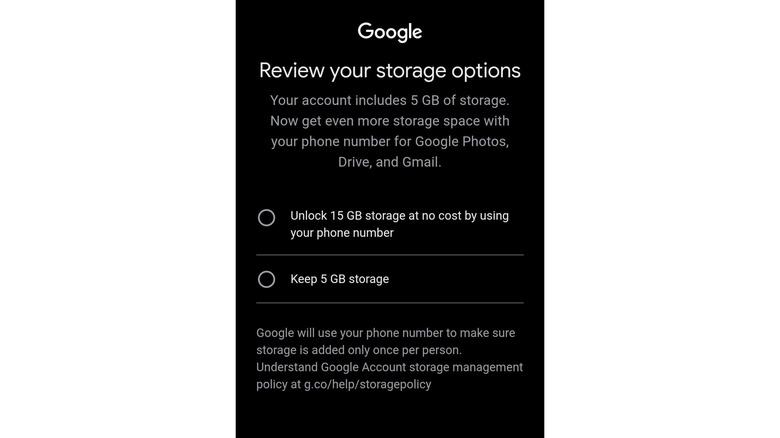
The implementation of this new storage structure introduces important considerations for different user segments. Casual users who create accounts but rarely utilize cloud storage may find the 5GB limit sufficient for basic email attachments and minor document backings. However, individuals who rely on Google Drive for collaborative projects, media storage, or comprehensive backup solutions will need to either provide phone verification or consider upgrading to a paid Google One subscription to maintain adequate storage capacity.
Google's decision to tie storage allocation to phone verification creates a dual incentive system that benefits the company in multiple ways. First, it enhances account security by ensuring that new users have verified contact information on file, making it easier to recover compromised accounts and reduce automated bot registrations. Second, it encourages users who previously took advantage of the 15GB free tier to evaluate paid subscription options if they require more storage space, potentially driving subscription revenue for Google's cloud services division.
The broader context of this change includes Google's strategic repositioning within the competitive cloud storage market. Services like Microsoft OneDrive, Amazon Drive, and iCloud offer varying amounts of free storage, and Google's adjustment may influence how potential users evaluate these alternatives. By reducing the default free offering while maintaining it for verified users, Google maintains a competitive position while also signaling that its premium services deserve compensation.
The practical implications of this policy change extend beyond individual users to small businesses and educational institutions that rely on Google Workspace solutions. While dedicated business accounts operate under different terms, this policy adjustment may influence how educational institutions approach student account management and storage provisioning. Schools and universities will need to evaluate whether their policies require phone verification for student accounts or if they should implement institutional licensing solutions to provide adequate storage for their communities.
Transitioning to this new model also requires consideration of user experience during the account creation process. Google will need to communicate the storage reduction clearly to new users while making phone verification straightforward and optional, though with transparent consequences. The company's interface designers face the challenge of presenting this information in a way that informs users without creating friction in the registration flow, which could negatively impact account creation rates.
Security experts have largely welcomed the emphasis on phone number verification as a measure to combat account abuse and fraudulent activity. Two-factor authentication using phone numbers, while not perfect, significantly increases the barriers to automated account creation and credential stuffing attacks. This policy change therefore represents a broader shift toward security-conscious account management practices across Google's ecosystem.
For existing Google account holders, the announcement serves as a reminder to review their account settings and storage usage. Users who have accumulated substantial content in Google Drive, Google Photos, and Gmail should assess whether their current storage usage approaches the 15GB limit and plan accordingly. Those who have not yet verified a phone number may want to do so promptly to secure their 15GB allocation before this policy takes full effect across all new account registrations.
The timeline for the full rollout of this policy remains important for users to monitor. Google typically phases in major account policy changes gradually to avoid overwhelming its customer support infrastructure and to allow users time to adapt. Early adopters and users in certain geographic regions may see this change implemented before others, so checking official Google support channels regularly is advisable for staying informed about the specific timing.
Looking forward, this policy adjustment may herald additional changes to Google's free service offerings as the company continues to balance generous user benefits with sustainable business economics. The evolving landscape of cloud storage services suggests that the era of unlimited or exceptionally generous free tiers may be gradually giving way to more structured, tiered offerings that require active user engagement and verification to unlock maximum benefits. Users who value accessible, secure cloud storage should stay informed about these developments and plan their digital storage strategies accordingly.
Source: Engadget


