
Ancient Galaxy Spotted 800M Years After Big Bang

James Webb Space Telescope discovers ultra-faint LAP1-B galaxy, the most chemically primitive ever observed, using gravitational lensing.
For several decades, astronomers utilizing advanced telescopes such as the Hubble Space Telescope have made persistent efforts to capture glimpses of the universe's primordial epoch—that transformative moment when the cosmos's first generation of stars began to illuminate the darkness. However, the diminutive galaxies that served as the fundamental building blocks of our present-day universe remained extraordinarily faint, evading detection even by humanity's most sophisticated and powerful astronomical instruments. Now, after years of technical advancement and patient observation, astronomers appear to have finally acquired two crucial advantages: access to the revolutionary James Webb Space Telescope and an element of serendipitous cosmic alignment.
According to groundbreaking research published recently in the prestigious journal Nature, an international team of scientists led by Kimihiko Nakajima, a distinguished astronomer from Kanazawa University in Japan, successfully employed the James Webb Space Telescope to examine an exceptionally faint and distant galaxy designated as LAP1-B. This galaxy existed during a remarkable period in cosmic history—approximately 800 million years following the Big Bang, during the universe's infancy. The observations represent a significant scientific milestone, as LAP1-B has been confirmed as the most chemically primitive galaxy ever observed by human instruments, offering unprecedented insights into the composition and evolution of the early universe.
The discovery of LAP1-B marks a watershed moment in extragalactic astronomy and cosmological research. This ancient galaxy serves as a cosmic time capsule, preserving chemical and physical conditions that existed when the universe was still in its nascent stages. Understanding such primordial structures helps astronomers piece together the complex narrative of cosmic evolution, from the first stars and galaxies through the formation of larger structures like galaxy clusters and superclusters. The detection of such an ancient object provides invaluable data that can refine our comprehension of stellar formation rates and the enrichment of the universe with heavier elements.
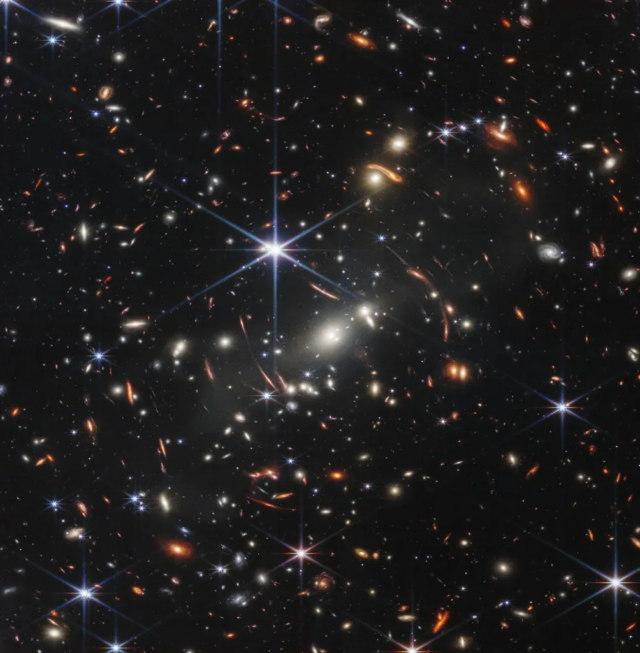
The Cosmic Magnifying Glass: Gravitational Lensing
The LAP1-B galaxy resides at an extraordinary distance from Earth—approximately 13 billion light-years away, meaning we observe it as it appeared 13 billion years ago in the universe's history. To successfully observe an object that is simultaneously so faint and so extraordinarily distant, even the unprecedented capabilities of the James Webb Space Telescope, with its iconic gold-coated beryllium mirrors and advanced infrared detection systems, proved insufficient when acting alone. The solution came from an unexpected cosmic advantage: a massive cluster of galaxies known as MACS J046, positioned fortuitously between Earth and LAP1-B.
This intervening galaxy cluster functions as an enormous cosmic magnifying glass through the principles of gravitational lensing—a phenomenon predicted by Einstein's general relativity theory. The massive concentration of matter within the MACS J046 cluster warps and distorts the fabric of spacetime itself, bending light rays traveling through the region. This gravitational warping acts precisely like a lens, magnifying and intensifying the faint light emanating from the distant LAP1-B galaxy, making it observable to the sophisticated instruments aboard the James Webb Space Telescope. Without this fortunate alignment and the magnification it provides, LAP1-B would remain completely invisible to our most advanced astronomical equipment.
Gravitational lensing has become an increasingly valuable tool in modern astronomy, allowing scientists to peer deeper into space and observe objects that would otherwise remain beyond our detection capabilities. The phenomenon essentially allows the universe itself to provide augmentation to our telescopes, turning massive galaxy clusters into natural amplifiers for distant light sources. Researchers studying the early universe have strategically identified and utilized gravitational lensing events to study galaxies from epochs that would be inaccessible through direct observation alone. This technique has revolutionized our ability to study cosmic history.
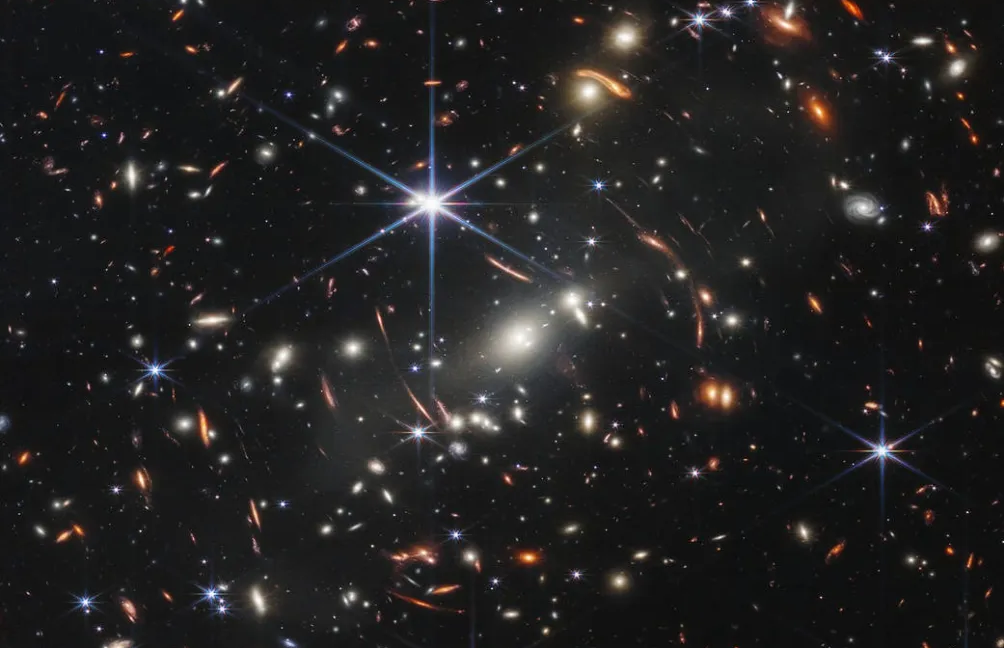
The collaboration between ground-based and space-based observation strategies, combined with the strategic exploitation of natural gravitational lensing phenomena, represents the cutting edge of observational astronomy. Scientists around the globe have increasingly focused on identifying and analyzing gravitationally lensed objects to maximize the scientific return from expensive space-based observatories. The discovery of LAP1-B exemplifies how modern astronomers leverage cosmic geometry and physics to overcome the tremendous distances and faintness that separate us from the universe's earliest structures. This approach has opened entirely new windows into understanding how galaxies formed and evolved in the universe's first billion years.
The team's success with LAP1-B demonstrates the transformative impact of the James Webb Space Telescope's superior infrared sensitivity compared to its predecessors. Where previous generations of telescopes could barely detect the brightest objects from the early universe, JWST's advanced detectors can capture signals from considerably fainter and more distant sources. The combination of JWST's technological capabilities with gravitational lensing provides astronomers with unprecedented access to the universe's hidden history. This synergy between technological innovation and cosmic fortune has yielded discoveries that were barely conceivable just a decade ago.

The implications of this discovery extend far beyond the single LAP1-B galaxy. The successful observation validates the strategic approach of using gravitational lensing to study the early universe and provides encouragement for future searches. Astronomers anticipate that similar lensing configurations will reveal additional ancient galaxies, potentially allowing for comparative studies of primordial galaxy properties and evolution. Each new discovery adds to the cumulative understanding of how stars, galaxies, and the universe itself have transformed across billions of years of cosmic time.
The findings from Nakajima's team represent a crucial step forward in addressing fundamental questions about cosmic origin and evolution. By examining some of the universe's oldest and most primitive galaxies, astronomers gain direct observational evidence about the conditions and processes that shaped the cosmos. The continued operation and utilization of instruments like the James Webb Space Telescope, combined with clever exploitation of natural phenomena like gravitational lensing, promises to yield even more remarkable discoveries in the coming years. The universe continues to reveal its secrets to those who learn to see in new ways.
Source: Ars Technica


