
ATO Fines 97-Year-Old Woman After Husband's Death

Australian Tax Office fined elderly widow $1,650 for late tax return after husband's death. Ombudsman criticizes ATO's decision in stinging rebuke.
The Australian Taxation Office has come under significant scrutiny after issuing a $1,650 penalty to a 97-year-old Brisbane resident who failed to lodge her tax return following the unexpected death of her spouse. The case highlights the growing concerns about ATO enforcement practices and their treatment of vulnerable taxpayers during periods of personal hardship and grief.
The elderly woman, who had relied on her late husband to manage the couple's financial and taxation matters, found herself facing substantial penalties despite her difficult circumstances. She had not prioritized her tax obligations in the aftermath of her husband's passing, a decision the tax office deemed worthy of financial punishment. This approach by the ATO prompted widespread criticism from industry professionals and regulatory bodies who questioned the appropriateness of such enforcement action against a grieving elderly person.
The situation only came to light when the woman's accountant decided to publicize the incident through LinkedIn, sharing details of how the ATO fine had been imposed on their vulnerable client. This public disclosure proved to be a turning point, as the post gained significant attention from tax professionals, industry associations, and regulatory oversight bodies who were appalled by the ATO's decision-making process.

The intervention of various industry stakeholders and professional bodies ultimately led to the involvement of the tax ombudsman, an independent authority tasked with reviewing complaints against the Australian Taxation Office. After examining the case, the ombudsman issued a stinging rebuke directed at the ATO, criticizing their handling of the matter and questioning their judgment in pursuing such aggressive enforcement against a pensioner in grief.
In response to the ombudsman's findings, the Australian Taxation Office formally apologized for their actions and agreed to overturn the penalty. The apology represented an acknowledgment that the tax office had erred in its assessment and enforcement decision. However, the incident raised broader questions about the ATO's approach to vulnerable taxpayers and whether adequate consideration was given to the personal circumstances facing the elderly woman.
The ombudsman's statement in the aftermath of this case proved particularly pointed, emphasizing that the ATO would not improve its practices unless members of the public and industry professionals continued to highlight such mistakes. This comment suggests that without external pressure and public scrutiny, similar cases might continue to occur, with vulnerable citizens bearing the brunt of overzealous tax enforcement.
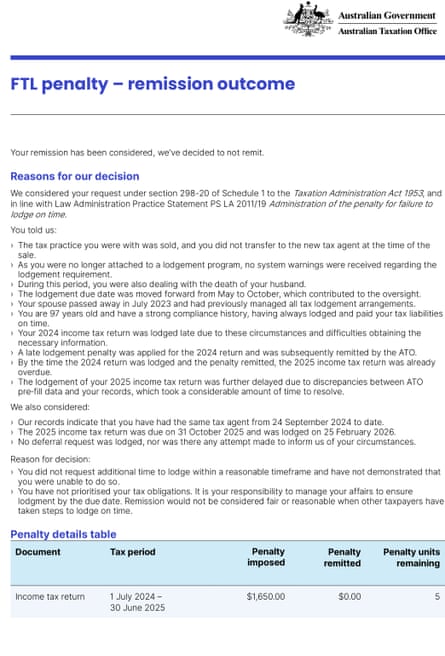
Tax professionals and advocates for elderly Australians have used this case as an example of why the ATO needs to implement more nuanced policies when dealing with taxation enforcement against seniors and other vulnerable groups. The gap between the ATO's initial decision and its eventual reversal demonstrates that compassion and understanding may not be built into the current system's default settings.
This incident reflects a broader pattern of concerns about how government agencies handle vulnerable populations during times of crisis. When individuals lose a spouse, especially in cases where that spouse managed financial affairs, the surviving partner may struggle with administrative tasks while simultaneously dealing with profound grief and loss. Tax compliance becomes understandably secondary to processing loss and managing practical arrangements such as funeral services and estate matters.
The 97-year-old woman's case serves as a cautionary tale about the importance of seeking professional advice when circumstances change due to death or other significant life events. An accountant or tax adviser could potentially help prevent such situations by ensuring that returns are filed on time or appropriate extensions are requested where necessary. However, this places the burden on individuals to know to seek help, rather than on the tax office to exercise discretion and understanding.
The LinkedIn post that exposed this case demonstrates the power of professional networks and social media in holding government agencies accountable. When individual complaints might be dismissed or ignored, public visibility can trigger systemic review and change. The accountant who shared the story was motivated by a desire to prevent other vulnerable clients from experiencing similar treatment, showing how professional ethics can drive accountability.
Moving forward, this case may prompt policy discussions within the ATO about how to better handle situations involving recent bereavements, health crises, or other circumstances that legitimately prevent individuals from meeting tax obligations. Best practices in other jurisdictions might include automatic extensions for certain categories of taxpayers, clearer communication about hardship provisions, or training for ATO staff on recognizing and responding compassionately to vulnerable circumstances.
The Australian Taxation Office's eventual apology and reversal of the penalty represents a partial victory for the Brisbane woman and sends a message that oversight and accountability mechanisms do work, albeit sometimes requiring public pressure to activate them. However, advocates argue that the system should not rely on social media exposure to ensure fair treatment of vulnerable taxpayers.
The broader implications of this case extend beyond a single elderly woman's experience. It raises important questions about the ATO's complaint handling processes, staff training on compassionate assessment, and whether current penalty frameworks adequately account for personal circumstances. The ombudsman's involvement and subsequent criticism suggest that existing safeguards may not be sufficiently protecting vulnerable groups from inappropriate enforcement action.
This incident will likely be referenced in future discussions about reforming the ATO's approach to vulnerable taxpayers and may influence how similar cases are handled going forward. The public nature of the case and the clear criticism from the ombudsman make it difficult for the tax office to ignore the issue or treat it as an isolated mistake.
Source: The Guardian


