
Baby Born at 35,000 Feet on Delta Flight

Paramedics assist passenger Ashley Blair deliver baby Brielle Renee during emergency landing. Read the surprising birth story.
In an extraordinary turn of events that unfolded at cruising altitude, a Delta flight from Atlanta to Portland became an unexpected delivery room when passenger Ashley Blair went into unexpected labor just minutes before landing. The dramatic birth of her daughter, Brielle Renee, occurred on Friday evening as the aircraft descended toward its destination, transforming what should have been a routine flight into a medical emergency requiring quick thinking and professional intervention.
Blair's unexpected labor caught everyone by surprise when she began experiencing contractions well into the cross-country journey. The timing could not have been more critical, as the medical emergency on the aircraft occurred during the final approach to Portland International Airport. Fortunately for both mother and child, the flight was staffed with two emergency medical technicians who were returning from their own vacation in the Dominican Republic, positioning them perfectly to assist during this unprecedented situation.
The two responding paramedics, identified as Tina Fritz and Caarin Powell, sprang into action immediately when flight crew members made an urgent call for medical assistance. The pair had been tending to another passenger who was experiencing a separate medical emergency when they received word about Blair's active labor. Despite the challenging environment of a commercial aircraft cabin, the experienced emergency responders shifted their focus to provide critical support during the in-flight birth.
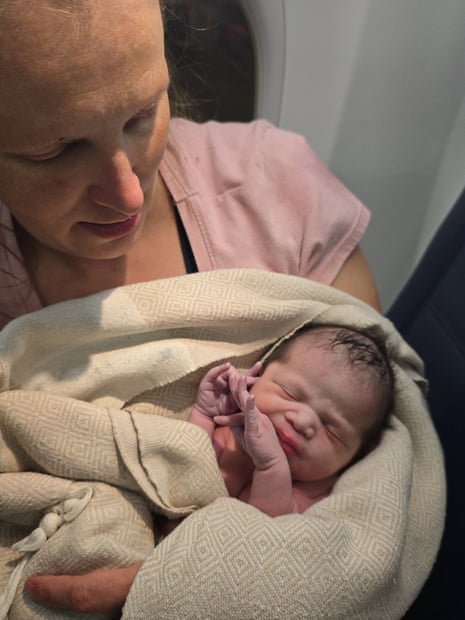
According to accounts shared with the Associated Press, Fritz and Powell coordinated seamlessly with the flight crew to manage the rapidly evolving situation. The paramedics worked to ensure that Blair remained as comfortable as possible under such unusual circumstances while monitoring both her vital signs and the baby's progress throughout the delivery process. The specialized medical knowledge these trained professionals possessed proved invaluable in what could have been a life-threatening situation at high altitude.
The birth of Brielle Renee represented a rare occurrence in commercial aviation history. While births do occasionally happen during flights, they remain exceptional events that require immediate coordination between flight crews, emergency medical services, and the responding medical professionals on board. The successful delivery at approximately 35,000 feet demonstrated the importance of having qualified medical personnel present during air travel.
The timing of the labor, occurring just before the aircraft's descent and landing, may have actually worked in Blair's favor. The pilots were able to coordinate with Portland International Airport ground personnel to ensure that emergency medical teams were standing by to provide immediate post-delivery care to both mother and newborn upon landing. This preparation allowed for a smooth transition from the aircraft to specialized medical facilities where comprehensive care could be provided.
The situation presented multiple layers of complexity that the entire team had to navigate simultaneously. Beyond assisting Blair with her delivery, Fritz and Powell were simultaneously managing another passenger's medical emergency elsewhere on the aircraft. This dual responsibility required exceptional multitasking and professional composure from the paramedics, who had to allocate their time and resources between two distinct medical situations.
The Delta flight crew also played a crucial role in the successful outcome, providing assistance and support to both the paramedics and the laboring mother. Flight attendants were instrumental in creating a safe and as-sterile-as-possible environment within the aircraft cabin, gathering necessary supplies and ensuring that other passengers remained calm and informed during the unfolding emergency. Their quick response and professionalism contributed significantly to the positive resolution.
Blair's delivery story has captured public attention, with many people finding the timing and circumstances both remarkable and touching. The birth of a healthy baby under such extraordinary conditions represents a testament to the preparedness of modern commercial aviation crews and the medical professionals who choose to fly. The fact that two qualified emergency medical technicians happened to be on the same flight speaks to the fortunate convergence of circumstances that allowed for the best possible outcome.
News of the in-flight birth at 35,000 feet quickly spread through social media and news outlets, with many people commending the quick actions of the paramedics and flight crew. The story has become a feel-good moment in an era when air travel often seems fraught with complications and frustrations. Passengers on subsequent Delta flights have shown increased interest in the story, and the airline has been receiving positive attention for how their crew handled the emergency.
The incident also raises important questions about preparedness on commercial aircraft. Airlines maintain emergency medical equipment on board and train their flight crews in basic first aid and emergency procedures. However, having two fully qualified paramedics aboard added an extra layer of professional medical expertise that proved crucial in this particular situation. Airlines continue to work with medical professionals to enhance training and resources for handling unexpected health emergencies at altitude.
Brielle Renee's arrival at 35,000 feet has already become part of her unique life story. Parents often tell their children the story of their birth, and Ashley Blair will have a particularly extraordinary tale to share with her daughter about the circumstances surrounding her entry into the world. The newborn's entry into life came not in a traditional hospital delivery room, but in the unlikely setting of a commercial aircraft flying across the continental United States.
The successful resolution of this medical emergency on the aircraft highlights the importance of having trained medical personnel among passengers on commercial flights. While airlines cannot guarantee such resources will be available, the presence of qualified professionals willing to step in during emergencies can mean the difference between a safe outcome and a tragic one. Fritz and Powell's willingness to interrupt their vacation to assist a stranger exemplifies the professional commitment of emergency medical personnel.
Looking forward, this incident will likely be discussed in aviation medical training circles as an example of successful emergency response in a challenging environment. The coordination between flight crew, paramedics, and ground personnel at Portland International Airport demonstrated the kind of seamless teamwork that ensures the best possible outcomes during medical emergencies in the air. As commercial aviation continues to carry millions of passengers annually, such preparedness remains essential for passenger safety and wellbeing at all times.
Source: The Guardian


