
California Cracks Down on Driverless Cars Breaking Traffic Laws

California implements new enforcement rules allowing police to ticket autonomous vehicle manufacturers directly for traffic violations. Here's what drivers need to know.
California is taking a significant step forward in regulating the rapidly growing autonomous vehicle industry by implementing new traffic enforcement rules that will hold manufacturers accountable for violations committed by their self-driving cars. Under this innovative regulatory framework, law enforcement officers will now have the authority to issue citations directly to the vehicle manufacturer when an autonomous vehicle violates traffic laws, marking a substantial shift in how driverless car accountability is handled across the state.
This groundbreaking approach addresses a critical gap that has existed since autonomous vehicles began operating on California's roads. Previously, the question of who bears responsibility for traffic violations committed by self-driving cars remained largely unanswered, creating legal ambiguity for both manufacturers and law enforcement agencies. The new regulations clarify this responsibility structure by establishing that manufacturers are liable for infractions committed by their vehicles, effectively placing the burden of compliance on the companies developing and deploying autonomous technology.
The enforcement mechanism represents a pragmatic solution to ensuring autonomous vehicle compliance with existing traffic laws. Rather than attempting to assign blame to non-existent drivers or leaving violations unpunished, California's regulatory approach creates a direct financial incentive for manufacturers to perfect their self-driving technology and ensure their vehicles operate within the bounds of traffic regulations. This system encourages companies to invest in better algorithms, sensor systems, and decision-making protocols that keep their autonomous fleets in full compliance with state traffic codes.
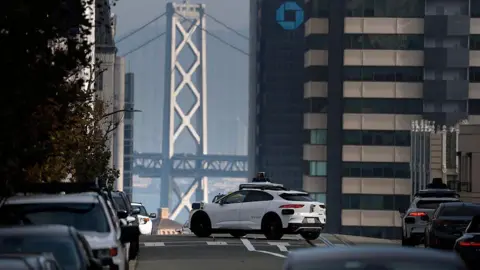
The implications of this regulatory shift extend far beyond simple traffic citations. By implementing a manufacturer-accountability model, California is essentially creating market pressure for autonomous vehicle companies to prioritize safety and legal compliance in their operational systems. Companies with higher violation rates may face reputational damage, increased insurance costs, and potential regulatory scrutiny, all of which serve as powerful motivators for continuous improvement in autonomous driving technology.
Several major autonomous vehicle manufacturers currently operating in California, including companies at the forefront of the self-driving car revolution, will need to adjust their operations and monitoring systems to account for this new enforcement landscape. These companies have invested billions in developing sophisticated artificial intelligence and sensor technology to navigate California's complex traffic environments, and now they must ensure these systems align perfectly with every traffic law on the books. From speed limits and traffic signal compliance to proper lane usage and parking regulations, every aspect of autonomous vehicle behavior will be subject to scrutiny.
The ticketing framework established by California authorities specifies exactly how violations will be documented and communicated to manufacturers. When a police officer observes an autonomous vehicle committing a traffic violation, they will record the vehicle's identification information and details of the infraction, then forward this citation to the appropriate manufacturer. This creates a paper trail that holds companies accountable and allows regulators to track patterns of violations that might indicate systemic issues with a particular manufacturer's technology or operational protocols.
Experts in transportation law and autonomous vehicle regulation have largely praised California's approach as a sensible solution to a complex regulatory challenge. The model shifts responsibility away from phantom drivers and toward the actual entities controlling the vehicles' behavior—the manufacturers and their algorithms. This approach aligns incentives in a way that encourages manufacturers to continuously refine their technology and ensures that the advancement of autonomous vehicles happens in tandem with strict adherence to established traffic safety rules.
The new driverless car regulations also include provisions for how manufacturers can contest citations they believe were issued in error or resulted from unusual circumstances beyond their technology's reasonable capabilities. This appeals process ensures fairness while still maintaining the core principle that manufacturers bear responsibility for their vehicles' actions. Manufacturers can potentially challenge citations by demonstrating that their vehicle's behavior complied with traffic laws or by explaining extenuating circumstances such as sensor malfunctions or unexpected environmental conditions.
Implementation of these rules has prompted discussions about whether other states might adopt similar models. As autonomous vehicle technology continues to mature and deployment expands across the country, the question of autonomous vehicle accountability becomes increasingly urgent. California's decision to implement manufacturer-focused ticketing could serve as a template for other states grappling with how to regulate and enforce traffic laws for self-driving cars operating within their jurisdictions.
The financial impact of these citations on manufacturers could be substantial, particularly if individual companies experience high violation rates. While a single traffic ticket might represent a minimal expense for a major automotive company, accumulating hundreds or thousands of citations could significantly impact profitability and shareholder confidence. This financial exposure creates powerful incentives for manufacturers to ensure their autonomous systems are optimized for perfect legal compliance, pushing the industry toward higher safety and regulatory adherence standards.
Consumer advocates and safety organizations have expressed interest in how this enforcement framework might lead to increased transparency and public access to information about autonomous vehicle performance and violation records. If manufacturers face significant citation costs, the public interest in knowing which companies' vehicles are violating traffic laws more frequently may grow stronger, potentially leading to demands for public reporting of violation statistics. This increased transparency could ultimately benefit consumers by allowing them to make informed decisions about which autonomous vehicle services or vehicles they trust with their safety.
The regulatory framework represents a significant evolution in how California—the nation's largest economy and a major hub for autonomous vehicle development—approaches the governance of emerging transportation technologies. Rather than taking an overly restrictive approach that might stifle innovation, or remaining permissive and allowing potential safety issues, California has opted for a balanced regulatory strategy that encourages responsible innovation while maintaining strict compliance with traffic safety standards.
Looking forward, the success of California's manufacturer-accountability model will likely depend on how consistently it is enforced and how manufacturers respond to the new incentive structure. If the system leads to measurable improvements in autonomous vehicle compliance and safety, it could become a model for self-driving car regulation nationwide. Conversely, if implementation proves cumbersome or if manufacturers successfully challenge the framework, the approach might require refinement.
As California continues to monitor the results of its new traffic enforcement rules for autonomous vehicles, the state remains positioned at the forefront of transportation innovation and regulation. The decision to hold manufacturers accountable for traffic violations represents a practical, evidence-based approach to ensuring that the future of transportation remains safe, legal, and aligned with the traffic laws that govern human drivers. This balanced regulatory approach may ultimately prove essential to public acceptance of autonomous vehicle technology and its integration into California's transportation systems.
Source: BBC News


