
California Man Charged in Trump Assassination Plot

31-year-old suspect arrested after alleged assassination attempt targeting Trump and high-level officials at Washington dinner event.
Federal authorities have formally charged a 31-year-old California resident in connection with an alleged assassination attempt targeting former President Donald Trump and other prominent government officials at a high-profile dinner gathering in Washington, D.C. The arrest marks a significant development in what law enforcement officials characterize as a serious and deliberate plot to harm multiple members of the nation's political elite.
According to investigators' statements and court documents, the suspect allegedly harbored intentions to eliminate not just the former president but also numerous other high-level officials in attendance at the exclusive dinner event. The scale and ambition of the alleged plot have drawn considerable attention from federal law enforcement agencies, including the Secret Service, Federal Bureau of Investigation, and Department of Homeland Security. Each agency has committed substantial resources to investigating the circumstances surrounding the alleged threat and determining whether any additional individuals were involved in the conspiracy.
The suspect apprehension occurred following a detailed investigation that involved coordinating multiple federal agencies and conducting extensive surveillance and intelligence gathering. Authorities did not immediately disclose the specific methods through which law enforcement became aware of the alleged plot, though sources suggest that actionable intelligence prompted the accelerated investigation that ultimately led to the arrest. The timing of the arrest relative to the dinner event raises important questions about the effectiveness of current security protocols protecting government officials.
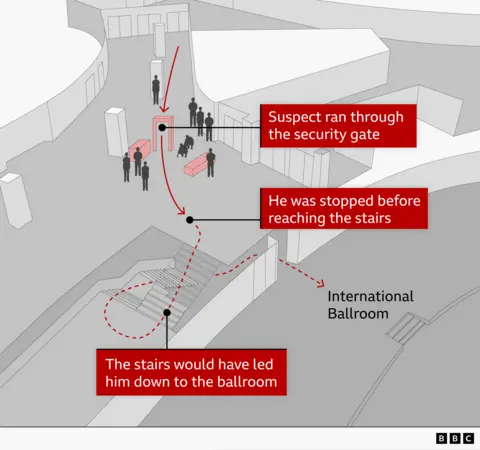
The formal charges against the California resident reflect the gravity with which federal prosecutors view the allegations. According to court filings, the defendant faces multiple serious federal offenses related to threatening the life of a former president and plotting violence against government officials. These charges typically carry substantial prison sentences upon conviction, with prosecutors often seeking maximum penalties in cases involving threats against national political figures and other government leadership.
Details regarding how the suspect allegedly planned to carry out the reported attack remain partially under seal as the investigation continues. Law enforcement officials have indicated that they discovered materials and communications suggesting premeditation and deliberate planning of the alleged scheme. The nature and sophistication of the alleged plot have prompted discussions among security experts about the evolving threat landscape facing American political leaders in the current era.
The incident highlights ongoing concerns about political violence and threats directed against American officials across the political spectrum. In recent years, federal authorities have documented an increasing number of credible threats targeting sitting and former presidents, members of Congress, and other government officials. These trends have sparked debates about balancing First Amendment protections with public safety obligations and the appropriate level of security resources dedicated to protecting government leaders.
The Secret Service, which maintains primary responsibility for protecting former presidents, has declined to release extensive details about the security measures that were in place at the dinner event. However, agency spokespersons confirmed that appropriate protocols were followed and that no breach of security perimeter occurred. The protective agency's response to the alleged threat demonstrates the continuous vigilance required to safeguard national political figures from potential harm.
Federal prosecutors have outlined their case against the suspect through court documents that detail alleged communications and statements expressing intent to harm government officials. The evidence presented includes digital communications, witness statements, and investigative findings that establish probable cause for the serious charges filed. Legal experts suggest that the strength of the government's case will likely be a significant factor in determining whether the defendant accepts a plea agreement or proceeds to trial.
The defendant's background and motivation for the alleged plot remain subjects of active investigation. Law enforcement officials have indicated that they are examining the suspect's mental health history, political affiliations, and social connections to determine what factors may have contributed to the alleged violent intentions. Understanding the suspect's motivations is critical for federal agencies tasked with identifying and preventing future threats to government officials.
This case represents another chapter in the ongoing challenge facing American law enforcement to balance individual civil liberties with the imperative to prevent violent crime and protect national leadership. The investigation's success in apparently preventing a potential attack underscores the importance of robust intelligence gathering and inter-agency coordination among federal security organizations. However, it also raises complex questions about the methods employed to identify and apprehend suspects before they can carry out alleged violent acts.
The legal proceedings against the California resident are expected to take considerable time as both prosecution and defense prepare their cases. Federal criminal trials involving charges of this magnitude typically involve extensive discovery processes, expert witness testimony, and detailed legal arguments about constitutional issues. The outcome of this case may have implications for how federal law enforcement approaches threat assessment and prevention strategies in the years ahead.
Congressional observers and security analysts continue to monitor developments in the case closely, given its implications for government safety protocols and the broader national security landscape. Some officials have called for enhanced security measures at high-profile political events, while others caution against overreaction based on individual incidents. The debate reflects ongoing tensions between protecting democratic processes and governmental leadership while maintaining open access for citizens and media to political events and institutions.
As the case progresses through the federal court system, additional details are likely to emerge about the specific allegations, evidence, and circumstances surrounding the alleged assassination plot. Investigators continue their work to ensure that all relevant information is properly documented and that any additional individuals who may have been involved in the conspiracy are identified and appropriately charged. The resolution of this case will contribute to ongoing discussions about preventing political violence and maintaining security for government officials in an increasingly complex threat environment.
Source: BBC News


