
Cassidy Stands Firm: No Regrets on Trump Impeachment Vote

Louisiana Republican Senator Bill Cassidy defends his Trump conviction vote despite primary election loss, declaring constitutional duty paramount.
In a striking display of political conviction, outgoing Louisiana Republican Senator Bill Cassidy has publicly reaffirmed his commitment to constitutional principles despite facing a devastating primary election defeat. Returning to Capitol Hill following his re-election loss, the longtime senator made clear that his controversial decision to support Donald Trump's impeachment conviction in 2021 remains justified, regardless of the political consequences it may have inflicted on his career trajectory.
During remarks to gathered reporters on Monday evening, Cassidy articulated a principled stance that prioritizes institutional duty over partisan loyalty. "I voted to uphold the constitution. It may have cost me my seat, but who cares?" the senator stated with apparent resolve. His rhetorical question underscored a philosophical position that emphasizes the gravity of legislative oaths and constitutional obligations, even when such positions prove politically unpopular within his own party.
The senator's candid reflection represents a notable moment in contemporary Republican politics, where Trump impeachment votes have frequently served as flashpoints for intra-party conflict and electoral consequences. Cassidy elaborated on his perspective, emphasizing the honor inherent in legislative service: "I had the privilege of voting to uphold the constitution – isn't that a great thing?" This rhetorical framing positions his controversial vote not as a political misstep but rather as a significant moment of democratic participation.
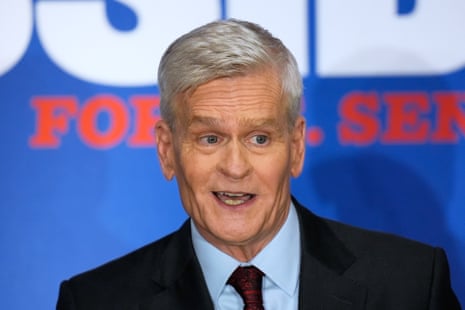
The Louisiana primary election loss represented a significant political rebuke for Cassidy, reflecting broader dynamics within Republican politics regarding alignment with former President Trump. Primary contests across the country have increasingly become battlegrounds where Trump-endorsed candidates challenge incumbent Republicans who voted for his impeachment, effectively weaponizing party loyalty as a central campaign issue. Cassidy's defeat followed this national pattern, with Trump-aligned opponents capitalizing on his Senate conviction vote to mobilize primary voters against the incumbent.
Cassidy's impeachment decision in early 2021 placed him among a small cohort of seven Republican senators who crossed party lines to support conviction proceedings. This bipartisan impeachment vote occurred during the Senate's second impeachment trial of Trump, centered on allegations related to the January 6th Capitol riot. The decision to join Democrats in voting for conviction marked Cassidy as a relative maverick within party ranks, earning both praise from Trump critics and enmity from Trump loyalists.
The political fallout from this vote has been substantial and immediate. Throughout the subsequent political cycle leading up to his primary challenge, Cassidy's impeachment vote featured prominently in opposition messaging. Primary opponents leveraged the vote as evidence of insufficient loyalty to Trump and the Republican base's policy preferences, ultimately proving a potent campaign issue that resonated with Louisiana's increasingly Trump-aligned Republican electorate.
Despite the electoral consequences, Cassidy has consistently maintained that his vote reflected serious constitutional considerations rather than political calculation. His Monday evening remarks continued this pattern of defending the decision on principle rather than attempting to reframe or distance himself from the vote. This approach differs markedly from some other Republicans who have attempted to minimize or reinterpret their impeachment votes in response to political pressure from Trump-aligned primary opponents.
The senator's comments illuminate ongoing tensions within Republican politics regarding party orthodoxy, Trump loyalty, and institutional responsibilities. These tensions have crystallized in numerous primary races across the country where incumbents face challenges from Trump-endorsed candidates, creating a broader pattern of political accountability for those who supported impeachment proceedings. Cassidy's situation exemplifies how single legislative votes can assume outsized political significance in contemporary partisan environments.
Looking forward, Cassidy's outgoing status provides him a degree of freedom to speak candidly about his record without worrying about future electoral viability within Republican primary contests. This lame-duck positioning may have contributed to his willingness to double down on his impeachment vote rather than attempt strategic repositioning. His comments suggest that he views the constitutional principle underlying the vote as transcending short-term political considerations or career consequences.
The broader implications of Cassidy's stance extend beyond his individual career trajectory. His public statements represent a counternarrative to the dominant Republican positioning on Trump, which has increasingly emphasized party unity and Trump vindication. By refusing to express regret or distance himself from the impeachment vote, Cassidy positions himself within a smaller tradition of Republican figures willing to prioritize constitutional interpretation over partisan advantage.
Political analysts have noted that Cassidy's defeat and subsequent comments contribute to ongoing discussions about the relationship between institutional responsibilities and electoral politics. The case demonstrates how single policy decisions can have profound electoral consequences in an increasingly polarized political environment. Moreover, it illustrates the political costs that Republican senators who voted for impeachment have faced within their party's base, suggesting lasting impacts on GOP primary dynamics and candidate selection.
As Cassidy prepares to leave office, his legacy will necessarily include his willingness to vote his conscience on the impeachment question, despite knowing the likely political ramifications. His Monday evening remarks suggest he views this choice as among his most significant legislative acts, worthy of defending even after electoral defeat has rendered further career considerations moot. Whether future generations of Republicans will view such constitutional prioritization as exemplary or cautionary remains an open question in the continuing evolution of Republican politics.
Source: The Guardian


