
Chrome Android Gets Location Sharing Feature

Google Chrome on Android now enables users to share their approximate location with websites. Desktop version coming soon.
Google has announced a significant privacy-focused update to its Chrome browser on Android, introducing a new feature that allows users to share their approximate location with websites. This latest development represents an important step forward in how mobile browsers handle location data, giving users greater control over what information they divulge to web services.
The new location sharing feature is designed to work seamlessly within Chrome's existing privacy framework. Rather than providing exact coordinates, the feature permits websites to receive only approximate location data, striking a balance between functionality and user privacy concerns. This approach has been carefully considered by Google's development team to ensure that websites can still deliver location-based services while protecting users from unnecessary precision tracking.
Users will have complete control over whether to share their location with any particular website. When a website requests access to location information, Chrome will prompt the user with a clear notification, allowing them to either grant or deny permission on a per-site basis. This transparent approach empowers Android users to make informed decisions about their privacy while maintaining the convenience of location-based features when they choose to enable them.
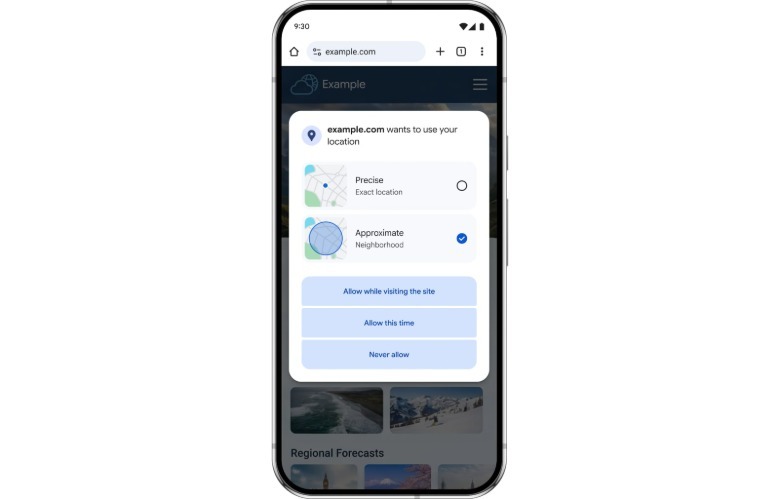
The approximate location sharing capability addresses a growing concern among privacy advocates who have warned about the risks of overly precise geolocation tracking. By limiting the granularity of location data, Google aims to protect users from potential surveillance while still enabling legitimate use cases such as local business recommendations, weather updates, and proximity-based services. This measured approach reflects Google's commitment to enhancing user privacy without sacrificing utility.
Google's engineering team has integrated this feature into Chrome's broader privacy and security framework, ensuring it works in harmony with existing permission management systems. The implementation takes advantage of Android's native location APIs while adding an extra layer of control at the browser level. This dual-layer approach ensures that users maintain oversight even when applications request location information through the browser.
The feature is particularly valuable for Android users who frequently access websites from their mobile devices. With the rise of progressive web apps and location-dependent services, this capability provides a more nuanced way to manage location privacy compared to traditional all-or-nothing permission models. Users can now choose to allow approximate location sharing without granting full, precise access to their whereabouts.
According to Google's official announcement, the location sharing feature for Chrome Android is already rolling out to users, with gradual deployment across different regions and device configurations. This phased approach allows Google to monitor performance and gather user feedback before a complete global rollout. Early adopters will notice the new permission prompts appearing when they visit location-aware websites.
Beyond the immediate mobile deployment, Google has confirmed that this functionality will soon extend to Chrome on desktop platforms as well. This cross-platform consistency will ensure that users experience uniform privacy controls regardless of whether they're browsing from their smartphone, tablet, or computer. The desktop rollout will follow a similar gradual distribution pattern to ensure smooth integration with existing systems.
The development of this feature comes as major technology companies face increasing scrutiny over location tracking practices. Privacy advocates and regulators have raised concerns about how much location data websites collect and how they use it. Google's introduction of approximate location sharing demonstrates a recognition of these concerns while acknowledging the legitimate need for location-based services in modern web applications.
Website developers will need to adapt their implementations to work effectively with approximate location data rather than precise coordinates. Many popular use cases, such as finding nearby restaurants, weather services, or local event recommendations, function well with approximate location information. However, applications requiring precise positioning may need to reconsider their technical architecture or seek user consent for more detailed location access.
The feature's implementation reflects broader industry trends toward privacy-enhancing technologies. Browser-level privacy controls have become increasingly important as websites collect more personal data. Google's approach with Chrome positions the company as responsive to privacy concerns while maintaining the functionality that users expect from modern web services. This balance will likely influence how other browser vendors approach similar features.
For Android users, this new capability adds to Chrome's growing suite of privacy and security features. Chrome has previously introduced dark mode, password management improvements, and enhanced tracking prevention. The location sharing feature represents another meaningful enhancement to user control over personal information. This cumulative approach demonstrates Google's recognition that modern browser users expect comprehensive privacy protections.
The rollout of this feature also signals Google's commitment to maintaining Chrome's competitive position against other mobile browsers. Privacy and user control have become increasingly important factors in browser selection, particularly among security-conscious users. By introducing these features, Google aims to demonstrate that Chrome takes privacy seriously while remaining functionally superior for most users.
Looking ahead, the approximate location sharing feature represents just one component of Google's broader privacy initiative. The company is working on numerous other features designed to protect user data while maintaining browsing functionality. As web standards evolve and user expectations around privacy increase, we can expect to see continued innovation in how browsers manage sensitive information like location data.
Source: Engadget


