
Cruise Ship Hantavirus Outbreak: Canary Islands Bound

Spanish health authorities respond to hantavirus outbreak aboard MV Hondius. The cruise ship is expected to reach the Canary Islands within 3-4 days.
Spain's health ministry has confirmed that the MV Hondius cruise ship, currently navigating European waters with a confirmed hantavirus outbreak aboard, is expected to arrive at a port in the Canary Islands within three to four days. The announcement marks a significant development in managing what has become an urgent public health situation requiring coordinated response efforts from Spanish authorities and maritime health officials.
The cruise ship hantavirus case has prompted immediate action from Spain's health administration, which has been monitoring the vessel's progression and coordinating with port authorities to ensure proper containment and medical response protocols are in place. Officials have emphasized that the timeline for arrival provides a critical window for preparation, allowing healthcare providers to mobilize resources and establish quarantine procedures at the destination port.
Hantavirus, a potentially serious viral infection transmitted primarily through contact with infected rodent droppings, saliva, or urine, has been detected among passengers or crew members aboard the vessel. The hantavirus disease outbreak on a cruise ship presents particular challenges due to the confined environment and close quarters typical of maritime travel, where transmission risks can be significantly elevated compared to land-based settings.
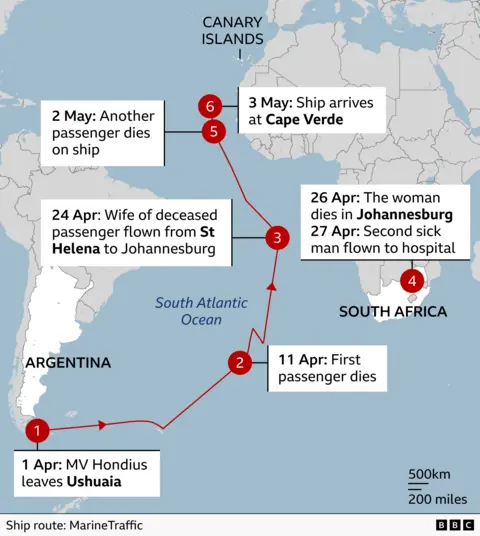
The MV Hondius is a Hurtigruten-operated expedition cruise ship known for specialized voyages to remote and scenic destinations across European waters. The vessel operates with a significantly smaller passenger capacity compared to traditional mega-cruise ships, typically accommodating around 100-150 passengers along with crew members. This particular ship has been engaged in expedition cruises that focus on exploring natural landscapes and wildlife habitats throughout northern European waters.
Spain's health ministry statement indicates that port facilities in the Canary Islands have been alerted to prepare for the ship's arrival and to implement necessary health and safety measures. The three to four-day window before docking will allow Spanish health authorities to finalize evacuation procedures, medical isolation protocols, and treatment preparations for any affected individuals requiring medical intervention upon arrival.
Hantavirus infections can range from asymptomatic presentations to severe illness characterized by fever, muscle aches, headaches, and potentially progressing to more serious complications affecting the kidneys or respiratory system. The hantavirus symptoms typically manifest between two to four weeks after initial exposure, making early identification and medical monitoring critical for affected individuals on the cruise ship.

Public health officials have emphasized the importance of coordinated response protocols between maritime authorities, port operations, and healthcare providers. The cruise ship outbreak management procedures being implemented represent established protocols refined through previous disease outbreak experiences in maritime settings, incorporating lessons learned from various health crises affecting passenger vessels over recent years.
The Canary Islands, comprising a Spanish archipelago off the coast of northwestern Africa, has comprehensive medical infrastructure and hospital facilities capable of handling infectious disease cases. Port authorities in major Canary Islands ports such as Las Palmas and Santa Cruz de Tenerife have been placed on heightened alert to receive the incoming vessel and facilitate proper medical responses for any passengers or crew members requiring hospitalization or specialized treatment.
Passengers aboard the MV Hondius have been informed of the situation and instructed to follow health and safety protocols established by the ship's medical personnel. The cruise ship passenger safety measures include enhanced monitoring, restricted movement in certain ship areas, and regular health assessments to identify any additional cases or symptomatic individuals requiring medical attention or quarantine.
Epidemiologists and infectious disease specialists have noted that while hantavirus outbreaks on ships are relatively uncommon, the confined nature of maritime environments can create favorable conditions for respiratory virus transmission if proper ventilation and isolation protocols are not strictly maintained. The maritime health response to this outbreak demonstrates the importance of having robust disease surveillance systems and rapid response capabilities in place for cruise ship operations.
The Spanish health ministry has coordinated with Hurtigruten, the ship's operating company, to ensure full transparency regarding the outbreak scope, the number of confirmed cases, and detailed information about transmission chains and identification of potentially exposed individuals. This collaborative approach between governmental health authorities and maritime operators reflects international best practices in managing infectious disease situations in the cruise industry.
Prior to reaching the Canary Islands, the ship will continue operating under strict health protocols, with enhanced cleaning and disinfection procedures implemented throughout the vessel. Crew members have received additional training and guidance regarding infection prevention measures, and regular monitoring continues for any emerging cases among the remaining passenger and crew population aboard the ship.
The expected arrival within three to four days allows sufficient time for Spanish health authorities to establish medical triage facilities, prepare isolation areas, and coordinate with regional hospitals for potential patient transfers if necessary. The outbreak response preparedness being demonstrated reflects Spain's commitment to protecting public health while maintaining international maritime operations and supporting both passengers and crew members affected by this health emergency.
Health officials have urged passengers and crew members to remain calm and cooperative with all health and safety directives, emphasizing that the protocols being implemented are designed to protect both those aboard the vessel and the broader public health in the Canary Islands and beyond. The situation remains under active monitoring, with regular updates expected from Spain's health ministry as the ship approaches its destination and medical response operations commence.
Source: BBC News


