
Debunking Myths: Deportation Officers Face Minimal Threats

Examines the claims that deportation officers face unprecedented threats, revealing the surprising truth about their safety in the line of duty.
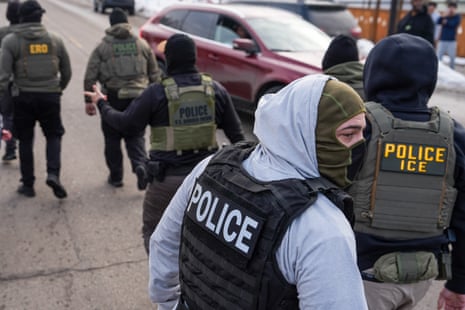
Despite the claims made by homeland security officials, a Guardian review has revealed that no deportation officer has been killed in the line of duty since ICE's creation. This surprising finding challenges the narrative that these officers are facing unprecedented threats as they carry out their duties.
The investigation examined the agency's own tracking of fallen officers, as well as recent violent incidents targeting immigration officers flagged by the Department of Homeland Security (DHS). The results paint a vastly different picture than the one presented by officials in the wake of Donald Trump's return to the presidency.
{{IMAGE_PLACEHOLDER}}
Contrary to the rhetoric, the Guardian found that only one person working a job that would today be called a 'deportation officer' has died from an act of violence. This raises questions about the validity of the claims made by homeland security authorities and the true nature of the risks faced by these officers.
The findings challenge the narrative that deportation officers are in constant danger, suggesting that the threats they face may have been exaggerated or misrepresented. This raises important questions about the policies and rhetoric surrounding immigration enforcement, and the need for a more nuanced and fact-based approach to addressing the challenges faced by those responsible for carrying out deportations.
The Guardian's investigation highlights the importance of scrutinizing official claims and conducting independent research to uncover the truth. By dispelling the myth of unprecedented threats against deportation officers, this report offers a more balanced and accurate understanding of the realities faced by those charged with enforcing immigration laws.
As the debate around immigration policy continues, this report serves as a reminder of the need for evidence-based decision-making and the importance of challenging narratives that may not align with the facts on the ground.
Source: The Guardian


