
Denmark Faces Complex Coalition Negotiations After Tight Election

Denmark's prime minister resigns after her party's poor showing, setting the stage for lengthy coalition talks with no clear majority.
Denmark is bracing for a prolonged and complex process of forming a new coalition government after Tuesday's election failed to deliver a clear majority for either the left-wing or right-wing blocs. Prime Minister Mette Frederiksen submitted her government's resignation to the king on Wednesday morning, the first step in what is expected to be a challenging negotiation period.
Frederiksen's Social Democrat party remained the largest in parliament, but suffered its worst general election performance since 1903, a bruising night that underscores the electorate's dissatisfaction with the incumbent government. Neither Frederiksen's left-wing alliance nor the right-wing parties were able to secure the 90 seats needed for a majority in the 179-seat Folketing, Denmark's parliament.
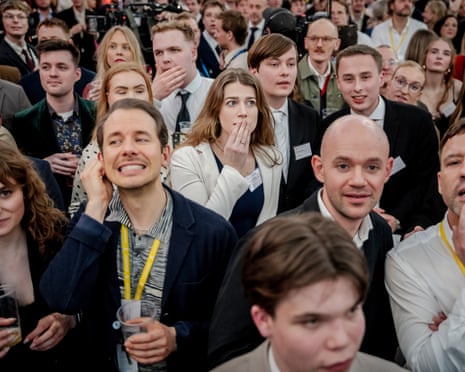
This political impasse will force the parties to engage in lengthy and challenging coalition talks as they seek to form a stable government. Observers expect the negotiations to be complex, with a range of ideological differences and competing priorities that will need to be reconciled.
"We're heading into a period of great uncertainty," said Kasper Møller Hansen, a political science professor at the University of Copenhagen. "The parties will have to show a willingness to compromise and bridge their differences if they want to form a workable coalition."
One key issue will be the future direction of Denmark's immigration and integration policies, which have been a central point of debate. The right-wing parties have generally favored more restrictive policies, while the left has pushed for a more welcoming approach.
Another area of contention is likely to be economic policy, with the left advocating for increased social spending and the right prioritizing fiscal restraint and tax cuts. Reaching a compromise that satisfies all parties will be crucial to forming a stable government.
Despite the political uncertainty, Danes can take some comfort in the country's history of pragmatic and consensus-driven politics. Past coalition negotiations, while challenging, have typically resulted in governments that are able to govern effectively.
"The Danish people are used to this process and have confidence in their political system," said Lotte Folke Kaarsholm, a political analyst at the Danish Institute for International Studies. "While it may take time, I'm confident they will ultimately find a way to form a new government."
Source: The Guardian


