
Duterte's Drug War Chief Flees ICC Arrest Warrant

Ex-Philippine police chief Ronald Dela Rosa escapes International Criminal Court arrest warrant by seeking refuge in Senate. Details on the controversial drug war enforcer's legal troubles.
Senator Ronald "Bato" Dela Rosa, the former national police chief of the Philippines who served as a key architect of former President Rodrigo Duterte's infamous drug war, has reportedly sought shelter within the confines of the Senate building to evade arrest following an International Criminal Court (ICC) warrant. The development marks a significant escalation in the ongoing legal troubles facing officials implicated in the controversial anti-drug campaign that claimed thousands of lives and drew international scrutiny for alleged human rights violations.
Dela Rosa's decision to remain in the Senate represents a strategic move to utilize parliamentary immunity protections afforded to elected legislators in the Philippines. As a sitting senator, the former police official enjoys certain constitutional safeguards that complicate the mechanics of arrest and detention, even when facing charges in international forums. This legal maneuver underscores the complex intersection of domestic Philippine law and international criminal justice mechanisms that currently shapes the legal landscape surrounding Duterte's drug war investigations.
The ICC arrest warrant stems from investigations into alleged crimes against humanity committed during the drug war, a campaign that dominated Duterte's presidency from 2016 to 2022. Dela Rosa, who headed the Philippine National Police during the initial and most intense phases of the drug war, faces serious accusations regarding extrajudicial killings and violations of fundamental human rights. International human rights organizations have documented thousands of deaths that occurred during anti-drug operations, many of which they contend were conducted without due process or appropriate legal oversight.
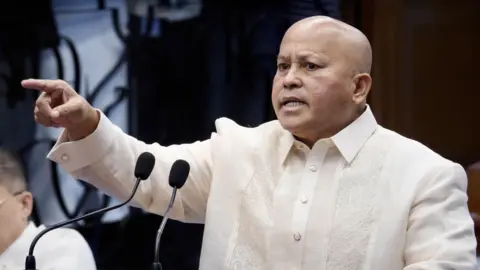
The drug war that Dela Rosa helped orchestrate became one of the most deadly and controversial government initiatives in recent Philippine history. Official government statistics reported approximately 6,000 deaths during the campaign, though independent researchers and human rights groups have suggested the actual death toll may be significantly higher, potentially exceeding 20,000 individuals. These statistics have made the Philippine drug war the subject of intense international scrutiny and formal investigations by international legal bodies.
Dela Rosa's tenure as Philippine National Police chief positioned him at the forefront of implementing Duterte's aggressive drug policy. Known for his tough-talking approach and unwavering commitment to the administration's crime-fighting agenda, Dela Rosa became one of the public faces of the drug war campaign. His prominence in executing the policy has made him a central figure in ongoing investigations into alleged human rights abuses, making his current legal predicament particularly significant for accountability efforts.
The International Criminal Court's involvement in these investigations represents a formal acknowledgment of the gravity of allegations against Philippine officials. The ICC investigation into Philippine crimes commenced in 2018 and has focused on examining patterns of killings during the drug war that may constitute systematic human rights violations. The court's preliminary examinations and subsequent formal investigations have placed international pressure on the Philippine government to address accountability concerns.

Senate immunity in the Philippines has historically served as a protective mechanism for legislators engaged in official duties, but its application to criminal matters—particularly those involving international jurisdiction—remains a contested legal issue. Constitutional scholars and legal experts continue to debate whether parliamentary immunity should extend to shield senators from international criminal prosecution, particularly when crimes of such magnitude are alleged. This ambiguity in legal framework has created a situation where Dela Rosa can potentially remain within Senate premises while authorities grapple with jurisdictional questions.
The pursuit of accountability for drug war killings Philippines has become increasingly complicated by political considerations and shifting administrations. President Ferdinand "Bongbong" Marcos Jr., who assumed office in June 2022, has taken a more measured approach to the drug war legacy compared to his predecessor. However, international pressure and advocacy from human rights organizations have continued to demand concrete steps toward accountability and justice for victims' families.
Dela Rosa's current situation exemplifies the broader challenges facing transitional justice efforts in the Philippines. The convergence of domestic political interests, national sovereignty concerns, and international human rights standards creates a complex backdrop for pursuing accountability. The senator's refuge in the legislative building raises important questions about the adequacy of existing legal mechanisms to address alleged crimes at the state level.
The case has also drawn attention from international human rights observers and legal analysts who view it as a critical test of the international criminal justice system's effectiveness. The ICC's ability to hold powerful officials accountable across different national jurisdictions remains one of the institution's most contentious and closely watched functions. Dela Rosa's evasion tactics underscore the practical difficulties the court faces when pursuing cases in countries with robust domestic legal protections for public officials.
Victims' families and human rights advocates have expressed frustration over the apparent ability of high-ranking officials to evade accountability through procedural and jurisdictional maneuvers. For many survivors of the drug war and relatives of those killed, Dela Rosa's refuge in the Senate represents a continuation of the impunity that has characterized responses to the campaign. These advocacy groups have intensified calls for concrete legislative measures and international cooperation to ensure that accountability mechanisms function effectively.
The broader implications of Dela Rosa's situation extend beyond his individual legal predicament. His case illuminates the structural challenges that transitional justice mechanisms face when attempting to prosecute powerful state actors in democratic settings. The tension between legislative immunity and international criminal accountability standards represents a fundamental question about the rule of law and the feasibility of prosecuting high-level government officials for alleged systemic human rights violations.
Looking forward, the resolution of Dela Rosa's legal status may significantly influence how the Philippines navigates accountability for drug war crimes and sets precedent for how similar cases might be handled. Whether the senator ultimately faces trial in the ICC, submits to Philippine judicial processes, or successfully maintains his immunity through legal channels remains uncertain. This unfolding situation continues to capture international attention as observers assess whether accountability mechanisms can function effectively in addressing alleged crimes against humanity at the highest levels of government.
Source: BBC News


