
Education Secretary Calls Out Lawyers' Exploitation of Special Needs Families

Bridget Phillipson accuses lawyers of profiting from the adversarial special education system, claiming her reforms aim to end the need for parents to 'fight so hard for support'.
Education secretary Bridget Phillipson has accused lawyers of exploiting parents of children with special needs, claiming their criticisms of the government's policy changes are motivated by profit. Speaking at the Association of School and College Leaders (ASCL) annual conference, Phillipson stated that the special educational needs overhaul outlined last month would "move the system away from the very adversarial system that we have, where parents have had to fight so hard for support".
Phillipson's comments come amid ongoing debates surrounding the government's proposed reforms to the special educational needs and disabilities (SEND) system in England. The changes, which include a new national SEND and alternative provision system, have received a cautious welcome from some education leaders, but have also faced criticism from lawyers and advocacy groups representing families of children with additional needs.
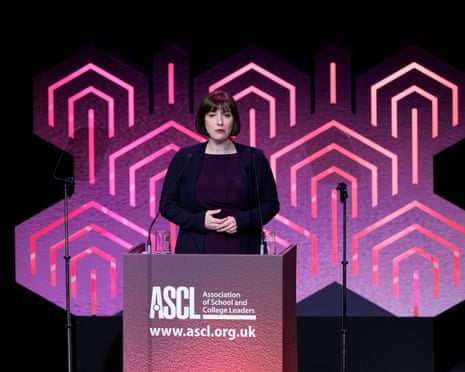
In her speech, the education secretary argued that the current system has been too adversarial, with parents often having to fight lengthy legal battles to secure the support their children require. She claimed that some lawyers have been profiting from this situation, suggesting that their criticisms of the government's reforms are driven by financial motives rather than a genuine concern for families.
"We know that the current system is not working for too many children and young people," Phillipson said. "It's an adversarial system where parents have had to fight so hard for support, and I'm determined to move that system away."
The education secretary's comments have sparked a fierce debate, with some lawyers and advocacy groups rejecting the accusation of exploitation. They argue that the current SEND system is deeply flawed and that parents often have no choice but to seek legal support to ensure their children receive the necessary provisions.
"Parents turn to lawyers because they have no other option," said Jane Harris, the chief executive of the Special Educational Needs and Disabilities Tribunal. "The system is broken, and lawyers are simply trying to help families navigate it."
As the debate continues, the government's SEND reforms will be closely watched to see if they succeed in addressing the challenges of the current system and reducing the need for adversarial legal battles. However, some skeptics remain unconvinced that the proposed changes will go far enough to support families of children with special educational needs.
"The government's proposals are a step in the right direction," said Sarah Rae, the chair of the National Association for Special Educational Needs. "But we need to see a much more fundamental overhaul of the system to truly empower families and ensure their children get the support they deserve."


