
Floreana Giant Tortoise Returns to Galápagos After 180 Years

The extinct Floreana giant tortoise returns to Galápagos island through groundbreaking back-breeding program, restoring ecosystem balance after 180 years.
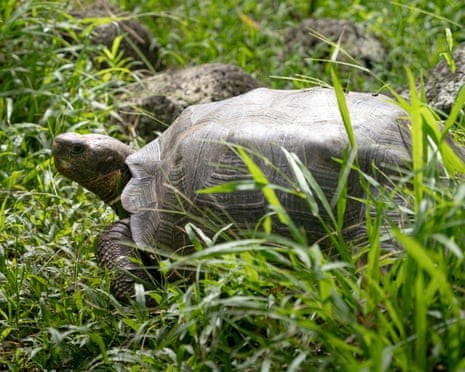
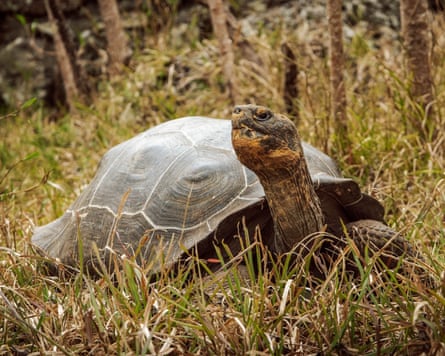
After nearly two centuries of absence, the majestic Floreana giant tortoise has returned to its ancestral home in the Galápagos archipelago, marking one of the most remarkable conservation achievements in modern scientific history. These colossal reptiles, known scientifically as Chelonoidis niger niger, are once again traversing the volcanic landscapes of Floreana Island, their massive shells gleaming under the equatorial sun as they resume their ancient role as ecosystem engineers.
The extraordinary return of these gentle giants represents the culmination of decades of meticulous scientific work and innovative conservation breeding programs. The original Floreana giant tortoise population was tragically eliminated during the 1840s, when commercial whaling operations systematically harvested thousands of these slow-moving creatures to serve as living provisions aboard their vessels. The tortoises' ability to survive for months without food or water made them invaluable to sailors, but this same trait ultimately sealed their fate as a species.
The back-breeding program that made this resurrection possible represents a groundbreaking approach to species recovery, utilizing the genetic material found in partial descendants of the original Floreana tortoises. Scientists discovered that tortoises living on nearby islands carried genetic signatures indicating they were descendants of Floreana tortoises that had been relocated by sailors centuries ago. Through careful genetic analysis and selective breeding, researchers were able to gradually increase the proportion of Floreana genes in successive generations.
These magnificent creatures serve as far more than mere inhabitants of their island home – they function as the primary ecosystem engineers of the Galápagos, fundamentally shaping the landscape through their daily activities. Their massive bodies create pathways through dense vegetation, their grazing habits maintain open grasslands, and their movement patterns distribute seeds across vast distances, essentially sculpting the biological communities that depend on their presence.
The Galápagos Conservation effort that enabled this reintroduction required unprecedented international cooperation and scientific innovation. Multiple research institutions collaborated to develop the genetic sequencing techniques necessary to identify suitable breeding candidates, while conservation organizations provided the long-term funding and logistical support required to maintain breeding populations across multiple decades. The project also required extensive habitat restoration work on Floreana Island itself, including the removal of invasive species that had colonized the island during the tortoises' absence.
The impact of the Floreana giant tortoise's historical extinction extended far beyond the loss of a single species, fundamentally altering the island's ecological balance. Without these massive herbivores to maintain open grasslands and disperse seeds, native plant communities began to shift dramatically. Invasive species found opportunities to establish themselves in previously unsuitable habitats, while endemic plants that had evolved alongside the tortoises faced increasing pressure from changing environmental conditions.
Modern genetic analysis techniques played a crucial role in making this species recovery possible, allowing scientists to trace the complex family trees of tortoise populations across multiple islands. Researchers collected blood samples from hundreds of tortoises throughout the archipelago, using advanced DNA sequencing to identify individuals carrying Floreana genetic markers. This painstaking process revealed that several tortoises living on Isabela Island were actually hybrid descendants of Floreana tortoises, providing the genetic foundation for the back-breeding program.
The reintroduced population consists of carefully selected individuals representing the highest percentage of Floreana genetic heritage achievable through the breeding program. Each tortoise underwent extensive health screening and behavioral assessment before being deemed suitable for release. The animals were also fitted with GPS tracking devices to monitor their movement patterns and habitat preferences, providing valuable data for ongoing conservation efforts and future population management decisions.
The success of this project has significant implications for species conservation efforts worldwide, demonstrating that even seemingly impossible recoveries may be achievable with sufficient scientific dedication and innovative approaches. The techniques developed for the Floreana tortoise project are already being adapted for use with other endangered species, potentially offering new hope for animals previously considered beyond recovery.
Climate change presents ongoing challenges for the newly reestablished population, as rising temperatures and changing precipitation patterns could affect the island's carrying capacity for these large reptiles. Scientists are closely monitoring environmental conditions on Floreana Island and developing adaptive management strategies to help the tortoise population cope with changing conditions. This includes identifying climate refugia where tortoises might shelter during extreme weather events and ensuring adequate water sources remain available during extended dry periods.
The ecological restoration accompanying the tortoise reintroduction encompasses multiple aspects of island ecosystem management, from controlling invasive plant species to protecting nesting sites for endemic birds. The return of giant tortoises is expected to gradually restore natural vegetation patterns, creating habitat improvements that will benefit numerous other species sharing the island. Early observations suggest that areas frequented by the reintroduced tortoises are already showing signs of ecological recovery.
Local communities and conservation organizations are working together to ensure long-term protection for the restored Floreana tortoise population. Educational programs help visitors understand the significance of this conservation achievement while promoting responsible ecotourism practices that support both conservation funding and local economic development. The success story of the Floreana giant tortoise serves as a powerful symbol of hope, demonstrating that dedicated conservation efforts can indeed reverse even the most seemingly permanent ecological losses.
Source: The Guardian


