
German Museum Returns Rare Irritator Dinosaur Skull to Brazil

Stuttgart museum agrees to return 113-million-year-old spinosaurid fossil after decades-long restitution campaign by Brazilian authorities.
A significant milestone in the world of paleontology and cultural restitution has been reached as a German museum prepares to return one of the world's most important dinosaur fossils to its country of origin. The Stuttgart Museum of Natural History has agreed to repatriate a rare Irritator dinosaur skull, a decision that resolves a long-standing dispute spanning over three decades and represents a major victory for Brazil's efforts to reclaim its invaluable natural heritage.
The specimen in question is a 113-million-year-old fossilized cranium that has captivated scientists worldwide since its acquisition. When the Stuttgart institution purchased the spinosaurid fossil in 1991, researchers quickly realized they had obtained something extraordinary—a virtually complete skull belonging to a previously unidentified genus of massive carnivorous dinosaurs. This discovery made the specimen extraordinarily valuable for scientific research and understanding prehistoric life during the Early Cretaceous period.
The journey of this remarkable fossil has been fraught with complexity and controversy. After the museum's initial acquisition, paleontologists conducted extensive analysis of the skull, publishing findings that demonstrated its immense scientific significance. The specimen provided unprecedented insights into the anatomy, evolution, and behavior of spinosaurs, a fascinating group of theropod dinosaurs that dominated many ecosystems millions of years ago. The fossil restitution campaign gathered momentum over the years as Brazilian institutions and government officials increasingly questioned the legitimacy of the artifact's removal from Brazilian territory.

Brazil's case for repatriation rested on several compelling arguments regarding international cultural property law and indigenous resource rights. The nation contended that the fossil represented a crucial piece of Brazil's natural and scientific heritage, and that its removal violated established principles governing the treatment of paleontological specimens. Museum repatriation efforts have become increasingly common in recent years as institutions worldwide recognize their ethical and legal obligations to return artifacts to their countries of origin, particularly when acquisition occurred under questionable circumstances.
The Irritator specimen holds particular importance in the scientific community due to its nearly complete preservation and exceptional quality. Most spinosaurid skulls are fragmentary and heavily damaged, making comparative analysis difficult. The Stuttgart specimen, by contrast, offered researchers an invaluable window into the cranial morphology of these apex predators. Scientists have utilized this fossil to better understand the feeding mechanisms, sensory capabilities, and evolutionary relationships of spinosaurs within the larger theropod family tree.
Spinosaurs themselves represent one of paleontology's most intriguing animal groups. These semi-aquatic predators possessed distinctive sail-like structures on their backs, supported by elongated neural spines extending from their vertebrae. The group reached impressive sizes, with some species rivaling or exceeding Tyrannosaurus rex in length. Fossils from Brazil's Santana Formation, where the Irritator specimen originated, have proven especially productive in revealing the diversity and adaptations of these remarkable creatures during the Cretaceous period.
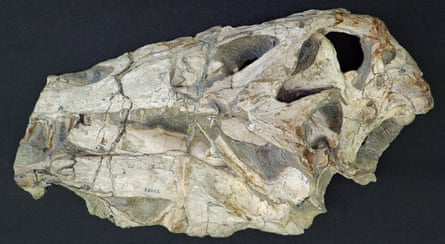
The Stuttgart Museum's decision to return the skull represents a significant shift in institutional attitudes toward cultural property and scientific ethics. Museums worldwide have increasingly grappled with the question of how to balance scientific access and preservation with legitimate restitution claims from source nations. This case demonstrates that even institutions with long-standing possession of important specimens can be persuaded to prioritize ethical considerations and international cooperation over permanent retention.
Brazil has invested substantially in developing its paleontological infrastructure and scientific capacity in recent years. The country hosts world-class research institutions capable of conducting advanced analysis on significant fossil specimens. The return of the Irritator skull will enhance Brazil's scientific collections and provide local researchers with unprecedented opportunities to study this exceptional fossil. This development may also inspire future discoveries and research initiatives focused on understanding South America's rich prehistoric fauna.
The restitution campaign succeeded through persistent diplomatic efforts, scientific argumentation, and appeals to established international conventions regarding cultural property. Organizations concerned with cultural heritage protection provided crucial support to Brazil's position, emphasizing the importance of maintaining equitable access to natural resources for all nations. The campaign also highlighted the growing recognition that paleontological specimens should remain accessible to scientists worldwide while respecting the sovereignty and heritage claims of nations in which they originated.
This resolution also carries symbolic importance beyond its immediate scientific implications. The case demonstrates that source nations can successfully challenge historical patterns of artifact removal and achieve repatriation of their natural heritage. Such outcomes encourage other nations to pursue similar claims and signal to museums that institutional collections must reflect contemporary ethical standards and legal obligations. The return of significant specimens like the Irritator skull represents progress toward more equitable relationships between scientific institutions and developing nations.
Looking forward, the Irritator fossil's return to Brazil opens exciting possibilities for collaborative international research. Scientists from German institutions, Brazilian universities, and other research centers around the globe can continue studying the specimen while respecting its cultural significance and national ownership. Such collaborative approaches often produce superior scientific outcomes while acknowledging legitimate claims to natural heritage. The specimen may be permanently housed in Brazil while remaining available to qualified researchers worldwide through institutional partnerships and research agreements.
The dinosaur repatriation case also raises important questions about the ethics of historical fossil collecting and museum acquisition practices. Many specimens in Western institutions were acquired during eras when source nations had limited capacity to prevent removal or when legal frameworks governing paleontological resources were virtually nonexistent. Museums now face increasing pressure to review their collections and identify items that should be returned, particularly when acquisition occurred without proper authorization or under circumstances that would be considered unethical by modern standards.
This decision by the Stuttgart Museum may influence other European and North American institutions holding significant fossils from developing nations. As scientific ethics evolve and international legal frameworks governing cultural property strengthen, museums increasingly recognize that maintaining contested specimens creates ongoing controversy and undermines their institutional credibility. The economic and reputational costs of resisting legitimate restitution claims often exceed the benefits of retention, particularly when collaboration offers viable alternatives to exclusive institutional control.
The return of the Irritator dinosaur skull represents a meaningful triumph for paleontological heritage conservation and international cooperation in science. The case demonstrates that persistence, scientific argumentation, and appeals to ethical principles can overcome institutional inertia and historical patterns of artifact retention. As this significant specimen returns to Brazil, it carries implications far beyond paleontology, signaling broader shifts in how museums, nations, and scientific communities navigate questions of cultural property, heritage stewardship, and equitable resource management in the twenty-first century.


