
Giant New Dinosaur Species Discovered in Thailand

Scientists identify nagatitan, Southeast Asia's largest dinosaur weighing as much as nine elephants. Revolutionary fossil discovery reshapes understanding of prehistoric Asia.
Paleontologists have made a groundbreaking discovery in Thailand that promises to reshape our understanding of dinosaur species that roamed Southeast Asia during the prehistoric era. Researchers have officially identified a new giant dinosaur species, scientifically named the nagatitan, which stands as the largest dinosaur ever discovered in the entire Southeast Asian region. This remarkable fossil find represents a significant milestone in paleontological research and provides invaluable insights into the evolutionary history and biodiversity of ancient Asia.
The nagatitan is an absolute marvel of prehistoric proportions, with a body mass that rivals some of the most enormous land creatures ever to walk the Earth. To put its massive size into perspective, this colossal sauropod dinosaur weighed approximately as much as nine adult African elephants combined, making it an extraordinarily impressive specimen. This extraordinary size classification places the nagatitan in an exclusive category of the world's most massive terrestrial animals, comparable to other superlative dinosaurs discovered across the globe. The sheer scale of this creature demonstrates the incredible diversity and magnitude of life forms that existed millions of years ago.
The fossil remains that led to the identification of the nagatitan were discovered in geological formations across Thailand, providing researchers with crucial physical evidence of this magnificent creature's existence. The excavation and analysis of these dinosaur fossils involved meticulous work by international teams of paleontologists who carefully examined every bone fragment and structural element recovered from the ancient rock layers. Each piece of the skeleton contributed essential information to reconstructing the complete picture of what this prehistoric giant looked like and how it functioned as a living organism. The careful preservation and study of these materials have enabled scientists to make definitive conclusions about this species.
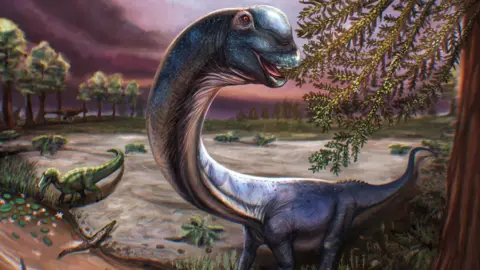
The discovery of the nagatitan has significant implications for understanding dinosaur evolution in Asia and the complex ecological systems that supported such enormous herbivorous creatures. Sauropods like the nagatitan were primarily plant-eating dinosaurs that required vast quantities of vegetation to sustain their tremendous body mass. The existence of such a large sauropod in Southeast Asia indicates that the region possessed abundant flora and favorable environmental conditions during the Mesozoic Era. This finding adds another crucial chapter to our knowledge of how prehistoric ecosystems functioned across different continents.
Comparative analysis of the nagatitan with other sauropod species discovered in different parts of the world provides researchers with valuable opportunities to study dinosaur distribution patterns and migration possibilities. Scientists can now examine whether the nagatitan shared common ancestry with similar giant dinosaurs found in other regions or whether it represents a unique evolutionary development specific to Southeast Asia. These investigations reveal complex biogeographical patterns and help explain how different species adapted to their respective environments. The nagatitan's characteristics offer clues about how sauropods diversified across various continents during the age of dinosaurs.
The geological context surrounding the nagatitan fossils provides important chronological information that helps paleontologists date this species and place it within the broader timeline of dinosaur existence. By analyzing the rock formations and associated fossils found alongside the nagatitan remains, scientists can determine approximately when this creature lived and what other organisms shared its environment. These temporal markers are essential for constructing accurate prehistoric timelines and understanding the sequence of evolutionary developments. The dating of these fossils contributes to our comprehensive understanding of Mesozoic Era history.
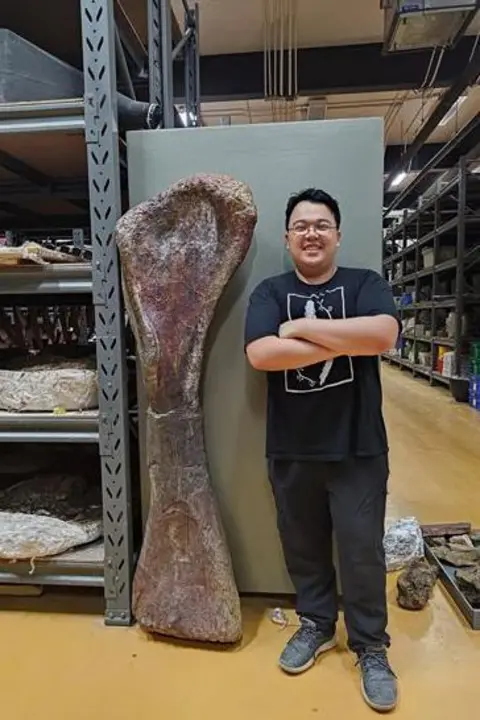
The nagatitan's skeletal structure reveals numerous adaptations that allowed it to thrive as such a massive terrestrial herbivore in its ancient ecosystem. The creature possessed an enormously long neck, characteristic of sauropod dinosaurs, which enabled it to reach vegetation high in trees and across wide areas of landscape. Its powerful skeletal framework, despite the incredible body mass, demonstrates remarkable engineering principles that nature had perfected through millions of years of evolution. The anatomical features of the nagatitan provide fascinating insights into how biology solves the engineering challenges of supporting such extraordinary size.
The discovery process itself involved dedicated fieldwork conducted by paleontological teams who methodically surveyed the Thai landscape searching for exposed fossil-bearing rock formations. Local geological knowledge, combined with modern paleontological techniques, enabled researchers to identify promising excavation sites and successfully recover substantial portions of the nagatitan skeleton. The collaborative efforts of international scientists and local experts demonstrated the importance of cross-border cooperation in advancing paleontological knowledge. These intensive field campaigns often require years of sustained effort before yielding such significant discoveries.
The implications of finding the nagatitan extend beyond pure scientific curiosity about prehistoric creatures to broader questions about ecosystem dynamics and environmental change across geological time. Understanding how megafauna like the nagatitan could survive required complex food webs, favorable climate conditions, and specific geological circumstances that allowed such giants to flourish. The presence of such enormous animals in Southeast Asia during the Mesozoic Era indicates that this region supported productive environments capable of sustaining gigantic herbivorous populations. This knowledge helps scientists reconstruct what ancient Asia looked like and how it functioned as a living, breathing ecosystem.
The nagatitan's classification and formal scientific description involved detailed anatomical studies comparing it with previously known sauropod species from around the world. Paleontologists examined unique structural features that distinguish the nagatitan from related genera, establishing its identity as a distinct evolutionary lineage. This taxonomic work requires expertise in comparative anatomy, phylogenetic analysis, and intimate knowledge of sauropod diversity across different geographical regions and time periods. The formal recognition of new dinosaur species represents a significant achievement in paleontological research methodology.
Future research opportunities surrounding the nagatitan remain extensive and promising for continued discoveries about prehistoric Southeast Asian fauna. Additional excavations in the same geological formations may yield more complete skeletal material or remains of other associated species living alongside the nagatitan. Advanced analytical techniques, including computer modeling and biomechanical analysis, can provide deeper understanding of how such massive creatures actually functioned in life. The nagatitan's discovery opens exciting new avenues for investigating the full diversity of dinosaurs that inhabited this fascinating region of ancient Earth.
Source: BBC News


