
Google Pics: Revolutionary AI Image Editor

Google launches Google Pics, an AI-powered image editor that challenges Photoshop. Discover how it outperforms Google Photos with intelligent editing features.
Google Pics represents a significant step forward in the evolution of AI-powered image editing technology, introducing a new application that challenges conventional wisdom about what's possible in accessible photo editing software. While the application may not carry the extensive feature set of industry-standard tools like Adobe Photoshop, early assessments suggest that Google's newest image editor could substantially outperform the built-in editing capabilities currently available within Google Photos. This development marks Google's continued investment in leveraging artificial intelligence to simplify complex creative tasks for everyday users.
The emergence of Google Pics signals a deliberate strategic decision by the technology giant to create a dedicated editing experience that exists separately from its established Google Photos ecosystem. Rather than serving as a minor feature within a larger application, this standalone tool demonstrates Google's commitment to providing users with a more refined and focused environment for image manipulation and enhancement. The distinction is important because it allows developers to optimize performance and user experience specifically around editing workflows, rather than compromising with the broader demands of a comprehensive photo management platform.
Industry observers have noted that AI image editing capabilities have reached a maturity level where they can now meaningfully compete with professional-grade software, at least for common editing tasks that most consumers regularly perform. Google's investment in this space reflects broader trends in artificial intelligence development, where machine learning models are becoming increasingly sophisticated at understanding visual content and making intelligent recommendations about how to improve it. The company's substantial resources and expertise in computer vision have positioned it uniquely to create tools that can understand context, lighting, composition, and subject matter in ways that traditional editing software cannot.
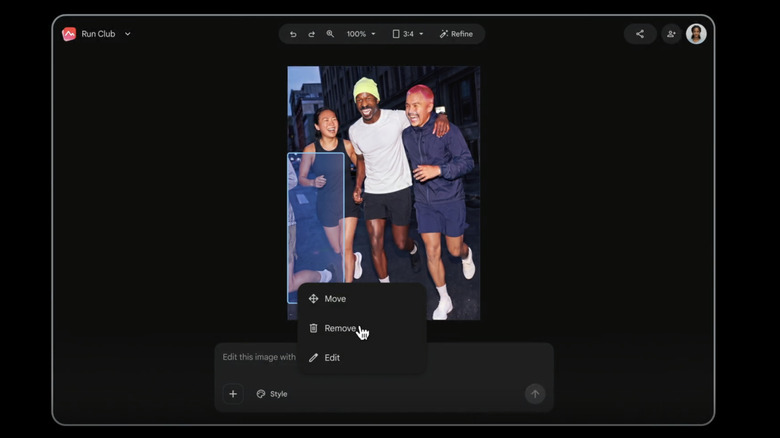
What distinguishes Google Pics from existing editing platforms is its reliance on sophisticated neural networks and machine learning algorithms to automate many traditionally manual editing processes. Users can leverage intelligent image enhancement that automatically adjusts exposure, color balance, and contrast based on the specific content of their photographs. The application's algorithms can identify and isolate different elements within an image, allowing for targeted adjustments that would typically require advanced Photoshop skills or extensive manual work. This democratization of advanced editing capabilities represents a fundamental shift in how casual photographers can achieve professional-quality results.
The comparison between Google Pics and the editing features embedded within Google Photos is particularly instructive. While Google Photos has always included basic editing tools—crop, rotate, brightness, contrast, and saturation adjustments—these remain relatively superficial when compared to what purpose-built editing applications can accomplish. Google Pics elevates the experience by incorporating advanced AI-driven features that go far beyond simple parameter adjustments. The new application can intelligently remove unwanted objects, enhance facial features with nuance, adjust backgrounds, and apply sophisticated filters that understand the image's context rather than applying uniform transformations.
The implications for amateur photographers and social media content creators are substantial. Previously, achieving polished, professional-looking photographs required either significant time investment in learning complex software or outsourcing to professional editors. With Google's AI image editing platform, users can now obtain comparable results in seconds through intuitive interfaces that require minimal technical knowledge. This technological advancement has the potential to reshape how people approach digital photography, making high-quality post-processing accessible to anyone with a smartphone or computer and an internet connection.

Google's venture into dedicated image editing software also reflects its broader strategy of integrating artificial intelligence more deeply into consumer-facing products. The company has consistently demonstrated that AI-powered applications can create compelling user experiences when designed thoughtfully around specific use cases. Rather than overwhelming users with thousands of options like traditional photo editing software, Google Pics likely employs an intelligent recommendation system that suggests edits based on the image content and identifies which adjustments would most improve the photograph's quality. This approach aligns with how modern users increasingly expect their digital tools to work—predictively and intuitively.
The technical infrastructure required to deliver cloud-based AI image processing at scale represents a significant engineering achievement. Google Photos users number in the hundreds of millions, and the company has developed the necessary computational resources to perform complex image analysis and manipulation operations on vast volumes of photographs daily. This infrastructure provides Google with a substantial competitive advantage when launching new editing features, as competitors must either build similar backend capabilities or rely on less powerful, locally-processed alternatives. The cloud-based approach also enables continuous improvement through machine learning models that improve with exposure to more diverse image content.
Beyond technical capabilities, the user experience design of Google Pics will likely prove crucial to its adoption and success. The most sophisticated algorithms mean little if they're wrapped in confusing interfaces that frustrate rather than delight users. Google's track record with consumer applications suggests the company will invest considerable effort in creating an editing experience that feels natural and intuitive, with clear visual feedback that helps users understand how adjustments affect their images. The goal is presumably to make advanced editing feel effortless rather than requiring users to develop new skills or conceptual models of how image manipulation works.
The competitive landscape for image editing applications is evolving rapidly as artificial intelligence capabilities mature. Adobe's Photoshop and Lightroom have begun incorporating generative AI features, while other companies have launched specialized AI editing tools. Google's entry into this market with a dedicated application suggests the company views this space as strategically important and believes it can differentiate through superior algorithms, seamless integration with its existing ecosystem, and a focus on accessibility. The battle for dominance in AI-powered image editing will likely determine which companies shape the future of digital photography and visual content creation.
For users contemplating whether to switch from their existing editing tools to Google Pics, the decision may ultimately depend on their specific needs and existing workflows. Professional photographers and designers will continue to require the comprehensive feature sets and precise control offered by established software, but for the vast majority of users who engage in occasional photo editing, Google Pics could prove substantially more satisfying. The application promises to deliver professional-quality results without requiring professional expertise, which is precisely what most consumers want from their digital tools.
Looking forward, Google Pics represents just the beginning of how artificial intelligence will transform creative tools. As machine learning technology continues to advance, editing applications will become even more capable at understanding user intent and automatically applying the modifications that best serve their creative vision. The availability of powerful AI editing tools at no cost or minimal expense could fundamentally reshape the creative landscape, empowering millions of people to engage in visual expression in ways that were previously inaccessible. Whether Google Pics ultimately displaces its competitors or simply establishes a strong presence in the market, its emergence signals a decisive shift in how technology companies think about image editing and creative expression in the age of artificial intelligence.
Source: Engadget


