
Google's Universal Cart Tracks Your Shopping

Google launches Universal Cart to streamline shopping across YouTube and Gmail. Learn how this new feature simplifies your purchasing experience.
Google's Universal Cart represents a significant shift in how the technology giant approaches e-commerce integration within its ecosystem. The new feature is designed to consolidate shopping experiences across multiple platforms, making it seamlessly easier for users to purchase products without leaving their favorite Google applications. This strategic move underscores Google's commitment to streamlining digital commerce and capturing more transaction data across its vast network of services.
The shopping cart feature will be available directly within YouTube and Gmail, two of Google's most widely-used platforms. By embedding purchasing capabilities into these applications, Google is removing friction from the buying process and creating a more integrated experience for millions of users worldwide. The implementation allows shoppers to add items to their cart while browsing YouTube videos or reviewing promotional emails, then complete their purchases without navigating away from their current activity.
This development builds on Google's broader efforts to compete in the e-commerce space, where platforms like Amazon have dominated for years. The Universal Cart functionality leverages Google's existing infrastructure and user base to create new opportunities for online retailers and merchants. By making it easier for consumers to complete transactions within trusted Google applications, the company is positioning itself as a central hub for digital shopping experiences.
YouTube shoppers will benefit from the ability to add items directly from product links embedded in videos. Content creators and brands can now integrate commerce more naturally into their video content, creating new revenue streams and improving viewer engagement. The feature is particularly valuable for educational content, product reviews, and sponsored videos where viewers might want to immediately purchase featured items.
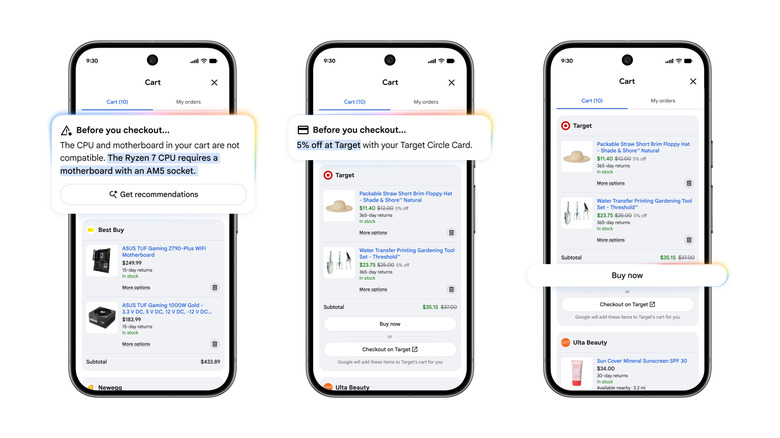
Gmail users will experience enhanced shopping cart integration when receiving promotional emails and shopping notifications from retailers. Rather than clicking through to external websites, shoppers can now manage their carts directly within their inbox, streamlining the path to purchase. This approach capitalizes on Gmail's position as a central communication hub where many retail promotions are already delivered to consumer inboxes.
The Google shopping ecosystem has been evolving significantly in recent years, with the company introducing various tools to help retailers reach customers more effectively. Universal Cart fits into this broader strategy by creating touchpoints where online shopping becomes more convenient and integrated. The feature also allows Google to collect valuable data about shopping behaviors, cart abandonment rates, and consumer preferences across different contexts.
Data privacy and security considerations are paramount to the Universal Cart rollout. Google has implemented encryption and authentication protocols to protect user payment information and purchase history. The company's existing trust relationships with both consumers and financial institutions provide a foundation for secure transaction processing within these new channels.
From a merchant perspective, the Universal Cart integration offers new opportunities to reach customers at critical moments in their shopping journey. Retailers can leverage YouTube's video content recommendations and Gmail's personalized email targeting to drive traffic to their products. This multi-channel approach increases the likelihood of converting browsing behavior into actual purchases.
The feature also addresses the growing trend of cross-platform shopping, where consumers expect seamless experiences as they move between different apps and services. By enabling Universal Cart, Google is acknowledging that modern shoppers don't follow linear purchasing paths. Instead, they discover products on YouTube, receive promotional offers via Gmail, and expect to complete transactions without unnecessary friction or page redirects.
Competitive advantages for Google become apparent when considering how this feature compares to Amazon's similar offerings. While Amazon has built its dominance through a dedicated e-commerce platform, Google is extending commerce capabilities throughout its existing ecosystem. This approach leverages Google's massive user base and the time people spend on YouTube and Gmail every day, creating unprecedented opportunities to monetize shopping activity.
The rollout of Universal Cart functionality will likely happen in phases, with Google testing the feature with select merchants and markets before wider deployment. This approach allows the company to identify technical issues, gather user feedback, and optimize the experience before making it available globally. Early adopters among retailers will gain competitive advantages in reaching customers through these new channels.
Looking ahead, the Google shopping experience may continue to evolve with additional features and integrations. Future developments could include augmented reality try-on capabilities, AI-powered product recommendations, and more sophisticated checkout processes. As artificial intelligence and machine learning technologies mature, Google's shopping platform could become increasingly personalized and predictive.
The implementation of Universal Cart also signals Google's confidence in the long-term viability of integrated commerce within existing applications. Rather than expecting users to visit separate shopping platforms, Google is bringing commerce directly to where users already spend significant time. This strategy acknowledges a fundamental shift in digital consumer behavior and reflects changing expectations about convenience and seamless experiences.
Retailers and merchants preparing for this change should consider how their product catalogs and inventory systems will integrate with the Universal Cart platform. Technical preparation, merchant support, and training will be essential for businesses wanting to capitalize on this new sales channel. Google's ecosystem provides tools and documentation to help merchants understand requirements and optimize their participation in the Universal Cart feature.
Source: Engadget


.jpg&w=3840&q=75)