
GOP Divides Over Trump's Haiti Stance to Protect Seats

Republicans in competitive districts break ranks with Trump over Haitian immigrants, citing economic benefits and community contributions in vulnerable states.
Across key battleground regions, a notable political fracture has emerged within Republican ranks as vulnerable lawmakers increasingly distance themselves from former President Donald Trump's hardline immigration rhetoric, particularly regarding Haitian immigrants who have become integral to their communities' economic recovery. This shift reveals a pragmatic calculation among Republicans facing competitive reelection campaigns: defending immigrant contributions to local economies may prove more politically viable than amplifying divisive messaging that could alienate moderate and independent voters in crucial swing districts.
In Ohio, where the Haitian diaspora has catalyzed an unexpected economic renaissance in struggling municipalities, this tension between national Republican party politics and local reality has become impossible to ignore. Carl Ruby, a respected pastor at a prominent Springfield congregation and outspoken advocate for the city's estimated 10,000 Haitian residents, has spent considerable effort attempting to bridge the communication gap between his community and elected officials. Ruby's persistence in seeking a face-to-face meeting with Republican Representative Mike Turner underscores the urgency felt by community leaders to ensure their voices are heard in Washington.
Ruby's mission reflects a broader pattern emerging across multiple districts where Haitian communities have become economic lifelines. These immigrants have revitalized neighborhoods that faced decades of decline, opening businesses, filling workforce gaps, and infusing local tax bases with much-needed revenue. For many of these struggling industrial towns, the arrival of Haitian families represented not a burden but a genuine opportunity for demographic and economic renewal.

The friction between Trump's pronounced anti-immigration stance and the practical experiences of Republican legislators in districts with significant Haitian populations highlights a critical disconnect between national political messaging and ground-level economic realities. Representatives facing reelection understand that their constituents—both native-born Americans and immigrants—care deeply about issues affecting their daily lives: job availability, business growth, neighborhood stability, and community cohesion. When Haitian families demonstrably contribute to these outcomes, the calculus becomes distinctly different from abstract policy debates conducted in national forums.
Vulnerable Republicans in competitive districts have begun calculating the political cost-benefit analysis of their immigration positions with new urgency. Polls consistently demonstrate that moderate and swing voters in battleground states prioritize pragmatic governance over cultural grievance politics. A congressman who opposes his community's economic recovery—driven substantially by immigrant entrepreneurship and labor—risks appearing out of touch with constituent needs and values. This vulnerability explains why previously reliable Trump allies are now expressing more nuanced views on immigration policy.
The Haitian community in Springfield represents more than just demographic statistics. Over the past several years, these immigrants have established restaurants, repair shops, construction companies, and service businesses that have transformed once-vacant storefronts into thriving commercial zones. They have stabilized the local housing market and reversed population decline that had plagued the region for generations. For business owners, municipal administrators, and civic leaders, these contributions are impossible to dismiss as mere anecdote—they represent measurable, documented economic transformation.
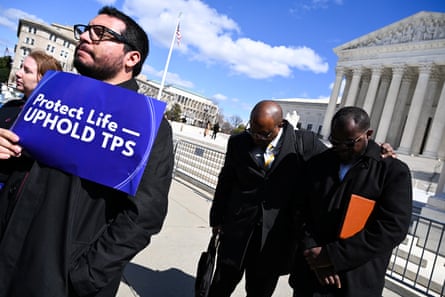
Pastor Ruby's attempts to arrange a meeting with Representative Turner exemplify the grassroots advocacy efforts underway across affected communities. Community leaders recognize that elected officials sometimes operate in information bubbles, receiving curated briefings that may not capture the full complexity of immigrant integration in their districts. Direct testimony from religious leaders, business owners, and long-time residents can provide the contextual understanding that transforms abstract policy positions into recognition of real human contributions and interdependencies.
The political dynamics surrounding immigration have shifted considerably as Republicans confront the electoral implications of blanket anti-immigrant rhetoric. In districts where Trump underperformed in previous cycles, candidates have learned that appeals to immigrant communities—or at minimum, acknowledgment of their economic contributions—can meaningfully affect vote margins. This recognition has produced a more calibrated approach to immigration messaging among some GOP candidates, distinguishing between rhetoric designed for primary elections and positions articulated during general election campaigns.
The conflict also reflects generational and geographic divides within the Republican Party. Conservative politicians representing major metropolitan areas and economically dynamic regions increasingly acknowledge immigration's contribution to labor markets and entrepreneurship. Meanwhile, politicians in areas less directly affected by immigrant community presence can maintain more absolutist positions without apparent electoral consequences. This geographic fragmentation undermines party unity on immigration but may ultimately produce more locally responsive governance.
For Haitian Americans and their allies, this political opening represents a critical opportunity to reshape the national conversation around immigration. By highlighting concrete examples of economic contribution, community building, and civic participation, advocates can challenge reductive narratives that portray immigrants uniformly as liabilities. Evidence from Springfield and similar communities demonstrates that immigration can simultaneously address labor shortages, revitalize struggling municipalities, and strengthen community institutions—outcomes that transcend typical left-right political categorization.
The situation in Ohio also illustrates how local issues increasingly diverge from national partisan talking points. Voters in Springfield care primarily about whether their streets are safer, their businesses more prosperous, and their neighborhoods more vibrant. When immigrants demonstrably contribute to these outcomes, voters—regardless of party affiliation—tend to view that community contribution favorably. This ground-level pragmatism can eventually influence national party platforms as candidates facing real electoral accountability pressure party leadership to adjust rhetoric accordingly.
Immigration reform debates often occur at abstract, theoretical levels removed from the actual human experiences and economic realities that define community life. The Republican divide on Haitian immigration reveals how direct engagement with affected communities can generate political pressure for more balanced, evidence-based policy discussions. As more vulnerable Republicans find political courage to acknowledge immigrant contributions, they create space for broader national conversation that moves beyond divisive culture war framing toward genuine policy analysis.
The willingness of some Republicans to depart from Trump's orthodox positions on immigration reflects a maturation of political strategy that recognizes electoral survival depends on meeting constituent needs. In communities where Haitian immigrants have become essential to economic vitality, opposing or denigrating that community carries genuine political risk. This realization has prompted some politicians to reconsider reflexive opposition to immigration, understanding that their electoral coalitions depend on broad-based support that encompasses diverse constituencies.
Looking forward, the division within Republican ranks over immigration policy will likely intensify as more GOP candidates in competitive districts confront constituent pressure to acknowledge immigrant contributions. This internal party conflict, while potentially destabilizing in primary elections, may ultimately produce more pragmatic, evidence-based immigration policies that account for local economic realities. Communities like Springfield offer compelling natural experiments demonstrating immigration's potential to address regional economic challenges—lessons that political leaders ignore at their electoral peril.
Source: The Guardian


