
Government Borrowing Drops £20bn in Fiscal Year

UK government borrowing falls significantly by £20bn in the year to March, driven by stronger tax revenues offsetting increased public spending.
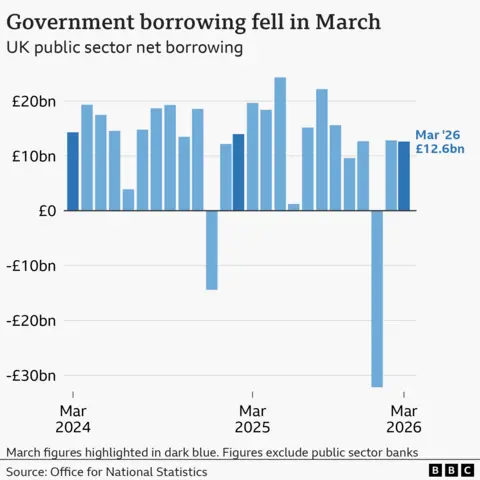
The United Kingdom's government borrowing has experienced a notable decline of £20 billion in the fiscal year ending March, according to newly released official figures from the Office for National Statistics (ONS). This substantial reduction represents a significant shift in the nation's fiscal position and demonstrates the complex interplay between revenue collection and public expenditure that shapes government finances.
The decrease in government borrowing occurred despite a marked increase in overall spending by the public sector during the same period. This seemingly paradoxical outcome reveals a fundamental economic principle: the government's ability to cover its increased expenditure through enhanced revenue collection has proven decisive. The ONS figures show that tax receipts have grown substantially, more than compensating for the additional costs incurred across various government departments and programs.
Analysis of the data indicates that tax revenue growth has been the primary driver of this positive fiscal development. Increased collections across multiple tax streams, including income tax, corporation tax, and value-added tax (VAT), have contributed to strengthening the government's financial position. This growth in tax revenues reflects both economic activity levels and the effectiveness of tax collection mechanisms operating throughout the fiscal year.

The improvement in UK public finances comes at a time when policymakers face mounting pressure to balance fiscal responsibility with the need to fund essential public services. The contrast between rising public spending and falling borrowing levels provides a more optimistic picture of the government's fiscal health than might have been anticipated given inflationary pressures and increased demand for public services across healthcare, education, and social support programs.
Looking at specific expenditure categories, government spending has increased across numerous departments as the nation addressed ongoing challenges in areas such as the National Health Service, education, and social welfare support. These increases reflect policy decisions to prioritize investment in critical services despite broader economic uncertainties. The ability to fund these increases without proportionally increasing borrowing suggests that the tax base has expanded and collection efficiency has improved during this period.
Fiscal policy outcomes during this year have demonstrated the government's capacity to manage competing demands for public resources. The figures suggest that economic growth and employment levels have remained sufficiently robust to generate the additional tax revenue necessary to offset increased spending commitments. This dynamic relationship between economic performance and public finances underscores the importance of maintaining conditions conducive to sustained economic activity.
The reduction in government borrowing requirements has implications for broader monetary policy and interest rate decisions. Lower borrowing needs can reduce pressure on gilt markets and may provide the Bank of England with greater flexibility in managing monetary policy objectives. The ONS figures also serve as a baseline for assessing future fiscal performance and inform ongoing debates about taxation levels, spending priorities, and long-term fiscal sustainability.
Economists have offered varied interpretations of these figures within the context of broader economic trends. Some analysts view the improved borrowing position as evidence of successful fiscal management, while others caution that underlying economic conditions may not remain as favorable in coming months. The sustainability of current tax revenue levels depends significantly on maintaining economic momentum and avoiding potential downturns that could reduce tax receipts.
The government's fiscal position improvement also reflects decisions made regarding public sector wages, benefit payments, and capital investment. These spending allocations have been calibrated to address immediate social and economic needs while seeking to maintain fiscal discipline. The balance achieved during this fiscal year provides a foundation for understanding the government's capacity to pursue its spending priorities while managing debt obligations.
Going forward, the UK public finances will continue to be shaped by interactions between economic growth, inflation levels, and policy decisions regarding taxation and spending. The current fiscal position presents both opportunities and challenges for policymakers navigating economic cycles and addressing structural demands on public services. Future borrowing levels will depend on how these various factors interact and evolve over coming quarters.
The ONS data provides crucial information for stakeholders including investors in UK government securities, international credit rating agencies, and domestic policymakers assessing the government's financial sustainability. These official figures serve as the definitive record against which all commentary and analysis of UK government finances must be measured. The £20 billion reduction in borrowing represents a meaningful improvement in the government's fiscal balance during a period marked by complex economic and social challenges.
This fiscal outcome demonstrates that increased public spending does not inevitably lead to proportionally increased borrowing when revenue collection remains strong. The ability to fund higher spending through enhanced tax receipts reflects economic resilience during the period under review. As the government continues to manage its finances and plan future budgets, understanding the dynamics that produced this improvement remains essential for informed policy development and economic forecasting.
Source: BBC News


