
Guide's Harrowing Account of Mount Dukono Eruption

An Indonesian mountain guide recounts the terrifying moments when Mount Dukono erupted while leading hikers up the volcano, killing three people in the devastating incident.
An experienced Indonesian mountain guide has provided a detailed and emotional account of the catastrophic moment when Mount Dukono erupted on Friday, resulting in the deaths of three individuals during what should have been a routine hiking expedition. The guide, who had safely led numerous trekkers up the volcanic slopes in previous seasons, found himself at the center of one of the region's most devastating natural disasters, offering insights into the chaotic and frightening circumstances that unfolded as the volcano suddenly came to life.
The eruption of Mount Dukono in Indonesia caught both experienced mountaineers and casual hikers off guard, despite the volcano's known geological activity. The guide's firsthand testimony reveals how quickly conditions on the mountain deteriorated from what appeared to be a normal day of hiking into a life-threatening emergency. His account provides crucial information about the sequence of events, the behavior of the volcano, and the desperate attempts to evacuate hikers from the danger zone as ash, rock, and superheated gases descended upon the slopes.
According to the guide's recollection, the morning had started like any other day on the mountain, with groups of hikers assembling at the base of Mount Dukono for their scheduled ascent. The weather conditions appeared favorable, and there were no obvious warning signs that would have suggested an imminent volcanic eruption was about to occur. The guide had completed pre-climb safety briefings and route planning with the trekkers, all of whom seemed enthusiastic and physically prepared for the challenging climb ahead through Indonesia's dramatic landscape.
The guide described how the group had progressed steadily up the volcanic slopes, passing through increasingly barren terrain as they gained elevation. Trekkers were making good time, maintaining a steady pace despite the physical demands of climbing at altitude on volcanic rock. The atmosphere among the group had been generally positive, with hikers stopping periodically to catch their breath, take photographs, and marvel at the increasingly panoramic views of the surrounding Indonesian landscape stretching out below them.
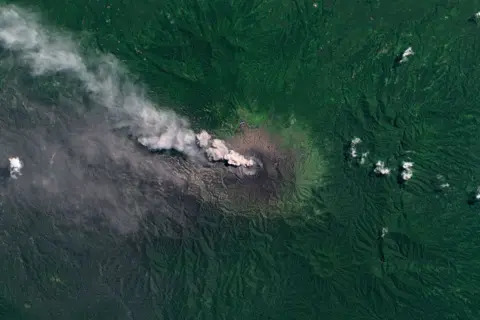
Everything changed in an instant when the mountain began to shake violently beneath their feet. The guide explained that the initial seismic activity was immediately recognizable as something far more serious than typical ground tremors. Within moments, the volcano released a massive burst of energy, sending columns of ash and volcanic materials high into the atmosphere. The sudden transformation of the tranquil morning climb into a terrifying ordeal happened with virtually no warning, leaving little time for the hikers and their guide to comprehend what was occurring or to execute evacuation procedures.
The guide's account emphasizes the confusion and panic that gripped the hiking party as volcanic debris began falling around them. Visibility deteriorated rapidly as thick ash clouds obscured the sun, turning what had been a bright morning into an eerie twilight. The temperature spiked dramatically due to the proximity of superheated volcanic gases, and the air became increasingly difficult to breathe as particles filled the atmosphere. Three members of the hiking group tragically succumbed to the effects of the eruption, unable to escape the volcano's violent discharge or withstand the extreme conditions it created.
The guide recounted his efforts to help other trekkers navigate down the mountain through the chaos and poor visibility caused by the volcanic ash. His knowledge of the mountain's terrain and evacuation routes proved invaluable in guiding survivors away from the most dangerous zones. He described having to make split-second decisions about which paths to take and how to best protect his group from the ongoing hazards posed by falling ash, rocks, and toxic gases. His experience and quick thinking likely prevented the death toll from being significantly higher.
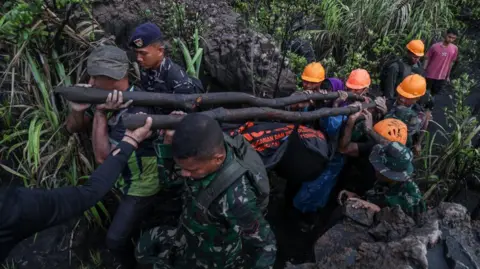
Indonesian authorities launched immediate rescue and recovery operations following the eruption of Mount Dukono. Emergency responders reached the area and began searching for any remaining hikers who might still be on the mountain or in need of assistance. The guide cooperated fully with rescue teams and investigators seeking to understand the circumstances of the tragedy and determine why the volcano erupted with such little warning. His testimony has become a crucial component of official investigations into the incident.
Mount Dukono is one of Indonesia's most active volcanoes, located in the North Maluku province on Halmahera Island. The mountain has a long history of volcanic activity, with frequent eruptions documented over many decades. Despite its known hazards, the volcano remains a popular destination for mountaineers and adventure tourists seeking to experience Indonesia's dramatic geology and natural beauty. Local guides are trained to assess volcanic risk and guide visitors safely, though the inherent dangers of climbing an active volcano can never be completely eliminated.

The guide's experience on Mount Dukono underscores the unpredictable nature of volcanic mountains and the risks that climbers accept when choosing to ascend these geological features. While modern monitoring systems attempt to provide early warning of increased volcanic activity, eruptions can sometimes occur with minimal precursor signs. The tragedy raises important questions about safety protocols, evacuation procedures, and the balance between allowing access to natural wonders while adequately protecting visitors from catastrophic hazards.
Survivors from the hiking group have expressed their gratitude toward the guide for his leadership and efforts to shepherd them to safety during the disaster. His actions during the crisis demonstrate the crucial role that trained, experienced mountain guides play in managing risk during adventure tourism in volcanically active regions. The guide's emotional account has resonated with many in the climbing community and with the broader public, highlighting both the extraordinary beauty and the very real dangers that exist when humans venture into the domain of active geological forces.
The eruption of Mount Dukono serves as a sobering reminder of nature's raw power and the limitations of human control over geological phenomena. It also demonstrates why preparation, experience, and rapid decision-making prove so critical when emergencies unfold in remote, mountainous terrain. The guide's testimony will likely influence future discussions about volcanic tourism safety in Indonesia and around the world, potentially leading to revised protocols and increased investment in monitoring systems to provide better early warning of future eruptions on this and other active volcanoes.
As investigations continue into the specific circumstances surrounding the fatalities, the guide's detailed account remains central to understanding how the disaster unfolded. His firsthand perspective provides invaluable data about the timing, intensity, and characteristics of the eruption, information that volcanologists and safety experts will analyze to improve preparedness for future volcanic events. The tragedy of the three lost hikers will serve as a lasting reminder of the risks inherent in exploring one of Earth's most volatile and fascinating natural features.
Source: BBC News


