
Guinean Opposition Vows to Resist Junta's Political Crackdown

After 40 political parties were dissolved, a prominent opposition leader in Guinea calls for 'direct resistance' against the junta-led government's efforts to consolidate power.
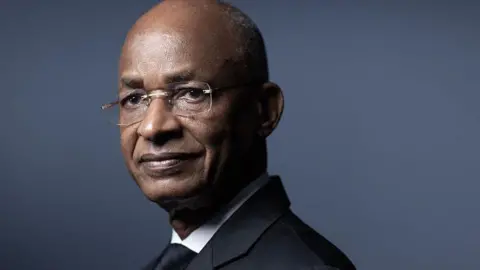
In a bold stand against the authoritarian actions of Guinea's junta-led government, Cellou Dalein Diallo, a prominent opposition leader, has urged his supporters to engage in 'direct resistance' following the dissolution of 40 political parties in the country.
Diallo, who has been a vocal critic of the military regime headed by President Alpha Conde, accused the government of attempting to erase any political threats to its rule. The move to disband nearly half of Guinea's registered political parties is widely seen as a blatant attempt to consolidate power and silence dissent.
The political crisis in Guinea has been ongoing since Conde's controversial re-election in 2020, which was marred by accusations of fraud and sparked widespread protests. Diallo, who ran against Conde in the election, has refused to recognize the results, and the current junta-led government has faced international criticism for its heavy-handed crackdown on opposition figures and civil society.
In his call to action, Diallo urged his supporters to engage in 'direct resistance,' a phrase that suggests a willingness to take to the streets and confront the authorities head-on. This move comes as no surprise, given the increasingly authoritarian nature of the current regime and its attempts to stifle any form of political opposition.

The dissolution of 40 political parties is a significant blow to the country's democratic institutions, which have been under strain since the military takeover in 2021. The move is seen as a desperate attempt by the junta to consolidate its grip on power and eliminate any potential challenges to its rule.
Despite the risks, Diallo's call for 'direct resistance' reflects the growing frustration and determination of Guinea's opposition to fight for the restoration of democratic governance in the country. As the political crisis continues to unfold, the international community will be closely watching the situation, with the potential for further unrest and upheaval looming on the horizon.
The developments in Guinea serve as a stark reminder of the fragility of democracy in the region and the ongoing struggle for power and legitimacy between authoritarian regimes and their opponents. As the country navigates this turbulent period, the outcome of this conflict will have far-reaching implications for the future of democracy in West Africa and beyond.
Source: BBC News


