
HMS Dragon Deploys to Middle East for Strait of Hormuz

UK warship HMS Dragon heads to Middle East for potential Strait of Hormuz mission to safeguard shipping lanes. Ministry of Defence confirms deployment plans.
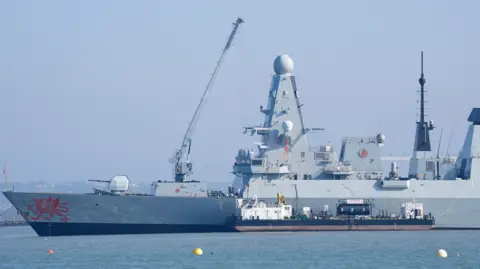
The United Kingdom's Ministry of Defence has announced that HMS Dragon, a advanced Type 45 destroyer, is being dispatched to the Middle East region with the primary objective of potentially joining an international maritime mission aimed at protecting vital shipping corridors. This strategic deployment represents a significant commitment by the British Armed Forces to maintaining security in one of the world's most economically critical waterways, though officials have made clear that active participation will only commence once regional hostilities have subsided.
The Type 45 destroyer represents the cutting edge of British naval technology, equipped with state-of-the-art radar systems and advanced weaponry designed to address modern maritime security challenges. HMS Dragon, specifically, has established itself as a formidable presence in international waters, with a crew of approximately 190 naval personnel trained in sophisticated operations. The vessel's deployment to the Middle East underscores the strategic importance of the Strait of Hormuz, through which approximately 20% of the world's petroleum and liquefied natural gas passes daily, making it indispensable to global energy security and economic stability.
The Ministry of Defence's announcement comes amid growing concerns about maritime safety in the region, where various geopolitical tensions and regional conflicts have created an unpredictable environment for commercial shipping. The statement explicitly emphasizes that HMS Dragon will prepare and train for potential involvement in the international coalition mission, but actual operational engagement will remain conditional on the cessation of active fighting in the area. This cautious approach reflects the complex security situation and the need for careful diplomatic coordination with international partners.
The Strait of Hormuz mission has attracted participation from multiple nations concerned about freedom of navigation and maritime commerce. Several countries have contributed naval assets to this international effort, recognizing that instability in the region could have cascading effects on global trade and energy markets. The presence of HMS Dragon would significantly enhance the capabilities of the coalition force, given Britain's extensive naval expertise and the vessel's advanced technological systems that can monitor vast stretches of ocean and coordinate with allied warships.
Recent months have witnessed escalating incidents affecting commercial shipping in the Middle East, including attacks on cargo vessels and tankers that have heightened concerns among shipping companies and energy exporters. The international community has grown increasingly focused on establishing robust maritime security measures to protect these essential trade routes. By positioning HMS Dragon in the region, the UK demonstrates its commitment to upholding international maritime law and ensuring that commercial vessels can traverse these waters with minimal risk of disruption or attack.
The deployment of HMS Dragon represents a continuation of Britain's broader naval strategy in the region. The Royal Navy has maintained a persistent presence in the Middle East for decades, conducting regular patrols and participating in multinational exercises designed to build interoperability among allied naval forces. This long-standing commitment reflects Britain's economic interests in regional stability and its role as a permanent member of the United Nations Security Council with responsibilities for global peace and security.
The preparation phase that HMS Dragon will undergo includes comprehensive training exercises, coordination protocols with partner nations, and familiarization with local conditions that characterize operations in the Middle East. The ship's crew will receive specialized instruction on the particular challenges of Middle East maritime operations, including navigating narrow waterways, managing complex international relationships, and responding to various security threats that might emerge. This preparation period is crucial for ensuring that the vessel and its personnel are optimally prepared for any mission they may undertake.
The Ministry of Defence's decision to condition HMS Dragon's active participation on the resolution of current hostilities reflects the complexity of the current geopolitical landscape. Officials recognize that deploying military assets to an unstable region during active conflict could inadvertently escalate tensions or create additional risks for the personnel involved. Therefore, the phased approach—deployment and preparation now, with operational engagement contingent on improved security conditions—represents a measured and responsible strategy that balances strategic objectives with practical security considerations.
International partners in the coalition mission have welcomed the announcement of HMS Dragon's deployment, viewing it as evidence of continued British commitment to regional stability and maritime security. Naval cooperation among Western allies in the Middle East has become increasingly important as traditional power dynamics in the region have evolved. The arrival of advanced British naval assets reinforces the coalition's collective capability to monitor maritime traffic, respond to emergencies, and deter hostile actions against commercial shipping.
The broader context for this deployment includes ongoing concerns about various actors in the region whose actions threaten maritime safety. Several non-state groups and regional powers have conducted operations that endanger shipping, from drone attacks to naval harassment. The international coalition's mission aims to create sufficient security presence to deter such activities and provide reassurance to commercial operators that their vessels will be protected when transiting these critical waters.
HMS Dragon's specific capabilities make it particularly valuable for this mission. The destroyer's sophisticated air defense systems can protect against threats from the air, while its advanced sensors provide comprehensive maritime awareness across vast ocean areas. The ship's ability to communicate and coordinate with allied vessels from multiple nations makes it an ideal platform for international maritime operations. These technical advantages, combined with the Royal Navy's extensive experience in the region, position HMS Dragon as a significant contributor to the coalition's operational effectiveness.
The announcement has been carefully timed in relation to broader diplomatic efforts aimed at reducing tensions in the Middle East. By making clear that HMS Dragon's active involvement depends on improved security conditions, the UK sends a subtle message that it supports peaceful resolution of regional conflicts while simultaneously demonstrating readiness to take action when necessary. This diplomatic signaling reflects the multifaceted nature of modern international relations, where military deployment decisions carry substantial political significance beyond their immediate operational implications.
The deployment timeline has not been specified in the Ministry of Defence announcement, but sources suggest that HMS Dragon could be operational in the region within coming months. The ship must complete final preparations, including crew briefings, equipment checks, and coordination meetings with international partners. These preparations typically require several weeks to several months, depending on the ship's current operational status and any maintenance requirements that may emerge during the transition process.
For the commercial shipping industry, HMS Dragon's potential arrival represents a positive development regarding maritime safety in the region. Insurance companies, shipping associations, and energy exporters have all expressed support for enhanced naval security measures that reduce risks to their operations. The availability of advanced military vessels capable of rapid response to incidents provides greater confidence that commercial vessels will receive protection when needed. This increased security should theoretically reduce insurance premiums and encourage more normal trade flow through the Strait of Hormuz, benefiting the global economy.
As HMS Dragon prepares for its potential deployment to the Middle East, the Royal Navy continues its commitment to global maritime security and international cooperation. The Strait of Hormuz mission represents just one aspect of Britain's broader naval strategy, which encompasses operations across multiple regions and partnerships with numerous allied nations. HMS Dragon's preparation for this mission demonstrates the versatility and readiness of modern British naval forces to respond to emerging security challenges anywhere in the world.
Source: BBC News


