
How Unattended Funerals Impact Grieving Families

One man shares how his mother's unattended cremation affected his grief journey. Explore the emotional and psychological impact of minimal funeral services.
Ed Cullen's experience with his mother's funeral has opened up an important conversation about the emotional consequences of choosing minimal or unattended cremation services. While these options can provide significant financial relief for families facing difficult economic circumstances, Cullen's story illustrates the deeper psychological toll that can accompany cost-saving funeral decisions. His candid account reveals how the absence of traditional funeral rituals left him grappling with unresolved grief and a sense of incompleteness that extended far beyond the initial loss.
When Cullen's mother passed away, his family made the difficult decision to opt for an unattended cremation, a service designed to minimize expenses while still providing a respectful disposition of the deceased. The process involves cremating the body without any formal ceremony, viewing, or family participation in the ritual aspects of the service. Though the financial savings were substantial—potentially reducing costs by thousands of pounds compared to a traditional funeral—Cullen found that the monetary benefits came at an unexpected emotional price that persisted long after the cremation took place.
The absence of a formal funeral ceremony meant that Cullen and his family were denied the structured opportunity to say goodbye, share memories, and gather as a community to acknowledge their loss. Funeral rituals have served fundamental psychological functions across cultures for centuries, providing designated spaces and times for people to process grief, celebrate the deceased's life, and receive support from their social networks. Without these traditional markers, Cullen discovered that his grief remained fragmented and incomplete, manifesting as painful memories that lacked a proper context or closure.
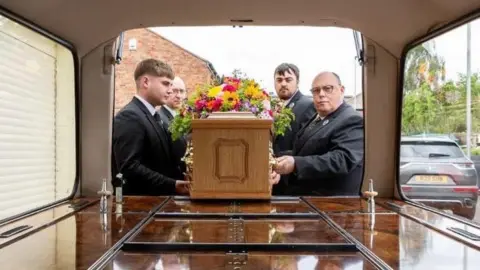
Cullen's experience highlights the growing phenomenon of budget funerals and direct cremations in the United Kingdom, where increasing costs have pushed many families toward more economical options. The average cost of a traditional funeral in the UK has risen substantially over the past decade, with some estimates placing the total expense between £3,000 and £5,000 or more. For families already struggling financially or facing unexpected death-related expenses, affordable cremation services have become an attractive alternative, even when they come with significant emotional trade-offs.
The psychological impact of foregoing traditional funeral ceremonies extends beyond the immediate period of loss. Grief specialists and bereavement counselors have increasingly documented how the absence of formal rituals can complicate the grieving process, leading to prolonged emotional distress, difficulty accepting the reality of death, and challenges in transitioning to life without the deceased. The funeral ceremony serves as a demarcation point in the grieving journey—a moment when the community acknowledges the significance of the person's life and the legitimacy of others' pain in response to their passing.
For Cullen, the decision to have an unattended cremation likely felt necessary at the time, perhaps driven by financial constraints that left his family with limited options. However, his reflections on the experience suggest that he would have benefited from some form of ceremonial acknowledgment, even if it couldn't be a full traditional funeral. This realization points to an important gap in how society addresses grief support for families facing economic hardship when death occurs.
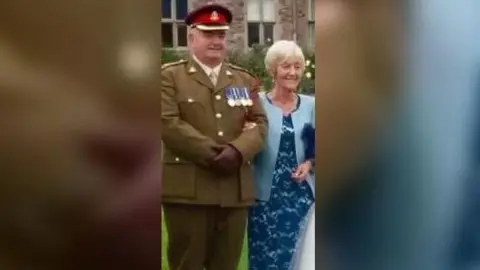
The emotional aftermath of Cullen's experience underscores the importance of grief support resources for people navigating loss without traditional funeral ceremonies. Many families in similar situations may not realize that they can organize informal memorial gatherings, create personalized tributes, or seek professional bereavement counseling even if they cannot afford elaborate funeral services. These alternative approaches can help provide the psychological closure and community support that formal funerals traditionally offer.
Cullen's story also raises questions about the broader societal implications of funeral affordability and access to grief support services. When funeral costs become prohibitively expensive for many families, the result is not simply economic hardship—it's a potential deepening of psychological trauma during an already vulnerable time. The fact that some families must choose between honoring their loved ones through ritual and maintaining their financial stability represents a concerning trend that warrants public policy attention and discussion.
Many funeral professionals and grief counselors now recognize that meaningful ceremonies need not be expensive to be effective. Simple gatherings in homes or community spaces, personalized playlists of the deceased's favorite music, written testimonies shared among family members, or the creation of memory books can all serve important psychological functions similar to traditional funerals. These alternatives acknowledge that grief needs expression and community recognition, regardless of financial circumstances.
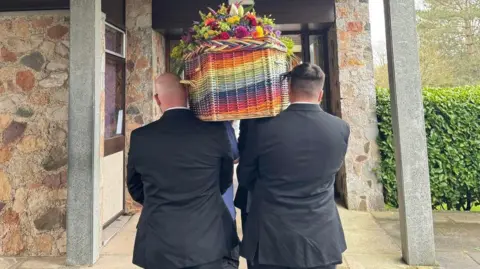
Cullen's willingness to speak publicly about his painful experience has value beyond his own healing journey. By sharing how an unattended cremation affected him emotionally, he's contributing to broader cultural conversations about death, grief, and the importance of ritual in processing loss. His testimony may help other families recognize that their emotional responses to minimal funeral arrangements are valid and understandable, and that seeking additional grief support is not only acceptable but advisable.
The experience also highlights the need for improved resources and guidance for families facing end-of-life decisions under financial pressure. Funeral directors, healthcare providers, and grief support organizations could better serve families by explicitly discussing the emotional implications of different funeral options, while also providing information about affordable ways to create meaningful ceremonies. This would honor both financial realities and emotional needs without forcing families to choose between them.
Looking forward, Cullen's story encourages reflection on how society can better support grieving families across all economic circumstances. Whether through policy changes that address funeral affordability, expanded access to bereavement counseling, or cultural shifts that recognize and validate diverse approaches to marking death, there is clear need for progress. The goal should be ensuring that financial limitations never prevent people from receiving the emotional support and ceremonial recognition their grief deserves during the profoundly difficult period following a loved one's death.
Source: BBC News


