
Hungary's Triumph: Restoring Democracy After Orbán's Reign

An expert analysis on how Hungarians demanded a restored democracy, ejecting the Trumpian hero Viktor Orbán. Europe must now support this unprecedented transition.
With the ejection of Trumpian hero Viktor Orbán, Hungarians have demanded a restored democracy. Now, Europe must support them in this unprecedented transition. To be in Budapest last Sunday evening was to witness history unfolding on the Danube once again.
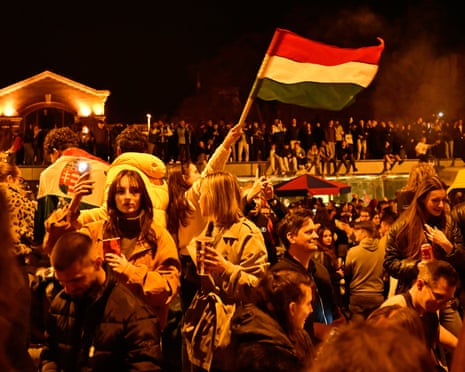
As rapturous crowds gathered on the riverbank opposite the brightly illuminated parliament building, chanting "Ria-ria Hungaria!" and "Hungary-Europe!", it became clear that the implications of the dramatic election victory for the Tisza party of Péter Magyar go far beyond this one central European country.
The result is very good news for Ukraine and the European Union. It's correspondingly bad news for the Russian president, Vladimir Putin, and the US president, Donald Trump, those twin backers of Viktor Orbán's regime. The critical question now is whether Hungary can be the first country in the world to emerge from such a far-reaching populist erosion of democracy – the "Orbánisation" Trump is trying to emulate in the US – and whether Europe has the political will and imagination to enable it to succeed.
Already on Friday evening, standing amid a huge crowd of young people at a "system-changer" concert on Heroes' Square, the energy for change was palpable. In the very square where, back in 1989, I watched a fiery young student leader named Viktor Orbán call for the end of the weary old communist regime and for the Russians to go home, the tide has now turned against the populist autocrat Orbán himself.
This transition represents an unprecedented opportunity for Hungary and Europe. The ejection of Orbán's Trumpian regime opens the door for a restored democracy, strengthened rule of law, and a renewed commitment to European values. But the path ahead is not without its challenges.

Péter Magyar and his Tisza party have a formidable task ahead of them, not only in undoing the damage of Orbán's 16-year rule but in rebuilding trust and unity within a deeply polarized society. They must address the legacy of corruption, cronyism, and the erosion of democratic institutions that characterized the Orbán era.
Moreover, the Tisza party's victory was not a landslide – they won just 52% of the vote, a slim majority that underscores the enduring support for Orbán's brand of populism among a significant portion of the Hungarian electorate. Navigating this political landscape and healing the country's divisions will require adept leadership and a steadfast commitment to democratic principles.
Yet, the energy and enthusiasm of the crowds celebrating in Budapest suggest a genuine desire for change and a rejection of the authoritarian drift that has characterized Hungary in recent years. Europe must now step up to support this democratic transition, providing political, economic, and diplomatic backing to ensure its success.
The stakes are high, not just for Hungary but for the entire European project. A successful restoration of democracy in Hungary could serve as a beacon of hope for other countries struggling with the rise of populism and the erosion of democratic norms. Failure, on the other hand, could embolden autocrats and undermine the EU's ability to defend its core values.
As the dust settles on this historic election, the path forward for Hungary and Europe is clear, but far from easy. The road to a fully restored democracy will be long and arduous, but the joyful crowds on the Danube suggest that the Hungarian people are ready to embrace this challenge. Europe must now rise to the occasion and ensure that this unprecedented transition succeeds.
Source: The Guardian


