
India's Viral Political Movement: The Cockroach Phenomenon

Discover how a political insult transformed into India's most unusual movement, with citizens proudly embracing cockroach costumes and symbolism.
India's political landscape has witnessed many surprising developments over the years, but few have captured public imagination quite like the cockroach political movement that recently swept across the nation. What began as a simple insult has blossomed into an unconventional and surprisingly widespread political phenomenon, with thousands of citizens donning cockroach costumes and embracing the symbolism with remarkable enthusiasm and pride.
The origins of this peculiar movement trace back to a controversial political statement that was intended as a derogatory remark. Rather than backing down or ignoring the insult, supporters of the targeted political figure chose to reappropriate the term in a clever display of political defiance and humor. This strategy of turning negative language into a badge of honor has proven remarkably effective in galvanizing support and creating a unique identity for the movement that sets it apart from traditional Indian political campaigns.
What makes this phenomenon particularly fascinating is how it has transcended typical political discourse in India. The movement has leveraged social media platforms, street protests, and cultural events to spread its message, with participants treating the cockroach imagery not as something shameful, but as a symbol of resilience, persistence, and the ability to thrive in difficult circumstances. This reframing has resonated deeply with many Indians who view the cockroach as a creature that survives against all odds.
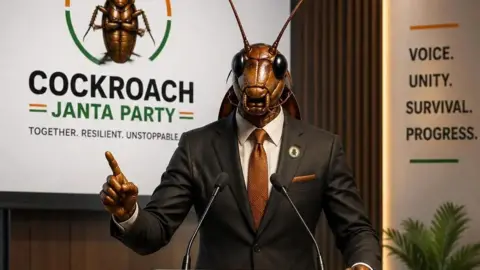
The visual representation of this movement has become iconic, with supporters wearing elaborate costumes featuring antennae, segmented bodies, and intricate designs that showcase both humor and artistry. These costumes have appeared at rallies, public gatherings, and cultural festivals across multiple Indian cities, creating striking and memorable images that have gone viral on social media platforms. The cockroach costume trend has even inspired local artisans and costume makers to create increasingly creative and elaborate versions, turning the movement into a creative outlet for political expression.
Political analysts have noted that this movement represents a significant shift in how Indian citizens engage with politics. Rather than responding to insults with anger or silence, this group has employed satire, humor, and creative symbolism to challenge traditional political narratives. The approach demonstrates a sophisticated understanding of modern political communication, where viral moments and memorable imagery can often prove more effective than traditional campaign messages.
The movement has attracted supporters from various demographic groups, including students, young professionals, farmers, and urban residents. This broad appeal suggests that the underlying political message resonates across traditional boundaries of class, geography, and age. The political messaging behind the cockroach symbolism speaks to themes of survival, adaptability, and the strength found in numbers—all concepts that hold universal appeal in Indian society.
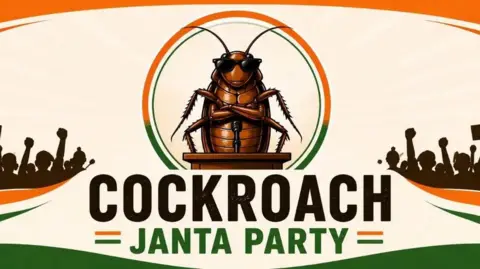
Social media has played a crucial role in amplifying this movement, with hashtags related to the cockroach campaign trending consistently across Twitter, Instagram, and Facebook. Videos of costumed supporters dancing, marching, and making speeches have accumulated millions of views, creating a viral phenomenon that has captured international attention as well. The movement's online presence has been particularly effective in reaching younger voters who are increasingly engaging with politics through digital platforms rather than traditional media.
The movement has also inspired merchandise and cultural products, from printed t-shirts to satirical artwork, extending the reach of the political symbolism far beyond the initial rallies and gatherings. This commercialization of the movement, while potentially controversial to some, has actually increased its visibility and accessibility to ordinary citizens who want to express their political affiliation in subtle ways. The ability to participate in the movement through various levels of engagement—from simply wearing a shirt to attending major rallies—has contributed to its broad appeal and sustained momentum.
Political opponents have struggled to respond effectively to this unconventional movement. Traditional criticisms and counter-arguments seem to bounce off the deliberately humorous and self-aware nature of the cockroach campaign. This has given the movement a significant advantage in the arena of political discourse in India, as it has essentially made itself critique-proof through its embrace of absurdity and satire. Many observers note that this represents a maturation of Indian political culture, where citizens can engage in serious political debate while maintaining a sense of humor and creative expression.

The movement has also raised important questions about political symbolism and how societies reappropriate language and imagery. What was meant as an insult has been transformed through collective action into a symbol of defiance and community identity. This process mirrors historical examples of social movements that have successfully reclaimed derogatory terms and transformed them into sources of pride and solidarity, suggesting that the cockroach movement is participating in a broader pattern of political and cultural transformation.
Cultural commentators have praised the movement for its creativity and its success in engaging citizens in the political process. By making politics fun, accessible, and visually interesting, the cockroach political campaign has managed to attract participation from people who might otherwise feel disconnected from traditional political activities. This has implications for voter engagement and political participation rates in future elections, potentially indicating a shift toward more creative and culturally integrated forms of political expression in India.
The movement's sustainability remains to be seen, but its impact on Indian political culture has already been substantial. It has demonstrated that political engagement doesn't always require serious, formal rhetoric, and that humor, creativity, and community participation can be just as powerful as traditional campaign strategies. As India continues to evolve politically and culturally, movements like this one will likely influence how politicians, activists, and ordinary citizens think about political communication and civic engagement.
The cockroach political superstar phenomenon serves as a reminder that politics in the 21st century is becoming increasingly dynamic, unpredictable, and intertwined with popular culture and social media trends. What began as an insult has evolved into a testament to the creativity and resilience of India's citizens, who have found innovative ways to express their political views while maintaining their sense of humor and community spirit. This movement will likely be studied by political scientists and cultural analysts for years to come as an example of how modern societies engage with political discourse in the digital age.
Source: BBC News


