
Interest Rates Likely on Hold Amid Iran Conflict Uncertainty

Central banks face difficult decisions as geopolitical tensions over Iran complicate economic forecasts. Analysts struggle to predict rate changes amid global uncertainty.
The global financial landscape faces significant headwinds as interest rates are expected to remain steady in the coming months, with major central banks adopting a cautious stance amid escalating tensions in the Middle East. The ongoing Iran war has introduced considerable uncertainty into economic forecasting models, making it increasingly difficult for policymakers to chart a clear course for monetary policy. As markets grapple with geopolitical risks and their potential economic ramifications, central bank officials are taking a measured approach to rate decisions, preferring to maintain the status quo until clearer economic signals emerge.
Analysts across the financial sector are finding it remarkably challenging to quantify the precise economic impact of Middle Eastern geopolitical tensions on inflation, employment, and growth trajectories. The Iran conflict introduces variables that traditional economic models struggle to incorporate, creating substantial uncertainty in economic forecasts that typically guide monetary policy decisions. Energy market volatility, supply chain disruptions, and shifts in investor sentiment represent just some of the complex factors that policymakers must consider when evaluating whether to adjust base rates. This unprecedented level of uncertainty has prompted central banks worldwide to adopt a more conservative posture, prioritizing stability over aggressive policy adjustments.
The Federal Reserve, European Central Bank, and Bank of England have all signaled their intention to hold rates steady in the near term, citing the need to monitor developments in the Middle East before making any significant policy moves. Officials have emphasized that the relationship between geopolitical instability and economic outcomes remains unpredictable, requiring more time and data before confidence in rate forecasts can be established. Each institution has noted that premature rate adjustments could prove destabilizing if the situation escalates or de-escalates unexpectedly, potentially exacerbating economic volatility rather than smoothing it.

Financial markets have responded to this uncertainty with increased volatility in both equity and bond markets, as investors struggle to price in geopolitical risk premiums. Central bank policy decisions now hinge not only on traditional economic indicators like inflation and unemployment but also on assessments of how regional conflicts might disrupt global trade and energy supplies. Oil prices, which are particularly sensitive to Middle Eastern developments, have become a crucial barometer for central banks evaluating the potential spillover effects on broader economic activity. The correlation between crude oil movements and policy decisions has strengthened considerably, with every barrel price fluctuation potentially influencing future rate trajectories.
Economists emphasize that the timing of any future rate adjustments will depend heavily on how the Iran situation unfolds and whether markets stabilize following initial shock reactions. Should tensions escalate further, expectations for lower rates could intensify as investors seek refuge in safer assets and economic growth prospects dim. Conversely, if diplomatic solutions emerge and tensions ease, central banks might feel more comfortable resuming their previous policy trajectories with greater confidence. This scenario-dependent approach to monetary policy represents a departure from the data-dependent frameworks that typically govern central bank decision-making, highlighting the outsized influence of geopolitical factors in the current environment.
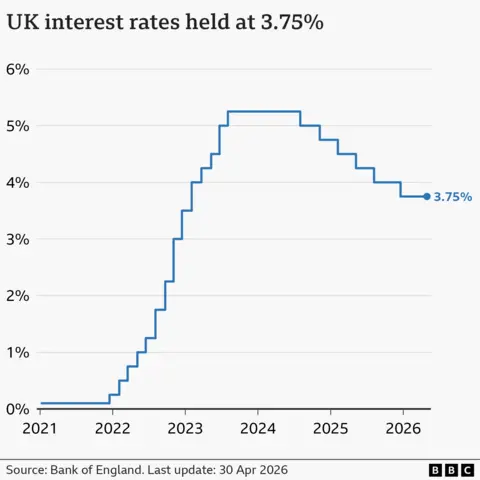
The energy sector remains the primary transmission mechanism through which Middle Eastern instability reaches the broader economy, and central banks are closely monitoring petroleum markets for signs of supply disruption. A significant oil price spike could reignite inflation concerns that have been gradually subsiding in recent months, potentially forcing central banks to reconsider their rate-holding stance. Energy costs constitute a meaningful portion of consumer and producer price indices, meaning that sustained elevations in oil prices could translate into higher inflation readings that challenge the inflation-control mandates of monetary authorities. This dynamic creates a delicate balancing act for policymakers who must weigh the risks of tightening policy against the dangers of allowing inflation to re-accelerate.
Forward guidance from central banks has become notably more cautious and conditional than in previous years, with officials explicitly tying future decisions to the resolution of geopolitical uncertainties. Rather than providing clear policy paths that markets can rely upon, central banks are adopting language that preserves maximum flexibility to adjust course as new information emerges. This approach protects policymakers from committing to actions that might become inappropriate if circumstances change dramatically, but it also reduces market predictability and potentially increases financial volatility. Investors are grappling with this ambiguity by demanding higher risk premiums on investments, which could affect borrowing costs for businesses and consumers in the broader economy.

Commercial banks and financial institutions are also adopting holding patterns with respect to their own lending decisions, as the uncertainty surrounding interest rate expectations filters down to corporate and consumer lending practices. Banks typically adjust their prime lending rates in anticipation of central bank moves, but with those moves now highly uncertain, lending standards have tightened and some loan products have become less readily available. This credit tightening, though modest so far, could begin to constrain economic growth if it becomes more pronounced or widespread. The potential for financial conditions to tighten involuntarily through banking sector reactions to geopolitical uncertainty represents another channel through which Middle Eastern tensions could impact the broader economy.
Inflation data in the coming months will be critical in helping central banks navigate this uncertain environment and potentially provide clarity about when policy normalization might resume. Should inflation readings remain benign despite geopolitical turmoil, this would provide central banks with more confidence to maintain their patient stance toward rate adjustments. If inflation begins climbing due to energy price pressures or supply chain disruptions, however, policymakers may feel compelled to act despite the geopolitical uncertainties that currently argue for caution. The next few quarterly economic reports will therefore prove decisive in shaping the trajectory of monetary policy decisions throughout the remainder of the year and into the next.

Global markets will continue to scrutinize every statement from central bank officials for hints about the potential timing of future rate movements, with geopolitical risk assessments playing an increasingly prominent role in market interpretation. The current environment represents a test of central banks' ability to maintain credibility and effectiveness when traditional economic relationships become distorted by external geopolitical shocks. As policymakers navigate these treacherous waters, their decisions will have profound implications for savers, borrowers, investors, and workers throughout the global economy. The coming weeks and months will reveal whether central banks' cautious patience proves to be the right strategy or whether they should have been more proactive in responding to emerging economic challenges.
Source: BBC News


