
Iran's 'Disposable' Operatives: A Growing Threat

New York court case exposes Iran's alarming recruitment tactics using technology to hire agents, revealing a shadowy threat to Western security.
A significant court case unfolding in New York has inadvertently exposed the intricate mechanisms behind Iran's recruitment operations, illuminating a troubling pattern of how the Iranian regime leverages modern technology to enlist operatives who may harbor little allegiance to state ideology. This revelation has sent shockwaves through Western intelligence agencies, prompting urgent reassessment of national security protocols across multiple continents.
When a 32-year-old Iraqi national was presented before a Manhattan federal court on Friday, charged with meticulously planning attacks against Jewish community sites across the United States, law enforcement officials and security experts witnessed a rare window into the operational methodology of one of the world's most sophisticated state-sponsored terrorism networks. The case has provided unprecedented insight into techniques that, until now, remained largely shrouded in classified intelligence reports and closed-door security briefings.
The arrest of Mohammed Saad Baqer al-Saadi in Turkey the previous week marked a pivotal moment in understanding Tehran's evolving approach to covert operations. Unlike traditional recruitment models that emphasized ideological commitment or blood relations to regime loyalists, Iran's contemporary strategy appears far more pragmatic and disturbingly efficient. The terrorist recruitment tactics revealed through this case suggest a calculated shift toward disposable operatives—individuals who can be activated, deployed, and discarded with minimal organizational risk or liability.
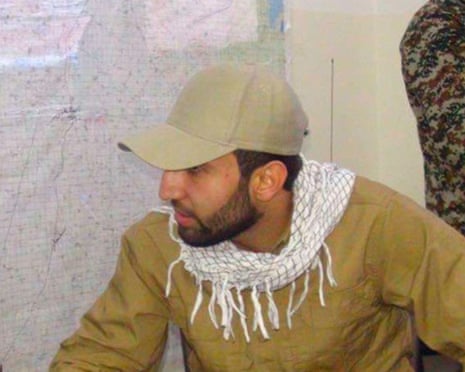
This emerging operational framework has prompted Western intelligence analysts to reassess the broader threat landscape. The utilization of technology as a primary recruitment and coordination tool fundamentally transforms the nature of the threat, making detection and prevention exponentially more challenging. Rather than relying on established networks of regime loyalists or ideologically motivated extremists, Iran's terror networks have apparently begun exploiting digital platforms to identify, vet, and activate individuals based purely on capability and willingness to execute specific operations.
The case details suggest that potential operatives need not possess deep ideological commitment to the Islamic Revolutionary Guard Corps or even express public support for Iranian foreign policy objectives. Instead, financial incentives, personal grievances, or simple criminal opportunism appear sufficient to motivate participation. This represents a fundamental departure from historical patterns of state-sponsored terrorism, where organizational coherence and ideological unity traditionally formed the foundation of operational security and personnel reliability.
Intelligence officials monitoring the situation have expressed particular concern about the technology-enabled recruitment methods at the heart of this operational shift. By utilizing encrypted messaging applications, cryptocurrency transactions, and sophisticated social engineering techniques, Iranian handlers can now reach potential operatives across global networks without requiring traditional face-to-face vetting or years of ideological indoctrination. This democratization of terrorism—making it accessible to individuals who might previously have been considered unsuitable—represents an alarming evolution in asymmetric warfare tactics.
The implications extend far beyond isolated criminal cases or individual prosecutions. Security experts warn that this operational model creates a hydra-like threat environment where Western countries face exponentially greater numbers of potential attackers, each with minimal organizational ties that could be traced backward to Iranian leadership. The disposable nature of these operatives means that even successful apprehension or elimination provides minimal intelligence value and does not meaningfully degrade operational capacity.
For European and British security agencies, the threat poses particularly acute challenges. These regions have substantial Jewish populations, established Islamic community networks, and porous borders that facilitate both operational planning and potential escape routes. The case against al-Saadi, who allegedly conducted extensive surveillance and developed detailed attack plans, demonstrates that Iranian handlers are not merely engaging in abstract planning but actively directing operatives toward concrete, implementable targets of significant symbolic and strategic importance.
The coordination mechanisms revealed through the prosecution suggest a hierarchy of Iranian orchestration coupled with operational autonomy for field operatives. Handlers in Iran or proxy locations apparently provide strategic direction, financial support, and target prioritization, while allowing on-the-ground operatives significant latitude in tactical implementation. This distributed decision-making model simultaneously enhances operational resilience while creating plausible deniability for official Iranian state structures.
Law enforcement agencies across the Western world are now grappling with the question of how to effectively counter this emerging threat paradigm. Traditional counterterrorism approaches emphasizing network disruption and organizational dismantlement prove less effective when adversaries utilize disposable operatives and minimal organizational structures. The emphasis must necessarily shift toward early identification of recruitment attempts, monitoring of financial transaction patterns, and identification of digital communication signatures associated with Iranian handlers.
The case simultaneously highlights the challenges inherent in international law enforcement cooperation. Al-Saadi's apprehension in Turkey underscores the critical importance of allied intelligence sharing and coordinated security operations across borders. Yet it also reveals the limitations of current frameworks, as numerous potential operatives may be in advanced stages of planning in jurisdictions where detection and interdiction mechanisms remain underdeveloped or where political considerations complicate direct law enforcement action.
For the broader Western security community, the immediate response must involve enhanced vigilance regarding recruitment patterns, financial flows supporting operational planning, and digital signatures associated with Iranian command and control elements. Simultaneously, longer-term strategic responses should address the root causes making individuals susceptible to recruitment—socioeconomic marginalization, social alienation, and grievances that can be exploited by sophisticated adversarial recruitment operations.
The case of Mohammed Saad Baqer al-Saadi ultimately serves as a stark reminder that state-sponsored terrorism continues evolving in response to detection capabilities and countermeasures deployed by Western security agencies. What began as traditional networks of committed ideologues has transformed into a distributed marketplace of tactical operatives, each potentially representing an autonomous threat vector requiring individual monitoring and interdiction. As this troubling evolution continues, Western countries face an increasingly complex security environment demanding sophisticated technological capabilities, enhanced international cooperation, and sustained commitment to homeland defense measures.
Source: The Guardian


