
Japan Overturns Post-WWII Arms Export Ban

Japan dramatically shifts defense policy, loosening strict arms export restrictions for first time since WWII. New rules could enable weapons sales to over a dozen nations.
Japan has made a historic departure from its long-standing commitment to pacifism by significantly loosening its arms export restrictions, marking the most substantial shift in defense policy since the end of World War II. This pivotal decision represents a fundamental recalibration of Japan's approach to international defense partnerships and military commerce, opening pathways for the nation to engage in weapons sales with more than a dozen countries around the globe.
For decades, Japan had maintained one of the world's most stringent defense export policies, rooted in the pacifist principles enshrined in its post-war constitution. The nation's historical commitment to limiting military exports stemmed from the devastation of the Pacific War and the subsequent occupation period, during which international agreements established strict parameters around Japanese military activities. This self-imposed constraint had become a defining characteristic of Japan's foreign policy, reflecting both national sentiment and constitutional interpretation.
The newly revised framework fundamentally alters this approach by removing many of the bureaucratic barriers and categorical prohibitions that previously prevented Japanese defense manufacturers from exporting military equipment and technology. Under the updated guidelines, Japan can now pursue international defense partnerships and commercial arrangements that were previously considered off-limits, provided these arrangements meet certain criteria regarding destination countries and intended use.

This strategic recalibration reflects Japan's evolving security concerns in an increasingly volatile Asia-Pacific region. The nation faces mounting geopolitical tensions, particularly regarding territorial disputes and the rising military capabilities of neighboring powers. By loosening its arms export controls, Japan positions itself to become a more significant player in regional security dynamics while strengthening alliances with like-minded democracies and defense-conscious nations seeking advanced military technology.
The decision to relax these restrictions comes amid broader transformations in Japan's defense posture. The government has been gradually reinterpreting the nation's pacifist constitution to permit increased military spending and expanded defense capabilities. This arms export policy revision represents another step in this multi-year process of rebalancing Japan's security commitments and international responsibilities, moving away from the purely defensive military doctrine that had characterized the post-war era.
Multiple countries have reportedly expressed interest in acquiring Japanese defense technology and weaponry, particularly advanced systems and equipment where Japan has achieved technological leadership. Nations across the Indo-Pacific region, as well as allies in Europe and North America, view Japanese military exports as potentially valuable alternatives to more traditional suppliers, offering cutting-edge capabilities with the added benefit of being supplied by a trusted, technologically advanced democracy.
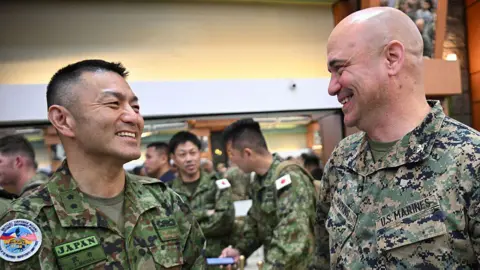
The relaxed military export regulations are expected to apply to equipment and systems in various categories, including advanced electronics, surveillance technology, maritime defense systems, and potentially unmanned platforms. Japanese manufacturers have developed considerable expertise in these fields, and the new policy allows them to compete internationally in markets from which they were previously excluded due to the nation's self-imposed restrictions.
However, this policy shift has generated considerable debate both domestically and internationally. Pacifist groups and opposition parties in Japan have criticized the decision, arguing that it represents a betrayal of constitutional principles and the spirit of post-war reconciliation that has defined Japan's role in the international community. These critics contend that expanding military exports contradicts the nation's historical commitment to peaceful resolution of conflicts and raises concerns about contributing to regional militarization and arms races.
The government has sought to address these concerns by implementing safeguards and criteria for arms exports. The revised policy includes provisions designed to prevent weapons from being sold to countries engaged in armed conflict, those with poor human rights records, or those likely to use Japanese weapons in destabilizing ways. These guardrails are intended to ensure that exports serve legitimate defensive purposes and align with Japan's broader commitments to international peace and stability.
The timing of this policy revision is significant given contemporary regional security dynamics. Japan has increasingly emphasized the importance of strengthening security partnerships with allied nations and has sought to enhance its role in regional stability efforts. The ability to export defense equipment and technology directly supports these strategic objectives by enabling deeper cooperation with partners and creating mutual interests in advanced capabilities and technological innovation.
International observers have noted that this shift could have substantial implications for regional defense markets and geopolitical alignments. Japan's reputation as a technologically advanced, stable, and trustworthy supplier could make it an attractive alternative in the marketplace for defense exports. The policy change also signals Japan's determination to play a more active role in regional security affairs, moving beyond the more circumscribed role it adopted during the Cold War and immediate post-Cold War periods.
The implementation of these new rules will involve establishing mechanisms for evaluating export applications, monitoring end-use compliance, and maintaining transparency with international partners regarding the types and quantities of equipment being exported. Japanese defense authorities are developing administrative frameworks to manage this new responsibility and ensure that exports are conducted in accordance with both domestic regulations and international treaties to which Japan is a signatory.
This transformation in Japan's defense export policy underscores the nation's broader evolution in its approach to national security and international engagement. While maintaining its fundamental commitment to peaceful coexistence and democratic values, Japan is adjusting its strategic posture to address contemporary security challenges and regional uncertainty. The loosened arms export restrictions represent both a practical response to current geopolitical realities and a symbolic acknowledgment that post-war constraints on Japanese defense activities may no longer fully reflect the nation's role and responsibilities in an increasingly complex international security environment.
Source: BBC News


