
Kenya's AI Health System Fails the Poor

Investigation reveals Kenya's AI-driven healthcare reform algorithm systematically increases costs for poorest citizens, contradicting President Ruto's promises.
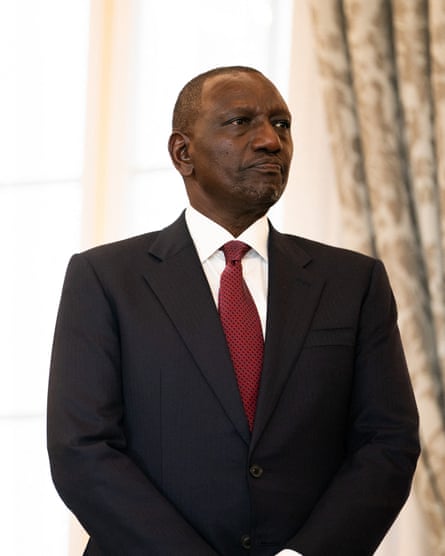
President William Ruto made sweeping promises during a period of significant civil unrest in Kenya, pledging that his administration would guarantee universal healthcare access for all citizens. However, an exclusive investigation has uncovered a troubling reality: the artificial intelligence system designed to determine affordability for healthcare services has systematically increased costs for the nation's most vulnerable populations, while simultaneously favoring wealthier Kenyans who can more easily absorb increased expenses.
The AI healthcare algorithm at the center of Kenya's ambitious health system overhaul was implemented as part of a comprehensive digital transformation initiative. Rather than creating equitable access, the system has demonstrated persistent bias against low-income Kenyans, raising serious questions about how the technology assesses financial capacity and determines pricing structures. This algorithmic discrimination represents a fundamental failure of the technology to deliver on the government's stated objectives of universal healthcare coverage.
Launched in October 2024, Kenya's new healthcare system was explicitly designed to modernize and replace the country's aging national insurance framework that had remained largely unchanged for decades. The government positioned this reform as a landmark achievement that would revolutionize healthcare delivery across the country and ensure that even the poorest Kenyans could access essential medical services without facing financial catastrophe.
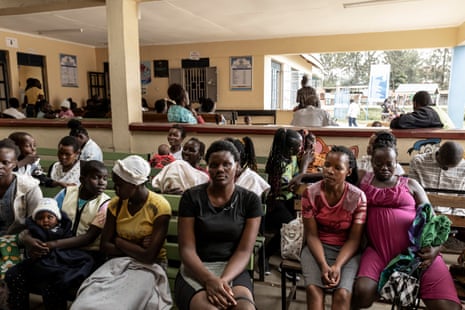
The investigation reveals that the AI-driven health reform contains fundamental flaws in how it evaluates household income, employment status, and overall financial capacity. The algorithm appears to consistently underestimate the financial circumstances of poor households while overestimating those of wealthier citizens, creating a perverse incentive structure where costs escalate precisely for those least able to pay. This systematic bias suggests either inadequate algorithm design or insufficient testing before national rollout.
Healthcare costs for vulnerable populations have surged since the system's implementation, with reports indicating that poor Kenyans are now paying significantly more for basic medical services than they did under the previous national insurance system. The financial burden has forced some families to forego necessary medical treatment entirely, creating a public health crisis that directly contradicts President Ruto's electoral mandate to improve health access. The situation highlights how technological solutions can perpetuate existing social inequalities when not carefully designed with equity considerations.
The healthcare algorithm bias problem extends beyond simple pricing mechanisms. The system's categorization of patients appears to rely on data points that are not meaningful predictors of actual financial hardship in Kenya's context. Many poor Kenyans work in informal sectors with irregular income patterns that the algorithm struggles to properly assess, leading to misclassification and inappropriate cost assignments. This technical limitation reveals a dangerous gap between how AI systems are designed in controlled environments and how they function in real-world contexts with complex socioeconomic realities.
Experts in digital equity and algorithmic fairness point out that Kenya's experience serves as a cautionary tale for other developing nations considering AI-driven healthcare reforms. Without rigorous testing for bias, particularly against historically marginalized populations, these systems can inadvertently entrench existing inequalities while appearing neutral and objective. The perception of AI as inherently fair and unbiased can actually mask underlying problems that manifest only when systems are deployed at scale across diverse populations.
The healthcare system's flaws have sparked significant criticism from civil society organizations, healthcare advocates, and opposition politicians who argue that the government rushed implementation without adequate safeguards. Multiple investigations by independent researchers have documented cases where identical financial circumstances produced vastly different affordability assessments depending on other variables the algorithm weighted, suggesting inconsistency and potential discrimination embedded in the machine learning model.
Government officials have responded to the investigation by acknowledging that adjustments may be necessary, but have defended the overall approach as a necessary modernization of Kenya's healthcare infrastructure. They argue that healthcare technology transformation inevitably involves transition periods with imperfections, and that the system will improve as more data is collected and the algorithm is refined. However, critics contend that this response is inadequate given the immediate harm being experienced by vulnerable populations who cannot afford to wait for gradual improvements.

The broader context of Kenya's healthcare challenges cannot be ignored when evaluating this system's failures. The country has long struggled with limited healthcare resources, geographic disparities in service access, and insufficient funding for public health infrastructure. Many observers hoped that AI healthcare solutions could help optimize limited resources and improve efficiency, but instead the technology has created new barriers for the poorest citizens.
Technical experts have suggested that the algorithm could be corrected through retraining with better-designed datasets that more accurately reflect the socioeconomic realities of Kenya's poor populations. However, this would require significant additional investment and time, delaying relief for those currently harmed by the system. The situation raises uncomfortable questions about whether governments should deploy complex AI systems before fully understanding their equity implications.
Patient advocacy groups have documented heartbreaking cases of Kenyans who have delayed or avoided necessary medical treatment because the system's algorithms determined they could afford higher costs than they actually could. Some individuals have exhausted savings to pay inflated fees, while others have turned to less formal healthcare options that may offer lower quality care but prove more financially manageable. These personal stories illustrate the real human cost of algorithmic failures.

Looking forward, Kenya's experience offers important lessons for other countries implementing healthcare digital transformation initiatives. Experts recommend that governments commit to transparent algorithmic audits before deployment, engage with affected communities to understand local contexts, and build in safeguards that prevent any individual or group from being systematically disadvantaged. The stakes are too high in healthcare for trial-and-error approaches to technology implementation.
President Ruto's original promise of expanded healthcare access remains unfulfilled for Kenya's poorest citizens, who now face higher costs and greater barriers to care than before the system was implemented. Whether the government can effectively remediate the algorithmic problems and deliver on its electoral commitments remains an open question. The investigation serves as a crucial accountability mechanism, forcing public examination of how technology is being deployed in critical social services.
Source: The Guardian


