
King Charles Stays Silent as Civil Servants Face Parliamentary Heat

Senior civil servants struggle under questioning over Peter Mandelson's US ambassador appointment. Discover what happened in parliament this week.
The machinations of British politics took center stage this week as civil servants found themselves thrust into the uncomfortable spotlight of parliamentary scrutiny. While King Charles and Queen Camilla adhered strictly to parliamentary requirements, observing proceedings with diplomatic restraint, the real drama unfolded as senior government officials were compelled to defend controversial decisions before the foreign affairs select committee. The tension in the chamber was palpable as these normally behind-the-scenes figures grappled with intense questioning from elected representatives.
It remains a peculiar quirk of the British system that senior civil servants earn honors and titles—knighthoods and damehoods—seemingly for the simple act of performing their designated duties within government departments. Meanwhile, ordinary citizens receive little more than a congratulatory email from their supervisors when they excel at their work. Yet the recent parliamentary proceedings demonstrated precisely why these public servants are held in such high regard within governmental circles. Their expertise, institutional knowledge, and ability to navigate complex political landscapes became glaringly obvious when two top officials were reluctantly summoned to justify their roles in Keir Starmer's controversial appointment of Peter Mandelson as the United States ambassador.
The appointment itself had raised eyebrows across Westminster and beyond, prompting the foreign affairs select committee to demand answers from those involved in the decision-making process. As the two senior officials took their seats before the committee, their body language spoke volumes about their reluctance to engage with public scrutiny. These are people accustomed to wielding influence from behind closed doors, crafting policy and advising ministers in the relative privacy of government offices. The transition from this protected environment to the harsh glare of parliamentary questioning proved deeply uncomfortable for both witnesses.

What emerged from the testimony was a fascinating window into the inner workings of government decision-making. The officials were forced to articulate the reasoning behind the Mandelson appointment, explaining how such a significant diplomatic posting came to be offered to the veteran Labour politician. Their evident discomfort at being held to account for their professional decisions illuminated a broader tension within the civil service—the traditional expectation of confidentiality and discretion versus the modern demand for governmental transparency and accountability. Every answer was carefully chosen, every pause pregnant with the weight of bureaucratic caution.
The nature of the questions posed by committee members revealed deep concerns about the process followed in making such an important diplomatic appointment. Had proper procedures been observed? Was the selection process transparent and merit-based? These were not merely academic inquiries; they struck at the heart of how government appointments should function in a democratic society. The civil servants found themselves defending decisions that, while made within their purview, had nonetheless generated significant public and political controversy. The experience appeared to rattle them considerably, as they wrestled with the challenge of explaining executive choices in a forum designed to expose potential irregularities.

Throughout the proceedings, King Charles and Camilla maintained their customary composure, respecting the three-line whip that binds members to attend key parliamentary votes and proceedings. The King, in particular, demonstrated considerable restraint, refraining from any commentary on the unfolding drama despite presumably having opinions on matters of state. This restraint contrasts sharply with the actions of other world leaders who occasionally allow their personal feelings to influence their public statements and actions. The monarchy's institutional approach to governance, characterized by careful neutrality and procedural adherence, stood as a counterpoint to the heated exchanges occurring within the committee chamber.
The Mandelson appointment itself represented something of a significant diplomatic move, bringing one of New Labour's most prominent figures and strategists back into a position of international prominence. Mandelson, no stranger to controversy throughout his political career, had previously served in various governmental roles, including as European Trade Commissioner. His appointment to such a crucial ambassadorial position—particularly one involving relations with the United States—suggested that Starmer's government was prioritizing experienced hands in key diplomatic posts. Yet the decision to tap Mandelson for this role, without what some perceived as adequate consultation or transparent process, had triggered the parliamentary inquiry.
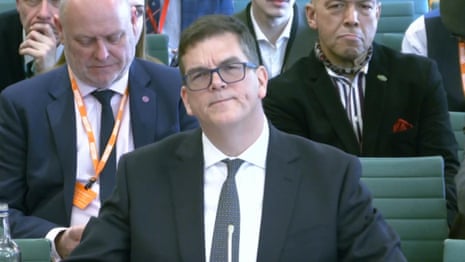
The broader implications of this week's parliamentary drama extend beyond the immediate question of one man's appointment. The incident highlighted fundamental questions about how governmental decisions should be made, announced, and justified in a mature democracy. It underscored the tension between executive authority and parliamentary oversight, between governmental efficiency and public accountability. The discomfort displayed by the civil servants suggested they understood the stakes: government legitimacy rests ultimately on public trust, and that trust requires transparency even when it makes those in power feel decidedly uncomfortable.
As the parliamentary session concluded, the officials departed having survived their ordeal, though not without visible relief at their release from scrutiny. Their reluctant appearance had nonetheless served an important function in the democratic process, forcing the government to defend its decisions in a public forum. Whether the inquiry will ultimately result in policy changes or simply serve as a cautionary tale about the importance of procedural transparency remains to be seen. What is certain is that the brief spotlight on these usually invisible servants of the state has reminded the public that even the most powerful departments and the most senior officials remain answerable to parliament and, ultimately, to the people they serve. The week's events stand as a testament to the ongoing relevance of parliamentary oversight, even if that oversight made some very important people deeply uncomfortable indeed.
Source: The Guardian


