
Lebanon Reports 39 Deaths in Israeli Military Strikes

Lebanon confirms 39 casualties from recent Israeli strikes amid ongoing tensions with Hezbollah. Ceasefire agreement from last month faces continued violations.
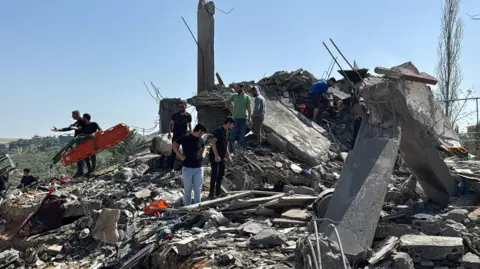
Lebanon's health and government officials have reported that recent Israeli military strikes have resulted in the deaths of at least 39 individuals, marking a significant escalation in hostilities between the two neighboring countries. The confirmed casualty figures represent a grave humanitarian concern as the region continues to experience cycles of violence despite diplomatic efforts to establish lasting peace. The reported deaths underscore the fragility of the current security situation and the challenges facing both nations in maintaining stability along their shared border.
The escalation comes despite a ceasefire agreement that was formally announced just one month prior, which was intended to bring an end to months of mounting tension and sporadic cross-border incidents. According to Lebanese officials, the strikes targeted various locations throughout the country, with some attacks affecting civilian areas and infrastructure. The continuation of military operations raises serious questions about the viability and enforcement mechanisms of the ceasefire agreement that both parties had previously committed to upholding.
Israel's military operations have been attributed to ongoing tensions with Hezbollah, the Iran-backed militant group that maintains significant presence and operational capabilities within Lebanese territory. Relations between the two entities have remained strained for decades, with periodic flare-ups in violence disrupting any semblance of regional peace. The group's military wing continues to pose security concerns for Israeli officials, who cite the need for preemptive operations to protect their citizens from potential attacks.
The ceasefire agreement, which was brokered with international mediation and support, was meant to represent a breakthrough in diplomatic relations and provide a pathway toward de-escalation. However, the apparent violations and continued military engagements suggest that underlying disputes remain unresolved and that both parties continue to view military action as a legitimate response to perceived threats. The agreement's inability to prevent renewed hostilities raises concerns among international observers about the prospects for long-term stability in the region.
Lebanese officials have expressed strong condemnation of the Israeli strikes, calling them violations of international law and humanitarian principles. The government has appealed to the international community to intervene and enforce the terms of the ceasefire agreement, emphasizing the humanitarian cost of continued warfare. Civil society organizations and humanitarian groups have also raised alarms about the impact on civilian populations and the urgent need for immediate action to prevent further escalation.
The ongoing conflict between Israel and Hezbollah has deep historical roots, stemming from decades of territorial disputes, ideological differences, and proxy warfare involving regional powers. Previous confrontations have resulted in significant casualties and displacement of populations, leaving scars on both Lebanese and Israeli communities. The current situation represents yet another chapter in a protracted struggle that has resisted multiple peace initiatives and diplomatic efforts.
International diplomatic efforts have focused on encouraging both parties to honor the ceasefire agreement and refrain from unilateral military actions that could trigger broader regional conflict. Several nations and international organizations have called for immediate dialogue and a renewed commitment to the peace process. However, the continued military operations suggest that diplomatic channels may be strained and that both Israel and Hezbollah remain committed to military strategies despite earlier commitments to peaceful resolution.
The casualty figures released by Lebanese authorities have not yet been independently verified by international monitoring organizations, though multiple Lebanese government sources have confirmed the reports. The death toll includes civilians as well as military personnel, though exact breakdowns have not been provided. The humanitarian impact extends beyond fatalities to include injuries, displacement, and destruction of civilian infrastructure and homes.
Regional observers and analysts suggest that the failure of the ceasefire agreement to take hold demonstrates the complexity of Middle Eastern peace processes and the difficulty of achieving lasting solutions when multiple stakeholder groups maintain conflicting interests and strategic objectives. The situation is further complicated by involvement of international powers with competing geopolitical interests in the region. Without meaningful intervention and enforcement of ceasefire terms, experts warn that further escalation remains a serious risk.
The Israeli military operations represent the latest in a series of tit-for-tat exchanges that have characterized recent months of Israel-Hezbollah tensions. Israeli officials have maintained that their military actions are defensive in nature and necessary responses to threats posed by the militant organization. The government has emphasized its commitment to protecting its citizens and maintaining security along the northern border with Lebanon.
Lebanese humanitarian organizations have reported that medical facilities and emergency services are overwhelmed with casualties, with limited resources available to treat the wounded. The healthcare system, already strained by years of conflict and economic crisis, faces additional pressure from the surge in demand for emergency medical care. International humanitarian organizations have called for urgent assistance and support for Lebanese health and relief services.
As the situation continues to develop, both nations face critical decisions about whether to pursue further military escalation or seek renewed diplomatic engagement. The reported 39 deaths represent a sobering reminder of the human cost of continued conflict and the urgent necessity for all parties to recommit to the principles outlined in the ceasefire agreement. The international community continues to monitor developments closely as regional stability hangs in the balance.
Source: BBC News


