
Lindsey Graham, Trump's Staunchest Iran War Supporter: Pushing for Escalation

Once a critic of Trump, Senator Lindsey Graham now backs the President's Iran policies, urging further escalation and invoking WWII battles to justify military action.
Lindsey Graham, the Republican senator from South Carolina, has undergone a remarkable transformation. Once a vocal critic of Donald Trump, he has now become the President's biggest advocate for war with Iran.
Graham, who once called Trump a "jackass" and a "bigot", has reconciled with the President and is now urging him to expand the ongoing conflict. To sceptics, Trump's war in Iran is a reckless gamble that could spiral out of control and bring disaster to the world. But to Graham, it is a dream come true.
The senator has spent decades agitating for a confrontation with the regime in Tehran, claiming that its overthrow would give the U.S. President his own "Berlin Wall moment". Now, he is pushing for further escalation, invoking the bloody battle of Iwo Jima from the Second World War as a justification for military action.
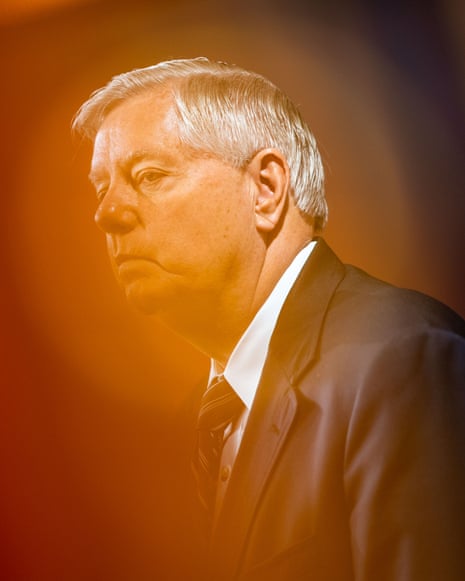
Graham's transformation from Trump critic to ardent supporter has puzzled many. But the senator's long-held hawkish views on Iran, combined with his newfound influence in the White House, have made him a driving force behind the administration's increasingly aggressive posture towards Tehran.
"Lindsey Graham is the most pro-war Republican out there," said one skeptic, who believes the senator's push for escalation could have disastrous consequences. "He's been itching for a fight with Iran for years, and now he's got Trump's ear."
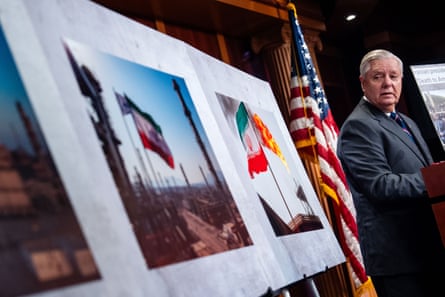
The escalating tensions between the U.S. and Iran have raised concerns about the potential for a broader conflict in the Middle East. Graham's calls for military action, combined with Trump's unpredictable nature, have only heightened those fears.
As the situation continues to evolve, the role of Lindsey Graham as Trump's most vocal cheerleader for war will be closely watched. His influence over the President's Iran policy could have far-reaching implications for the region and the world.
Source: The Guardian


