
Mars Orbiter Contract Stirs Senate Controversy

NASA's $700M Mars spacecraft contract sparks debate between two senators over competition fairness and Mars Sample Return mission revival potential.
NASA announced a highly anticipated Mars spacecraft contract solicitation last week, launching what industry observers predict will become an intensely competitive and potentially divisive procurement battle. The announcement has already attracted significant attention from Capitol Hill, with key stakeholders questioning whether the procurement will truly operate as a fair and open competition.
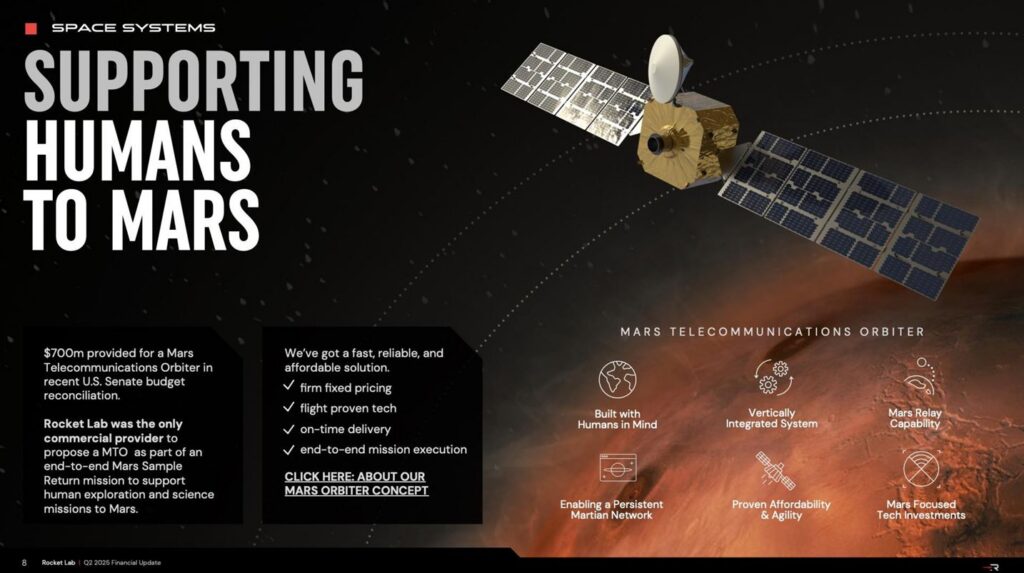
The contract centers on $700 million in congressional appropriations designated for designing, building, and launching a specialized Mars-orbiting spacecraft. Once operational in Martian orbit, this spacecraft will serve a critical function as a communications relay vehicle, facilitating data transmission between missions on the Martian surface and control centers here on Earth. This relay capability is essential infrastructure for any sustained human or robotic presence on Mars.
Beyond the immediate communications mission, however, the implications of this procurement extend considerably further. Industry analysts and space policy experts have suggested that the contract could pave the way for resurrecting the Mars Sample Return mission, an ambitious program that was recently canceled due to budget constraints and technical complexity. The Sample Return mission, which would have retrieved rock and soil samples collected by the Perseverance rover, has been a cornerstone of NASA's Mars exploration strategy for over a decade.

NASA's official procurement documentation states that the agency intends to conduct this acquisition as a "full and open competition." This language suggests that multiple contractors will be invited to submit proposals, with the selection based on technical merit, cost, and other established evaluation criteria. However, this assertion has drawn skepticism from multiple parties involved in the space industry and policy communities.
The core question being raised is straightforward but consequential: will this procurement truly remain open and competitive, or are there underlying circumstances that could bias the selection process? Several individuals with knowledge of the procurement process have begun raising concerns about potential favoritism or predetermined outcomes. These questions touch on fundamental issues of government procurement integrity and fair competition in the aerospace industry.
The controversy appears to involve at least two United States senators who have taken opposing positions on how the procurement should be conducted. While the full details of their disagreement remain somewhat opaque, it appears to center on questions about which contractors should be eligible to bid, whether existing mission requirements might inadvertently favor certain companies, and how the resurrection of the Sample Return mission should factor into the overall procurement strategy.

The Mars communications relay infrastructure has become increasingly important as NASA and international partners pursue more ambitious exploration objectives. A dedicated relay satellite in Mars orbit significantly enhances data transmission rates and reliability, enabling more scientifically productive missions to the surface. This infrastructure improvement has been on NASA's roadmap for several years and represents a critical investment in Mars exploration capabilities.
The timing of this solicitation is particularly significant given recent developments in NASA's Mars program. The cancellation of the Sample Return mission represented a major setback for Mars science, disappointing the international community and scientists who had invested years in the program's development. The prospect that this new communications spacecraft contract might somehow facilitate Sample Return's revival has energized advocates for the mission and drawn attention from congressional supporters.
Industry observers have noted that the spacecraft contract represents substantial financial stakes for major aerospace contractors. Companies including established prime contractors and potentially newer space firms may be positioning themselves to bid. The competition for major NASA spacecraft contracts typically involves intensive proposal efforts, with teams of engineers and managers dedicating months to developing competitive bids. A $700 million contract translates to significant revenue and, more importantly, to valuable experience and technology development opportunities.
The senatorial dispute adds an additional layer of complexity to an already intricate procurement process. Congressional involvement in NASA contracting decisions is not unusual—the space agency answers to Congress and must operate within appropriated budgets and legislated parameters. However, when senators take divergent positions on specific procurement matters, it can create political pressure that complicates NASA's ability to conduct neutral evaluations.
One fundamental tension in this case appears to involve the question of how to structure the procurement to achieve multiple objectives simultaneously. On one hand, NASA wants to acquire the most capable communications relay spacecraft possible within budget constraints. On the other hand, there may be congressional expectations that the procurement should be structured in ways that advance other policy objectives, such as supporting particular industrial capabilities or enabling the Sample Return mission restoration.
The procurement process transparency will be crucial in determining whether controversies can be avoided or minimized. NASA's Source Evaluation Board will need to evaluate proposals using clearly established criteria that can withstand scrutiny and potential legal challenge. Any appearance of bias or predetermined decisions could invite protests from unsuccessful bidders or criticism from Congress.

Looking ahead, the coming months will likely involve intensive activity from interested contractors preparing proposals, continued discussion among the senators involved, and possible additional scrutiny from Congress. NASA officials will need to navigate these complex stakeholder expectations while maintaining their commitment to selecting the best solution for the agency's Mars exploration objectives. The outcome of this procurement will have implications not only for Mars exploration capabilities but also for how NASA manages high-stakes spacecraft contracts in an era of increasing political attention to space programs.
The broader context includes growing international competition in space exploration and the importance of maintaining American leadership in Mars science and exploration. The communications relay spacecraft represents more than just a procurement decision—it symbolizes America's commitment to sustained Mars exploration and the technological capabilities required to maintain an active presence on the red planet for decades to come.
Source: Ars Technica


