
Microsoft Retires Copilot Mode: AI Now Built Into Edge

Microsoft discontinues dedicated Copilot Mode on Edge as AI features become standard across the browser. Learn what this means for users.
Microsoft is making a significant shift in how it integrates artificial intelligence into its Edge browser, announcing the retirement of the dedicated Copilot Mode feature. This move reflects a broader strategy where AI capabilities have become so deeply embedded into the browser's core functionality that a separate mode is no longer necessary. The decision marks a turning point in how major tech companies approach AI integration, moving away from siloed features toward seamless, omnipresent intelligence.
The discontinuation of Copilot Mode doesn't mean Microsoft is scaling back its AI ambitions for Edge. Rather, it represents the company's confidence that Copilot features are now available on Edge across all platforms, including mobile devices. By integrating these capabilities directly into the browser's fundamental operations, Microsoft ensures users have access to AI assistance without needing to activate a specific mode or toggle. This approach simplifies the user experience while maintaining the full power of the AI system that has become central to Microsoft's product ecosystem.
The timing of this announcement comes as Edge mobile browser integration continues to expand. Mobile users can now access the same AI-powered features that desktop users have enjoyed, including writing assistance, research support, and intelligent summarization tools. This cross-platform availability was likely a prerequisite for retiring the dedicated mode, as Microsoft needed to ensure feature parity across devices before making such a transition. The mobile expansion demonstrates Microsoft's commitment to making AI assistance universally available to Edge users regardless of their device of choice.
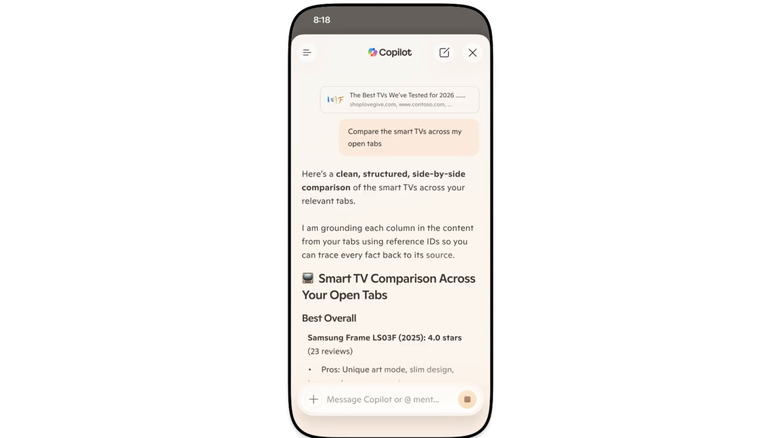
The original Copilot Mode served as a dedicated space where users could access concentrated AI functionality, essentially creating a separate interface optimized for interacting with the AI assistant. However, as the company has matured its AI integration strategy, the boundaries between regular browsing and AI assistance have become increasingly blurred. Users can now invoke AI features contextually while browsing, editing, or researching without needing to step outside their normal workflow. This represents a maturation in how AI integration in browsers should function, moving beyond novelty features toward practical utility.
The retirement of Copilot Mode also reflects Microsoft's broader philosophy about the future of computing. The company has positioned Copilot as a fundamental component of its technology stack, much like how search or navigation became essential browser features. By removing the need for a dedicated mode, Microsoft signals that AI assistance is now as basic and expected as spell-checking or autocomplete. This normalization of AI could have significant implications for how other technology companies approach artificial intelligence in their own products.
Understanding why Microsoft made this decision requires examining how user behavior has evolved with AI-powered tools. Early adopters and power users were often the ones who deliberately activated Copilot Mode to access enhanced AI functionality. However, as AI capabilities become more refined and more users gain comfort with these tools, dedicated activation modes become less necessary. The company's data likely showed that users wanted seamless AI integration rather than the friction of mode-switching. By eliminating the mode requirement, Microsoft removes barriers to adoption and usage.
The mobile expansion of Edge Copilot features represents another crucial element of this strategy. Smartphones and tablets have become primary computing devices for many users, and Microsoft recognized that limiting AI features to desktop browsers would create an incomplete experience. The development of mobile-optimized versions of Copilot features required careful consideration of screen size, battery life, and mobile user expectations. By successfully bringing these features to mobile platforms, Microsoft has demonstrated technical capability and market understanding that justified retiring the dedicated desktop mode.
This transition also has implications for how users discover and learn about AI features. With a dedicated Copilot Mode, users had a clear entry point to exploring AI capabilities. Now that features are distributed throughout the browser, Microsoft will need to invest in user education and discovery mechanisms to ensure people understand what's available to them. This could involve onboarding experiences, contextual tips, or redesigned interfaces that make AI features more discoverable without requiring users to actively seek them out.
The competitive landscape also influences Microsoft's decision. Other browser makers and technology companies are racing to integrate AI features into their products, and having a dedicated mode might have seemed antiquated compared to fully integrated approaches. By retiring Copilot Mode, Microsoft positions Edge as a forward-thinking browser that has evolved beyond the early stages of AI integration. This positioning could be important for marketing and user perception as the browser market becomes increasingly competitive around AI capabilities.
Looking ahead, the retirement of Copilot Mode likely signals how Microsoft plans to handle AI integration across its entire product portfolio. The company has been working to make Copilot available in Office applications, Windows, and numerous other products. If the Edge approach proves successful, we may see similar transitions in other Microsoft products where dedicated AI modes or features gradually disappear as AI becomes omnipresent. This would represent a fundamental shift in how people interact with Microsoft's ecosystem.
The broader technology industry should take note of this shift. As AI technology matures and becomes more reliable, users will increasingly expect seamless integration rather than novelty features. The decision to retire Copilot Mode demonstrates that even cutting-edge AI companies recognize when their own systems have matured beyond the point where separate modes add value. This kind of product evolution—from novel feature to fundamental capability—often signals that a technology has reached mainstream status and is ready for wider adoption.
Microsoft's move also reflects lessons learned from how users actually interact with technology. Many software features that seemed important in theory turn out to be rarely used in practice, or users find them confusing and prefer simpler approaches. The retirement of Copilot Mode suggests that Microsoft's telemetry data and user research indicated that dedicated mode switching wasn't enhancing the user experience as much as seamless integration would. This customer-centric approach to product evolution demonstrates a willingness to rethink initial design decisions based on real-world usage patterns.
The implications for Edge users are largely positive, though some power users might mourn the loss of a concentrated AI workspace. Most casual and professional users will likely appreciate the simplification and increased accessibility of AI features. The fact that AI features remain available across the browser, just without requiring mode activation, means users lose nothing in functionality while gaining a smoother experience. This kind of transparent, invisible AI integration may represent the ideal balance between capability and usability that the industry is working toward.
As Microsoft continues its AI journey with Edge and its broader product ecosystem, the retirement of Copilot Mode stands as a notable milestone. It marks the moment when a company decided that its AI integration had matured enough to stop treating it as a special feature requiring user activation. Instead, AI assistance has become woven into the fabric of how the browser operates, accessible to anyone without special knowledge or deliberate configuration. This transition embodies the industry's broader movement toward making artificial intelligence a seamless, expected part of modern computing experiences rather than an optional enhancement for early adopters.
Source: Engadget


