
MPs Slam Government's 'Clumsy' Maccabi Fan Ban Response

Parliamentary committee criticizes government's late decision to overturn West Midlands police ban on Maccabi Tel Aviv supporters at Villa match.
A scathing parliamentary report has condemned the government's handling of the controversial Maccabi Tel Aviv fan ban, describing the response as fundamentally flawed and counterproductive. The home affairs select committee's findings, released on Sunday, paint a picture of administrative mismanagement that escalated rather than resolved community tensions. The committee's analysis reveals how what should have been a straightforward security decision became a political flashpoint that divided communities and highlighted deeper issues within Britain's approach to managing sensitive sporting events.
The controversy stems from West Midlands police's original decision to prohibit away supporters from attending the Europa League fixture between Aston Villa and Maccabi Tel Aviv in November. This unprecedented move was initially justified on security grounds, with police citing concerns about potential disorder and public safety risks. However, the government's subsequent intervention to overturn this ban has now been characterized by MPs as poorly timed and inadequately considered, creating more problems than it solved.
According to the parliamentary investigation, the government's response came far too late in the decision-making process to be effective. The committee found that by the time ministers intervened, community tensions had already been significantly heightened, and the damage to public confidence in both policing decisions and government coordination had been done. The report suggests that earlier engagement between different levels of government could have prevented the situation from escalating to such a problematic level.
The select committee's analysis goes beyond mere criticism, examining the broader implications of how such decisions are made and communicated. MPs discovered that the late decision to overturn the exclusion order created confusion among supporters, security services, and local communities. This confusion was compounded by mixed messaging from different government departments and agencies, leading to a situation where nobody seemed entirely certain about what policies were actually in place.
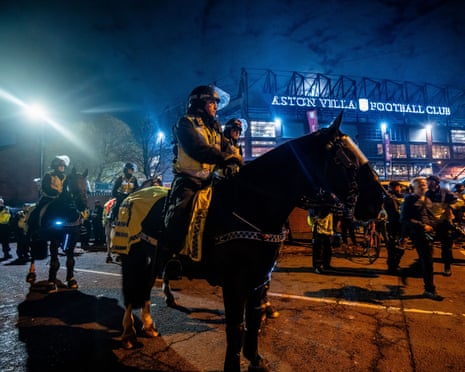
West Midlands police's original rationale for implementing the ban centered on intelligence suggesting potential risks to public order. The force argued that given the heightened tensions surrounding matches involving Israeli teams, particularly in the wake of broader Middle Eastern conflicts, a precautionary approach was necessary. However, the committee's investigation revealed significant gaps in the consultation process that led to this decision, with insufficient engagement between local police, national security agencies, and government ministers.
The parliamentary report highlights how the government's eventual intervention, while perhaps well-intentioned, was executed in a manner that inflamed tensions rather than calming them. The committee found evidence that the decision to reverse the police ban was made without adequate consideration of the practical implications or the impact on community relations. This approach, according to MPs, demonstrated a fundamental misunderstanding of how such sensitive issues should be handled in a diverse democratic society.
Committee members expressed particular concern about the timing of the government's intervention. The report notes that the decision came so late in the process that many logistical arrangements had already been finalized based on the original police ban. This created a cascade of practical problems, from security planning to ticket sales, that could have been avoided with earlier and more coordinated decision-making processes.
The investigation also revealed deeper systemic issues in how security decisions for high-profile sporting events are made and coordinated across different levels of government. MPs found evidence of poor communication channels between local police forces, national security agencies, and government departments, leading to situations where different parts of the system were working with different information and different assumptions about what policies were in effect.
Beyond the immediate controversy, the committee's findings raise important questions about the balance between security concerns and the rights of football supporters. The report suggests that while legitimate security considerations must always be taken seriously, the process for making such decisions needs to be more transparent, more consultative, and more carefully coordinated across different agencies and levels of government.
The MPs' investigation also examined the broader context in which these decisions were made, including the impact of international tensions on domestic sporting events. The committee found that while security agencies were right to be concerned about potential risks, the way these concerns were translated into practical policies was often clumsy and counterproductive. The report suggests that better frameworks are needed for handling situations where international conflicts create domestic security challenges.
Local community leaders and supporters' groups provided evidence to the committee about the impact of the confused decision-making process on community relations. Many witnesses described how the initial ban, followed by its reversal, created uncertainty and division within local communities that had previously coexisted peacefully. The committee found that this damage to community cohesion was one of the most serious consequences of the government's mishandled response.
The select committee's report also criticizes the lack of clear communication from government ministers throughout the crisis. MPs found that mixed messages from different departments created confusion not just among the public, but also among the agencies responsible for implementing whatever policies were actually in place. This communication failure, according to the committee, significantly amplified the negative impact of an already difficult situation.
Looking forward, the committee has made several recommendations for improving how such situations are handled in future. These include establishing clearer lines of communication between different agencies, creating more transparent processes for making security-related decisions about sporting events, and ensuring that community impact assessments are conducted before implementing measures that could affect community relations.
The report emphasizes that while security concerns must always be taken seriously, the process for addressing these concerns must be more sophisticated and more sensitive to the broader implications of such decisions. The committee argues that the clumsy government response to the Maccabi Tel Aviv situation serves as a cautionary tale about what happens when security decisions are made without adequate consultation, coordination, or consideration of their wider impact on society.
The parliamentary investigation concludes that the entire episode represents a missed opportunity for demonstrating how democratic institutions can handle sensitive security issues while maintaining public confidence and community cohesion. Instead, the committee found, the government's approach created more problems than it solved and left all parties involved worse off than they were before the crisis began.
Source: The Guardian


