
Muon Mystery Solved: No Fifth Force After All

Physicists resolve 20-year debate over muon magnetic properties. New Nature study suggests discrepancy stems from calculation error, not new physics.
For two decades, the international physics community has grappled with a perplexing puzzle surrounding the muon, an elementary particle that serves as the electron's substantially heavier cousin. Experimental measurements appeared to diverge significantly from theoretical predictions regarding the muon's magnetic properties, sparking widespread speculation about the existence of undiscovered fundamental forces operating beyond our current understanding. However, groundbreaking research published in the prestigious journal Nature has fundamentally altered this narrative, suggesting that the long-standing discrepancy may have been rooted in a computational oversight rather than evidence of revolutionary new physics that would reshape our comprehension of the universe.
The implications of this finding are substantial for the scientific community. If confirmed through additional validation, the research would represent a significant vindication of the Standard Model of particle physics, the theoretical framework that has successfully described the fundamental forces and particles that comprise our universe for decades. The Standard Model has withstood countless experimental challenges and refinements, and this resolution reinforces its robustness and predictive power in explaining the behavior of subatomic particles and their interactions.
According to Zoltan Fodor, a distinguished physicist at Penn State University and co-author of the groundbreaking paper, the resolution emerged from applying innovative computational methodologies. "There were many calculations in the last 60 years or so, and as they got more and more precise, they all pointed toward a discrepancy and a new interaction that would upend known laws of physics," Fodor explained in remarks that captured the scientific community's long-held expectations. "We applied a new method to calculate this discrepancy quantity, and we showed that it's not there. This new interaction we hoped for simply is not there. The old interactions can explain the value completely."
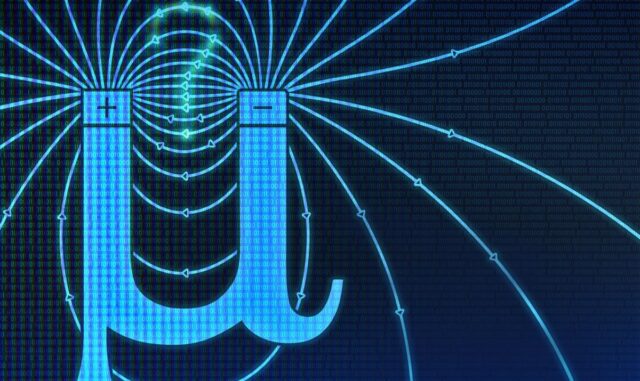
The muon itself occupies a fascinating position within the hierarchy of elementary particles. Classified as a member of the lepton family—a category of fundamental particles that includes electrons and their higher-energy counterparts—the muon represents the second-generation cousin of the electron in terms of mass and classification. The tau particle completes this trilogy as the third-generation lepton, with each successive generation exhibiting progressively greater mass while maintaining similar fundamental properties and charge characteristics.
What makes muons particularly intriguing to physicists is their remarkable sensitivity to virtual particles and quantum fluctuations that permeate the quantum vacuum. These transient particles exist for infinitesimally brief moments due to the uncertainty principle, constantly popping in and out of existence throughout the quantum realm. The magnetic properties of muons serve as an extraordinarily sensitive probe for detecting any subtle modifications or deviations from theoretical predictions, making them ideal candidates for investigating whether fundamental physics extends beyond the Standard Model.
The experimental techniques employed to measure muon properties have evolved considerably over the past several decades, becoming increasingly sophisticated and precise. Advanced laboratory facilities around the world have conducted detailed measurements of the muon's anomalous magnetic moment—a quantity denoted as "g-2" by physicists—which describes how the particle's intrinsic magnetism deviates from classical predictions. These measurements generated tantalizing hints that something might be fundamentally different about nature at its most basic level, warranting investigation into potential new particles or forces.

The computational challenge inherent in reconciling experimental results with theoretical predictions proved to be considerably more complex than initially appreciated. Physicists had developed increasingly sophisticated mathematical models to calculate the expected magnetic properties of muons, accounting for countless quantum interactions and virtual particle contributions. These theoretical calculations required enormous computational resources and innovative mathematical techniques to achieve the necessary precision for meaningful comparison with experimental data. Previous calculations spanning six decades had consistently pointed toward the same conclusion: a measurable discrepancy that seemed to demand an explanation beyond the Standard Model.
The new methodology introduced by Fodor and colleagues represents a significant advancement in computational physics. Rather than relying on traditional approaches that may have introduced systematic errors or approximations, the research team employed an alternative calculation method that approached the problem from a different mathematical perspective. This fresh computational strategy yielded surprisingly different results, suggesting that previous calculations—despite their sophistication and precision—may have contained subtle systematic biases or methodological limitations that accumulated over numerous computational steps.
This development carries profound implications for the future direction of particle physics research. The persistent anomaly had motivated substantial experimental and theoretical efforts aimed at discovering new physics beyond the Standard Model, including searches for hypothetical particles, additional spatial dimensions, or completely novel fundamental forces. If the discrepancy indeed stems from computational error rather than genuine physical phenomena, it would suggest that the Standard Model remains our most accurate description of fundamental reality, at least within the energy scales currently accessible to experimental investigation.
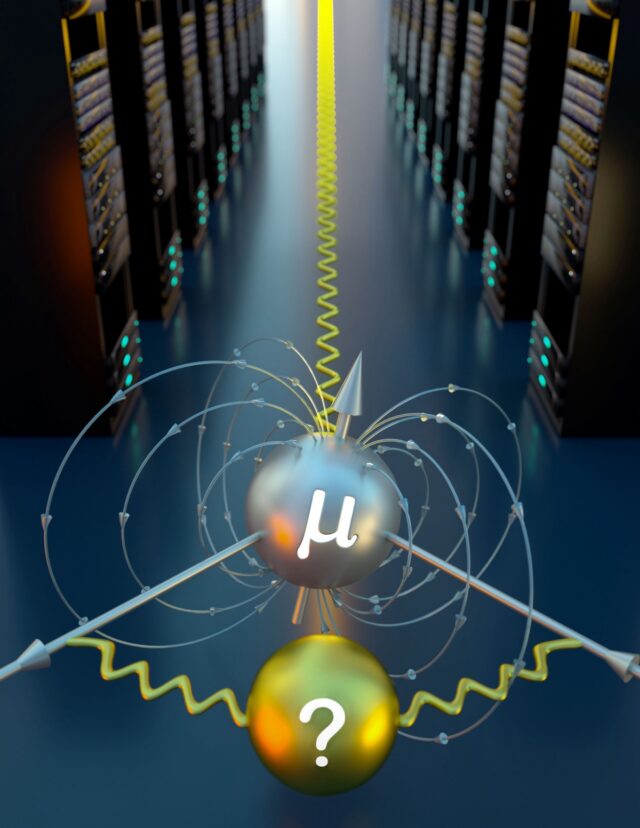
However, the scientific community has historically emphasized that extraordinary claims demand extraordinary evidence. While this latest analysis presents compelling arguments for reinterpreting the muon measurement discrepancy, the physics community will likely demand independent verification through multiple research groups employing various computational approaches. Peer review and reproducibility stand as cornerstone principles of scientific methodology, and additional confirmation from different laboratories using alternative computational techniques would substantially strengthen confidence in these conclusions.
The resolution of the muon mystery also highlights an essential aspect of scientific progress: the iterative refinement of our understanding through increasingly precise measurements and calculations. Initial experimental anomalies often provide crucial opportunities to probe the boundaries of existing theoretical frameworks, even when ultimately they lead back to confirmation of established models rather than revolutionary discoveries. The two-decade investigation into muon properties has advanced both experimental and computational capabilities, contributing valuable methodological improvements to the broader field of particle physics regardless of this particular outcome.
Looking forward, physicists will undoubtedly continue seeking evidence of physics beyond the Standard Model through diverse experimental approaches and observable phenomena. While the muon mystery may have found resolution through computational refinement rather than revolutionary discovery, the Standard Model continues to face persistent challenges in other domains—including the nature of dark matter, dark energy, and the fundamental asymmetries observed in particle interactions. These outstanding puzzles ensure that theoretical and experimental physicists will remain engaged in pushing the boundaries of our understanding of the natural world for decades to come.

The implications of this research extend beyond pure theoretical interest, influencing research priorities and funding decisions within the global physics community. Resources allocated toward investigating explanations for the muon anomaly might now be redirected toward other promising avenues of fundamental physics research. Nevertheless, the sophisticated experimental and computational techniques developed during this investigation represent permanent advances in scientific methodology that will continue benefiting future research endeavors across multiple disciplines.
Source: Ars Technica


