
NASA's Curiosity Rover Stuck: Arctic Seafloor Discoveries

NASA's Curiosity rover encounters drilling challenges on Mars while scientists make groundbreaking discoveries in Arctic waters. Read this week's top science news.
This week brought a fascinating array of developments across the scientific community, highlighting both the challenges and triumphs researchers face as they explore Earth and beyond. From mechanical setbacks on the Red Planet to remarkable acoustic discoveries beneath polar ice, the past seven days have reminded us why continued investment in scientific exploration remains crucial for understanding our universe and our own planet.
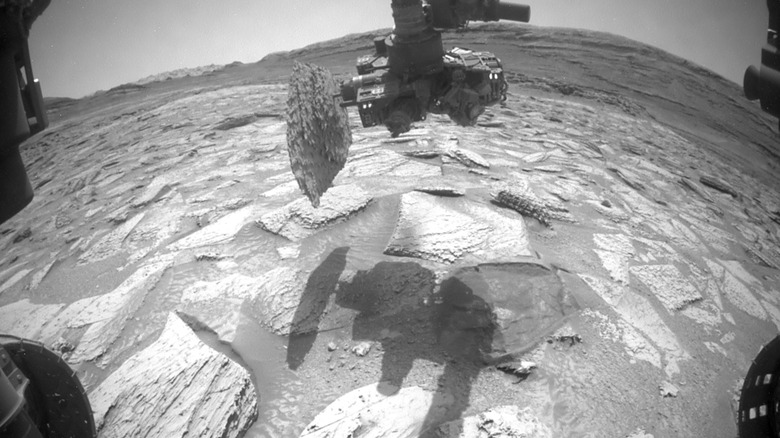
NASA's Mars exploration efforts faced an unexpected obstacle when the Curiosity rover encountered significant difficulties with its sampling drill mechanism. The rover, which has been conducting geological investigations on Mars since 2012, became stuck during a routine drilling operation designed to extract rock samples for analysis. This technical challenge represents one of the more serious operational issues the rover has faced in recent years, prompting engineers at NASA's Jet Propulsion Laboratory to carefully assess the situation and develop recovery strategies.
The Curiosity rover drill system plays an essential role in the mission's scientific objectives, allowing researchers to access subsurface material that may provide insights into Mars' geological history and potential past habitability. The stuck drill has forced mission controllers to pause regular sampling operations while they work through diagnostic procedures and develop solutions to free the mechanism. Engineers have been analyzing telemetry data and conducting extensive testing to understand exactly what caused the obstruction and how best to proceed without causing additional damage to the rover's delicate instruments.
Despite this setback, Mars rover operations continue to yield valuable scientific data through the rover's other sophisticated instruments. The team remains optimistic about resolving the drill issue, drawing on their extensive experience troubleshooting mechanical problems in the unforgiving Martian environment. This situation underscores the remarkable resilience of rovers designed for long-duration missions and the dedication of teams committed to maximizing scientific return from these expensive and complex missions.
In equally compelling news from Earth's polar regions, scientists have made remarkable discoveries in the Arctic seafloor recordings that are reshaping our understanding of deep ocean ecosystems. Researchers deployed sophisticated acoustic monitoring equipment beneath the Arctic ice, capturing unprecedented sound recordings that reveal the complex acoustic environment of this largely unexplored frontier. These recordings represent years of accumulated data that paint a vivid sonic portrait of life and geological processes occurring thousands of meters below the surface.
The acoustic data collected from the Arctic seafloor has exposed surprising biodiversity and biological activity in regions previously thought to be relatively sparse. Marine creatures, geological phenomena, and human-related noise sources all contribute to the underwater soundscape, and analyzing these recordings helps scientists better understand the interconnected relationships within deep-sea ecosystems. The findings have significant implications for marine conservation efforts and our broader understanding of how Arctic ecosystems function beneath their frozen surface.
Arctic ocean research conducted through these audio monitoring stations provides a non-invasive window into deep-sea environments that are extremely difficult and expensive to study through traditional methods. The data collected offers insights into animal behavior, migration patterns, and communication strategies that would be nearly impossible to observe directly. Furthermore, these recordings serve as a baseline for monitoring how climate change and other environmental factors may affect Arctic marine communities in the coming years and decades.

Beyond these headline-grabbing stories, the scientific community has continued making steady progress across numerous research fronts. Advances in space exploration technology continue to expand our capabilities for studying distant worlds and phenomena. The integration of artificial intelligence and advanced data analysis techniques has revolutionized how scientists process and interpret the vast amounts of information collected by modern research instruments and missions.
Environmental monitoring and climate science research have also captured significant attention as scientists work to better understand climate systems and predict future trends. Research institutions worldwide are collaborating to share data and insights, accelerating the pace of discovery and fostering international cooperation in the pursuit of scientific knowledge. These collaborative efforts demonstrate the global commitment to addressing fundamental questions about our planet, our solar system, and the universe beyond.
The challenges faced by NASA's Curiosity rover serve as an important reminder that space exploration rarely follows a perfectly smooth path. Engineers and scientists regularly encounter unexpected obstacles that require creative problem-solving and persistence to overcome. These setbacks often lead to innovations and refinements in technology that benefit not just space missions but also terrestrial applications, a phenomenon known as technology transfer that has produced countless practical innovations over the decades.
Meanwhile, the Arctic seafloor discoveries highlight the importance of investing in oceanographic research and marine science. As our planet faces unprecedented environmental challenges, understanding the baseline conditions and natural variability of ocean ecosystems becomes increasingly critical. The acoustic monitoring approach represents an innovative and cost-effective methodology that could be deployed in other challenging marine environments worldwide, from deep ocean trenches to underwater polar regions.
Looking forward, the scientific community remains committed to expanding humanity's knowledge across all disciplines. Whether through robotic explorers on distant planets, sophisticated monitoring systems in Earth's most remote locations, or cutting-edge laboratory research, scientists continue pushing the boundaries of what we know and what we can achieve. The combination of technological advancement, methodological innovation, and sustained funding creates the conditions necessary for breakthrough discoveries.
As these science stories demonstrate, exploration and discovery remain central to human progress and understanding. The work being conducted by researchers at NASA, oceanographic institutions, and scientific organizations worldwide reflects humanity's enduring curiosity about the cosmos and our own planet. Despite technical challenges and resource constraints, the scientific community continues producing discoveries that expand our knowledge, inspire future generations, and ultimately help address some of humanity's most pressing challenges.
These developments from this week's science news cycle remind us that scientific progress is never a straight line. Setbacks like the Curiosity rover's stuck drill are integral parts of the exploratory process, providing opportunities for learning and innovation. Meanwhile, breakthrough discoveries like the Arctic seafloor acoustic findings validate our commitment to investigating Earth's remaining frontiers. As we continue advancing scientific knowledge, both on Mars and in our own world's oceans, we forge ahead toward a future of greater understanding and capability.
Source: Engadget


