
NASA's Roman Telescope Ready for Launch, 8 Months Ahead

NASA unveils fully assembled Nancy Grace Roman Space Telescope, set to launch in September. This groundbreaking observatory surpasses Hubble and Webb capabilities with advanced wide-field imaging.
GREENBELT, Maryland—On Tuesday, officials from the National Aeronautics and Space Administration (NASA) hosted a press event showcasing the fully assembled Nancy Grace Roman Space Telescope, marking a significant milestone in modern astronomical research. The telescope has achieved a remarkable feat by reaching operational readiness eight months ahead of its originally projected timeline and coming in substantially under its allocated budget. This achievement positions the Roman Space Telescope to take its place among humanity's most sophisticated orbital observatories, with a scheduled launch planned for September of this year.
The Roman Space Telescope, officially designated as NGRST, carries a name honoring Nancy Grace Roman, a pioneering astrophysicist whose instrumental work shaped the conceptualization and development strategy of the legendary Hubble Space Telescope. Unlike its distinguished predecessors—the Hubble and the James Webb Space Telescope—the Roman observatory represents a fundamentally different approach to cosmic observation. The telescope's architecture prioritizes expansive wide-field imaging capabilities paired with an exceptionally robust data collection system that will transmit approximately 1.4 terabytes of astronomical information back to Earth on a daily basis.
This extraordinary data transmission rate reflects the telescope's advanced technological specifications and its capacity to observe vast swaths of the universe simultaneously. The imaging system integrated into the Roman Telescope far exceeds the capabilities of previous generations of space-based observatories, enabling scientists to capture unprecedented detail across multiple wavelengths of light. The early completion of assembly and manufacturing phases demonstrates the dedication and precision of the engineers and technicians involved in this complex international collaboration.
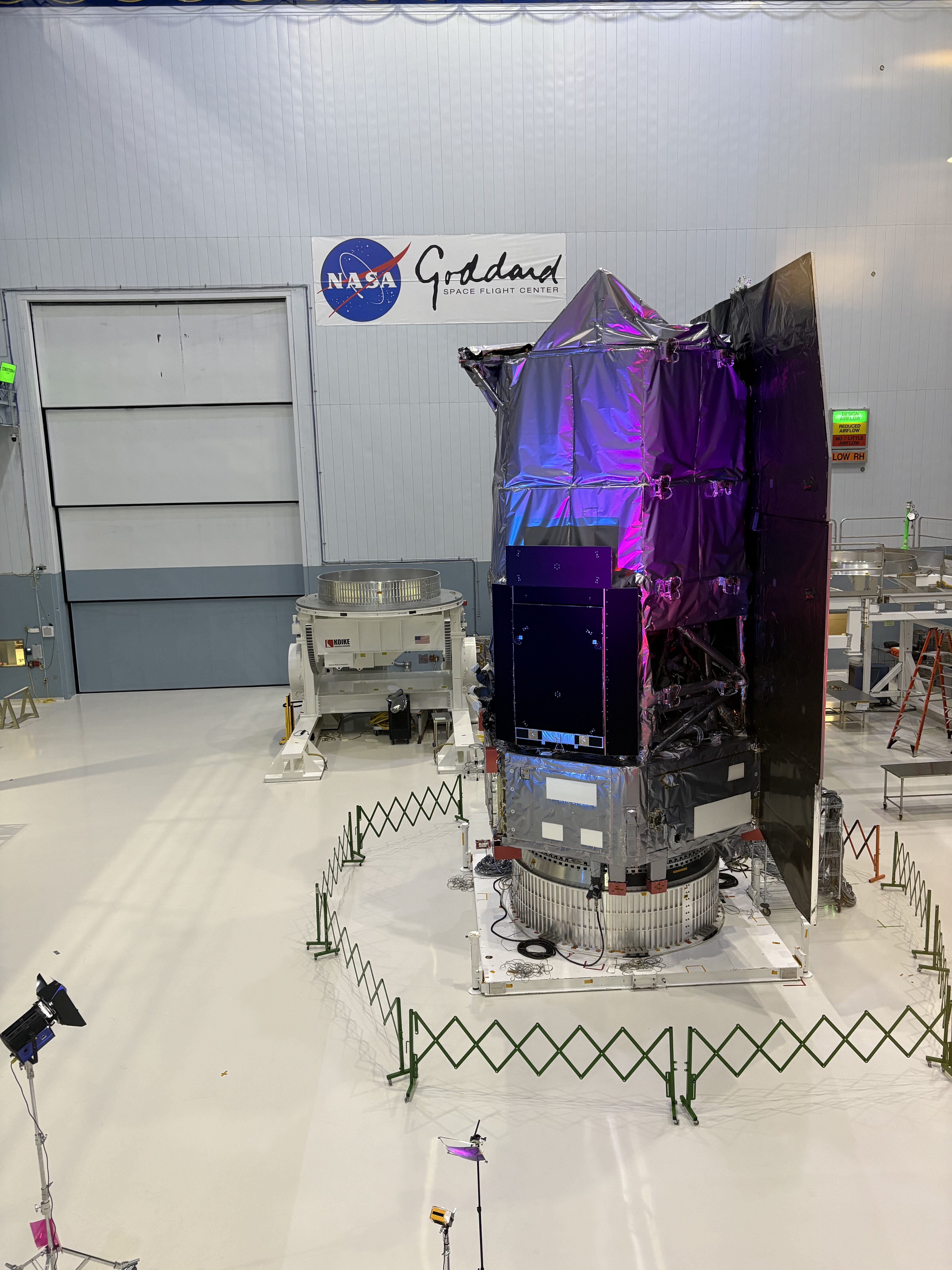
The path to creating the Roman Space Telescope features an unusual and fascinating backstory rooted in the intersection of Cold War-era military technology and contemporary scientific ambition. The project's origins trace back to decisions made decades ago when NASA's strategic planning encountered surplus sophisticated hardware from classified defense programs. Rather than allowing this advanced equipment to remain unused, space agency officials recognized its potential application for civilian scientific research.
The repurposing of this specialized hardware demonstrates the resourcefulness and pragmatic approach NASA has adopted throughout its institutional history. Cold War military investments in optical technology had produced instruments of exceptional precision and capability. When these systems became surplus to defense requirements, NASA seized the opportunity to leverage this existing technological infrastructure for revolutionary astronomical objectives. This unconventional supply chain reduced development costs significantly and accelerated the timeline for bringing advanced imaging capabilities to the astronomical community.

One of the most compelling scientific motivations for the Roman Space Telescope involves the study of infrared radiation and its crucial role in astrophysics. The Earth's atmosphere presents a formidable obstacle for infrared astronomy conducted from the planet's surface. Numerous atmospheric gases possess the physical property of absorbing infrared wavelengths across various portions of the electromagnetic spectrum. This atmospheric absorption phenomenon, while contributing to the greenhouse effect that has maintained Earth's habitability throughout our planet's geological history, creates insurmountable challenges for ground-based infrared observation.
The environmental conditions that make infrared astronomy so difficult from Earth simultaneously make space-based infrared observation extraordinarily valuable to the scientific community. Critical astronomical phenomena across the cosmos emit radiation primarily at infrared wavelengths, rendering them invisible to visible-light telescopes. The earliest and most distant galaxies in the observable universe, which formed mere hundreds of millions of years after the Big Bang, emit light that has been redshifted into the infrared portion of the spectrum due to the universe's expansion.
Similarly, the atmospheres of exoplanets orbiting distant stars reveal their chemical composition and physical characteristics predominantly through infrared spectroscopy. Scientists studying the possibility of life beyond Earth recognize that infrared observations provide essential data about planetary atmospheres. The chemical signatures detectable in exoplanet atmospheres through infrared analysis may indicate the presence of biosignatures or conditions favorable for biological processes. These scientific questions underscore why infrared astronomy represents one of the most dynamic and crucial frontiers in modern astrophysics.
NASA and other space agencies have previously deployed infrared-specialized observatories into orbit to circumvent atmospheric limitations and conduct sensitive infrared investigations. The Spitzer Space Telescope, launched in 2003, represented one of the original suite of Great Observatories—a complementary collection of advanced instruments designed to observe the universe across different wavelengths simultaneously. Spitzer operated successfully for over a decade and a half, fundamentally transforming our understanding of star formation, galaxy evolution, and planetary systems.
The unprecedented success of Spitzer and earlier infrared missions demonstrated unambiguously the scientific value of conducting infrared astronomy from space. These accomplishments established the template for subsequent infrared observatories and validated the necessity of sustained investment in infrared astronomical capabilities. The data collected by Spitzer continues to generate significant scientific insights through ongoing analysis by researchers worldwide. Its contributions to our comprehension of the infrared universe established an expectation among the scientific community for continued access to advanced infrared observing facilities.
The Roman Space Telescope builds upon this rich heritage of infrared astronomy while introducing technological innovations that substantially expand scientific capabilities. The telescope's wide-field imaging approach enables simultaneous observation of larger celestial regions than many previous infrared instruments. This capability proves particularly valuable for surveys designed to discover new astronomical objects and map large-scale structures within the universe. The Roman observatory's engineering represents the culmination of decades of technological development and scientific planning.
The completion of the Roman Space Telescope assembly ahead of schedule and under budget represents a significant achievement for the teams responsible for its construction and integration. Space telescope programs historically encounter scheduling delays and cost overruns due to the extraordinary complexity inherent in building instruments designed to operate in the harsh environment of space. The Roman project's success in avoiding these common pitfalls speaks to the competence of the engineering teams and the effectiveness of project management throughout the development phase.
The financial discipline demonstrated by completing the project under budget during a period of significant inflation and supply chain disruptions proves especially noteworthy. NASA and its contractors managed complex procurement processes, coordinated work across multiple facilities and organizations, and maintained rigorous quality assurance standards while simultaneously achieving both schedule and cost targets. These metrics indicate that the project leadership maintained exceptional oversight and made prudent decisions throughout the development timeline.
The September launch window represents the culmination of years of planning, engineering, testing, and integration work. Once deployed in orbit, the Roman Space Telescope will assume its position as a flagship observatory complementing the James Webb Space Telescope and other advanced scientific instruments. The two observatories will provide scientists with observing capabilities across complementary wavelength ranges, enabling investigations impossible with either instrument alone. The future of infrared and optical astronomy depends significantly upon the successful deployment and operation of the Roman Space Telescope.
Source: Ars Technica


