
NASA Sets March Date for Historic Moon Mission Return

NASA announces early March launch target for Artemis II mission after successful wet dress rehearsal, marking humanity's return to lunar orbit.
The National Aeronautics and Space Administration has officially established an early March timeframe for launching the Artemis II mission, a groundbreaking endeavor that will mark humanity's return to lunar orbit for the first time in over five decades. This announcement follows the successful completion of a comprehensive "wet dress rehearsal," a critical pre-flight test that validates all systems and procedures necessary for the historic journey. The mission represents a pivotal moment in space exploration, as it will carry the first crew around the Moon since the Apollo 17 mission concluded in 1972.
The wet dress rehearsal conducted by NASA's mission teams involved a complete simulation of launch day procedures, including the loading of propellants into the Space Launch System (SLS) rocket and the execution of countdown sequences up to the point of ignition. This comprehensive test allowed engineers and mission controllers to identify and resolve any potential issues while ensuring that all systems operate flawlessly under realistic conditions. The successful completion of this rehearsal has provided NASA with the confidence necessary to proceed with the March launch window, demonstrating that the Artemis II spacecraft and its supporting infrastructure are ready for the ambitious lunar journey ahead.
The Artemis II crew will consist of four carefully selected astronauts who will embark on a multi-day mission that will take them on a trajectory around the Moon before returning safely to Earth. Unlike the uncrewed Artemis I mission that successfully completed its lunar orbit in late 2022, this upcoming flight will carry human passengers, making it a significant milestone in NASA's broader Artemis program. The crew will experience the same weightlessness and cosmic radiation exposure that future lunar surface missions will encounter, providing invaluable data and experience for subsequent Artemis missions planned for the coming years.
The Space Launch System rocket, standing at an impressive 322 feet tall, represents the most powerful rocket NASA has ever built, capable of generating 8.8 million pounds of thrust during liftoff. This massive launch vehicle will propel the Orion spacecraft and its crew beyond Earth's gravitational influence and toward lunar orbit, demonstrating the technological capabilities necessary for deep space exploration. The SLS has undergone extensive testing and validation procedures, including multiple static fire tests of its core stage engines and comprehensive structural analysis to ensure it can withstand the enormous forces generated during launch and flight.
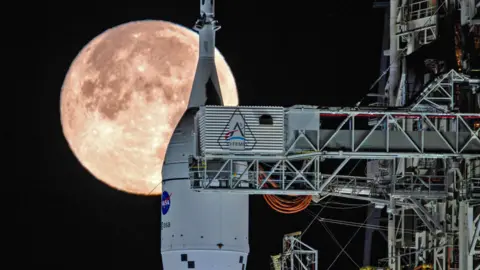
The Orion spacecraft, which will serve as the crew's home during their lunar journey, incorporates advanced life support systems, radiation shielding, and navigation technologies designed specifically for deep space missions. This state-of-the-art vehicle features a crew module capable of sustaining four astronauts for extended periods, complete with sleeping quarters, exercise equipment, and sophisticated communication systems that will maintain constant contact with Mission Control throughout the flight. The spacecraft's heat shield, measuring 16.5 feet in diameter, represents the largest of its kind ever constructed and will protect the crew during their high-speed reentry into Earth's atmosphere upon their return from lunar orbit.
NASA's Artemis program encompasses a series of increasingly complex missions designed to establish a sustainable human presence on and around the Moon, serving as a stepping stone for future Mars exploration. Following the success of Artemis II, the program will progress to Artemis III, which aims to land the first woman and the next man on the lunar surface, specifically targeting the Moon's south polar region where scientists believe water ice deposits may exist. These missions will utilize the Lunar Gateway, a planned space station that will orbit the Moon and serve as a staging point for lunar surface operations and deep space exploration missions.
The technological achievements demonstrated through the Artemis program extend far beyond lunar exploration, as the innovations developed for these missions will benefit numerous industries and scientific disciplines here on Earth. Advanced materials science, life support technologies, and propulsion systems created for lunar missions often find applications in medical devices, environmental monitoring systems, and transportation infrastructure. The international collaboration fostered through the Artemis Accords has brought together space agencies and commercial partners from around the world, creating a framework for peaceful cooperation in space exploration that will benefit all of humanity.
Mission planners have carefully selected the early March launch window to take advantage of optimal orbital mechanics and lighting conditions around the Moon, ensuring that the crew will have the best possible experience during their historic journey. The timing also allows for favorable weather conditions at the Kennedy Space Center launch site and provides multiple backup launch opportunities should technical issues or weather delays require postponement. The lunar trajectory planned for Artemis II will take the crew on a free-return path around the Moon, meaning that even if propulsion systems were to fail, the spacecraft would naturally return to Earth using gravitational forces alone.
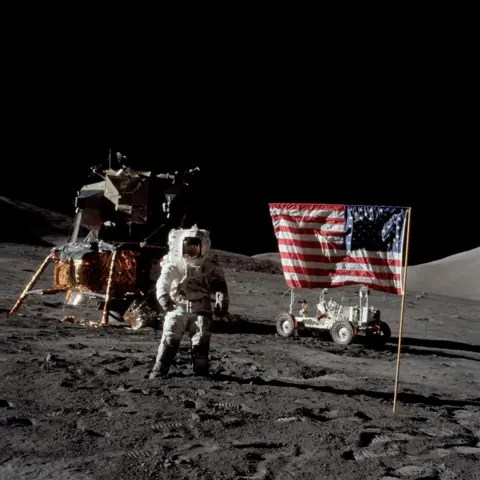
The crew training program for Artemis II has been exhaustive, encompassing everything from spacecraft systems operations to emergency procedures and scientific data collection protocols. The four astronauts have spent countless hours in simulators, underwater training facilities, and reduced-gravity environments to prepare for the unique challenges they will face during their lunar mission. Their training has included geological sample collection techniques, astronomy observations, and medical procedures that may be required during the multi-day flight, ensuring they are prepared for any eventuality that might arise during their historic journey around the Moon.
Ground support teams at NASA's mission control centers have also undergone extensive preparation, conducting numerous simulated missions to ensure seamless coordination between Earth-based controllers and the Artemis II crew. These mission control operations represent a significant evolution from the Apollo era, incorporating modern computing systems, advanced communication technologies, and real-time data analysis capabilities that will provide unprecedented support for deep space operations. The integration of artificial intelligence and machine learning systems will assist flight controllers in monitoring spacecraft systems and predicting potential issues before they become critical problems.
The successful launch of Artemis II will mark not only a return to lunar exploration but also the beginning of a new era in human space exploration that promises to unlock the mysteries of our solar system and beyond. Scientific instruments aboard the Orion spacecraft will collect valuable data about the space environment between Earth and the Moon, including radiation measurements, micrometeorite impacts, and solar wind interactions that will inform the design of future deep space missions. The scientific discoveries expected from this mission will contribute to our understanding of lunar geology, solar physics, and the long-term effects of space travel on human physiology.
As NASA prepares for this momentous launch in early March, the space agency continues to work closely with international partners and commercial contractors to ensure all aspects of the mission meet the highest safety and reliability standards. The lessons learned from Artemis II will directly inform the planning and execution of Artemis III, bringing humanity one step closer to establishing a permanent presence on the lunar surface and eventually venturing to Mars and other destinations throughout the solar system.
Source: BBC News


