
Navigating the Geopolitical Minefield: Starmer's Dilemma on Iran

Keir Starmer's position on Iran highlights the limited options for a British prime minister in the face of Trump's transactional foreign policy and the threat of war in the Middle East.
Starmer's Position on Iran Pleases No One, but There Are No Good Options
The current geopolitical landscape is fraught with complexities, and Keir Starmer's position on Iran is a testament to the limited choices available to a British prime minister. As the US president, Donald Trump, does not view alliances as long-term relationships based on mutual advantage, but rather as rolling transactions on a mafia model, the boss offering protection in exchange for tribute and loyalty, the options for the UK are severely constrained.
The threat of war in the Middle East is exposing the extent to which Britain's foreign policy is perilously dependent on US power. None of Starmer's critics engages with the hard strategic dilemmas arising from this dependency, and it is not easy being a friend of Trump, but it is a lot less dangerous than being his enemy. There isn't a huge range of options in between.
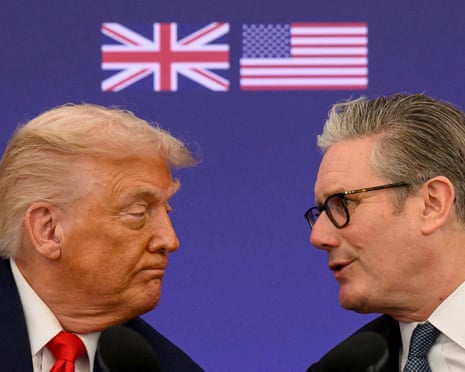
The US president's transactional approach to global affairs presents a significant challenge for Starmer and the Labour Party. The boss offers protection in exchange for tribute and loyalty, leaving little room for independent decision-making or the pursuit of Britain's own interests. This dynamic has far-reaching implications for the UK's foreign policy and its ability to navigate the treacherous geopolitical landscape.
Starmer's position on Iran, which has failed to please any of his critics, is a testament to the lack of good options available to him. The threat of war in the Middle East is a clear and present danger, and the UK's dependence on US power leaves little room for maneuver. Navigating this minefield requires nuance, diplomacy, and a clear-eyed understanding of the strategic realities at play.

Ultimately, Starmer's critics must engage with the hard choices and trade-offs that come with being a British prime minister in the current geopolitical climate. The days of easy answers and clear-cut foreign policy decisions are long gone, and the UK must adapt to the new realities of a world in flux, where the lines between friend and foe are often blurred and the stakes are high.
As the Guardian columnist Rafael Behr points out, war in the Middle East is exposing the limitations of the choices available to the UK. Starmer's position on Iran may not satisfy everyone, but it is a reflection of the difficult circumstances in which he and the Labour Party must operate. The path forward is not easy, but it is one that must be navigated with care, nuance, and a clear-eyed understanding of the strategic landscape.
Source: The Guardian


