
New Unit Targets £1bn Criminal Cash Laundering

UK government launches specialist unit to tackle money laundering through high street shops including vape stores, barbers and mini-marts suspected of criminal activity.
The United Kingdom government has announced an ambitious new initiative to combat what authorities describe as widespread money laundering through seemingly ordinary high street businesses. According to official estimates, approximately £1 billion annually flows through retail outlets suspected of concealing the proceeds of serious criminal enterprise. These establishments, which include vape shops, barbershops, convenience stores, and confectionery retailers, are believed to serve as financial fronts for organized crime networks involved in drug trafficking, tax evasion, and the distribution of counterfeit goods.
The newly established National Crime Agency specialist unit will serve as the coordinating body for a comprehensive crackdown on suspected money laundering operations across multiple police jurisdictions. With a dedicated budget of £20 million, this specialized division will orchestrate complex investigations and conduct targeted enforcement operations against businesses operating as apparent money laundering conduits. The ambitious expansion reflects growing concerns among law enforcement that the scale of criminal cash flowing through retail channels has reached unprecedented levels, prompting the need for dedicated resources and sustained investigative focus.
The collaborative enforcement effort will unite resources from the National Crime Agency alongside regional police forces spanning Greater Manchester, the West Midlands, Kent, and Essex. Together, these agencies will recruit and deploy 75 additional law enforcement officers specifically trained in identifying and dismantling money laundering networks embedded within the retail sector. This significant personnel expansion demonstrates the government's commitment to addressing what senior officials have characterized as a serious threat to the integrity of the UK financial system and legitimate business operations.

The targeting of seemingly innocuous retail establishments represents a strategic shift in how authorities approach financial crime prevention. High street shops, particularly those in densely populated urban areas, offer ideal conditions for laundering illicit proceeds because they generate substantial daily cash transactions that can effectively mask the introduction of criminal money into legitimate business revenue streams. Vape retailers, barbershops, and small convenience stores have proven particularly attractive to criminal enterprises seeking to obscure the origins of their wealth while maintaining relatively low visibility compared to other potential money laundering channels.
Tax evasion represents one of several serious criminal enterprises allegedly connected to these suspect retail operations. Beyond simply processing drug trafficking proceeds, many of the businesses under investigation are believed to engage in systematic undeclayment of income and deliberate misrepresentation of financial records to tax authorities. The integration of money laundering with organized tax evasion suggests that criminal networks have developed sophisticated schemes to multiply their profits through layered financial manipulation, creating complex webs that prove difficult for individual law enforcement agencies to unravel independently.
The counterfeit goods distribution network represents another significant criminal enterprise allegedly flowing through these retail channels. Organized crime groups have increasingly turned to selling fake luxury items, pharmaceuticals, and consumer goods through seemingly legitimate retail outlets, generating substantial profits while simultaneously flooding markets with dangerous and substandard products. The integration of counterfeiting operations with money laundering creates a particularly complex enforcement challenge, as law enforcement must simultaneously disrupt multiple revenue streams and financial flows connected to individual criminal enterprises.

The drug trafficking connection underscores the fundamental motivation driving this enforcement initiative. Criminal organizations operating large-scale drug distribution networks generate enormous quantities of cash that must be introduced into the financial system through seemingly legitimate business activities. The criminal cash derived from narcotics trafficking represents perhaps the most significant source of illicit proceeds flowing through high street retail operations, making drug enforcement and financial crime investigation increasingly inseparable in modern law enforcement strategy.
The deployment of 75 additional officers across multiple police jurisdictions reflects the substantial resource commitment required to effectively investigate and prosecute money laundering cases. These specialist investigators will require training in complex financial analysis, surveillance techniques, and evidence gathering methodologies specific to retail-based money laundering schemes. The geographic distribution of these officers across Greater Manchester, the West Midlands, Kent, and Essex suggests that authorities have identified particular regional hotspots of suspected money laundering activity requiring concentrated enforcement attention and sustained investigative pressure.
The National Crime Agency's coordinating role in this initiative highlights recognition that money laundering investigations require centralized direction and information sharing across multiple law enforcement agencies. Individual police forces, while competent in their respective jurisdictions, lack the specialized expertise and cross-regional perspective necessary to identify and dismantle sophisticated money laundering networks that often operate across multiple police boundaries. By centralizing coordination within the NCA, authorities hope to develop a more comprehensive understanding of criminal cash flows and financial networks operating throughout the country.
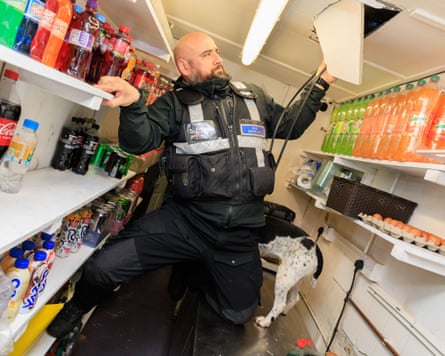
The £20 million budget allocation represents a significant investment in tackling what the government describes as a threat of epidemic proportions. This substantial resource commitment demonstrates official recognition that addressing the billion-pound annual money laundering problem requires more than marginal increases in enforcement activity. The dedicated funding stream allows for sustained operations over multiple years, enabling investigators to develop detailed understanding of criminal networks and build prosecutable cases against individuals and enterprises involved in facilitating money laundering schemes.
The focus on high street retail operations also reflects evolving criminal methodology and adaptation to law enforcement pressure targeting more traditional money laundering channels. As authorities have increased scrutiny of financial institutions, money service businesses, and casinos, criminal enterprises have increasingly turned to cash-intensive retail sectors offering plausible deniability for substantial daily cash flows. The difficulty of distinguishing legitimate retail revenue from laundered criminal proceeds creates investigative challenges that require specialized training and sustained attention from law enforcement specialists.
The government's announcement of this new enforcement initiative also serves to warn legitimate business operators about the risks of inadvertently facilitating money laundering schemes. Retailers who accept suspicious cash payments from customers or engage in unusual business practices may find themselves subject to law enforcement investigation, underscoring the importance of implementing robust compliance procedures and reporting suspicious financial activity to relevant authorities. The distinction between intentional facilitation of money laundering and negligent tolerance of suspicious activity has significant legal consequences for business operators.
The collaborative approach involving multiple police forces alongside the National Crime Agency reflects modern best practices in organized crime investigation. Money laundering networks rarely respect police jurisdiction boundaries, instead deliberately exploiting gaps between different enforcement authorities to conceal criminal cash flows. By creating mechanisms for information sharing and coordinated investigation across jurisdictional lines, law enforcement agencies increase their collective ability to identify and dismantle sophisticated criminal enterprises.
Looking forward, the effectiveness of this new enforcement initiative will depend substantially on the quality of investigation and prosecution work conducted by the 75 newly recruited officers and supporting staff. Successfully prosecuting money laundering cases requires painstaking financial analysis, surveillance operations, and development of admissible evidence demonstrating the criminal source of funds being processed through retail establishments. The specialized training and sustained focus provided by this dedicated unit should substantially improve law enforcement's capacity to disrupt the billion-pound annual money laundering problem affecting the UK.
Source: The Guardian


