
Police Crack Down on Criminal VPN Service

European law enforcement hacked into First VPN, a service used by cybercriminals for ransomware and data theft. The operation led to arrests and shutdown of the platform.
European law enforcement agencies have successfully dismantled a major virtual private network (VPN) service that served as a critical infrastructure tool for cybercriminals operating across the continent. The operation, which culminated in the identification of thousands of users and the arrest of the service administrator, represents a significant victory in the ongoing battle against organized cybercrime. Europol announced the results of this coordinated international effort, which targeted First VPN, a platform that had become synonymous with criminal activity in online forums and dark web marketplaces.
The First VPN service had been actively promoted on Russian-speaking cybercrime forums for years as a trusted solution for individuals seeking to evade law enforcement detection. The platform distinguished itself by offering features specifically tailored to criminal operations, including anonymous payment methods, hidden infrastructure, and layers of anonymity designed to protect users from surveillance and investigative techniques. According to law enforcement statements, the service had become so deeply embedded within criminal networks that it was considered an essential tool for conducting large-scale ransomware campaigns, orchestrating data theft operations, and facilitating other serious offenses.
The international operation was spearheaded by authorities in France and the Netherlands, with crucial support provided by Europol and Eurojust, the European Union's law enforcement cooperation agency. This coordinated approach demonstrates the increasingly sophisticated methods that law enforcement agencies are employing to combat cybercrime and digital-based criminal enterprises. The collaboration between multiple nations and international bodies underscores the transnational nature of modern cybercrime and the necessity for coordinated responses across borders.
According to Europol's official announcement, law enforcement agencies successfully hacked into the VPN infrastructure itself, gaining access to critical systems and user data that had been carefully protected by multiple layers of encryption and security measures. This technical achievement allowed investigators to compile a comprehensive database of thousands of active users on the platform, identifying individuals suspected of involvement in ransomware operations, data theft rings, and other serious criminal enterprises. The ability to penetrate such a well-defended system demonstrates the growing capabilities of international cybersecurity teams and their access to sophisticated hacking tools and expertise.
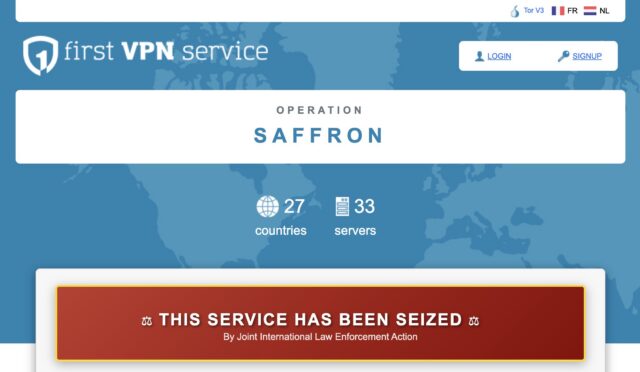
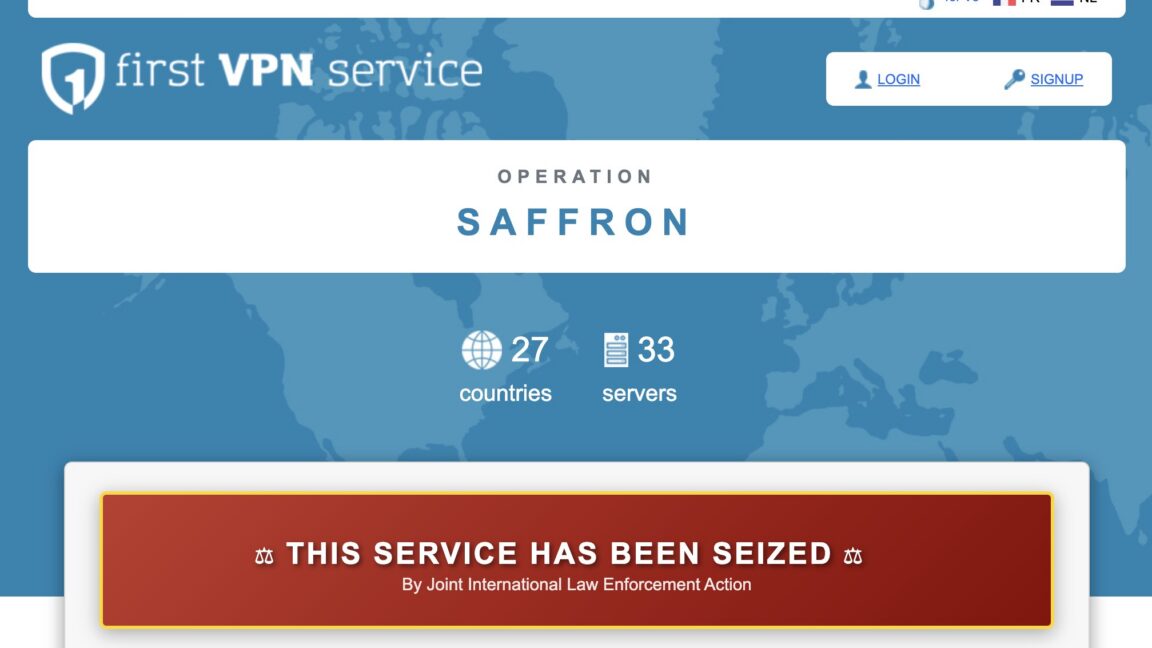
The operation resulted in the identification and arrest of the individual responsible for administering and maintaining the First VPN service. Law enforcement officials seized the domain and shut down all associated infrastructure, effectively eliminating the platform's ability to serve its criminal user base. When users attempted to access First VPN following the operation, they were greeted with a prominent message indicating that the domain had been seized as part of a joint international law enforcement action, serving as a visible reminder of the risks associated with providing services to criminal networks.
The takedown of First VPN represents far more than just the elimination of a single service provider. Criminal VPN services have become increasingly essential to ransomware operations, allowing threat actors to hide their true locations, mask their internet protocol addresses, and obscure their digital footprints. By compromising First VPN's infrastructure, law enforcement agencies not only disrupted the immediate operations of thousands of cybercriminals but also collected valuable intelligence on criminal methodologies, network structures, and operational patterns.
The investigation into First VPN likely required extensive coordination between technical specialists, intelligence analysts, and law enforcement officials across multiple jurisdictions. Cybersecurity experts from various countries would have collaborated to identify vulnerabilities in the VPN's architecture, develop exploitation strategies, and execute the technical breach while maintaining operational security to prevent alerting the service administrators. The complexity of such operations typically involves months or even years of preparation, including surveillance of communications, mapping of network infrastructure, and building cases against individuals involved in the service's operation.
For years, First VPN had cultivated a reputation within criminal communities as an unusually reliable and trustworthy platform. This reputation was built on promises of absolute anonymity, immunity from law enforcement interference, and technical safeguards designed to protect users from surveillance. The service's administrators actively marketed these features on underground forums, leveraging testimonials from satisfied criminal customers to attract new users and build credibility within illicit marketplaces. The platform's apparent security and reliability made it an attractive choice for high-level criminal operations that could not tolerate exposure or disruption.
The dismantling of First VPN is likely to have cascading effects throughout the cybercriminal ecosystem. Ransomware gangs and other criminal organizations that relied on the service will need to identify alternative infrastructure, potentially disrupting ongoing operations and creating vulnerabilities in their security practices. The psychological impact on criminal communities cannot be overlooked, as the breach of what was believed to be an impenetrable service will likely generate distrust toward other VPN providers and criminal service operators. This erosion of confidence in criminal infrastructure can significantly impede the ability of these networks to coordinate operations and maintain operational security.

Law enforcement agencies have emphasized that the operation against First VPN is part of a broader strategic approach to combating organized cybercrime networks and their supporting infrastructure. Rather than focusing solely on individual cybercriminals, authorities increasingly recognize that disrupting the services and tools that criminals depend upon can have exponentially greater impact on criminal operations. By targeting the infrastructure providers themselves, law enforcement can eliminate thousands of potential criminal activities simultaneously, rather than pursuing perpetrators one at a time.
The success of this operation also highlights the importance of international cooperation and intelligence sharing among law enforcement agencies. The coordination between French, Dutch, and European Union authorities, supported by Europol's analytical capabilities, enabled the authorities to develop a comprehensive understanding of the First VPN operation and execute a simultaneous takedown that prevented the service operators from being alerted and potentially destroying evidence. This level of international coordination has become increasingly common in major cybercrime investigations, reflecting the global nature of modern criminal networks.
Moving forward, the takedown of First VPN is likely to encourage additional international law enforcement operations targeting criminal VPN services and other infrastructure providers that facilitate cybercrime. The technical achievements demonstrated in this case, combined with the intelligence gathered about criminal methodologies and network structures, will inform future investigations and help authorities develop more effective strategies for disrupting criminal infrastructure. Cybersecurity researchers are likely to analyze the methods used in this operation to better understand vulnerabilities in similar services.
The arrest and prosecution of the First VPN administrator will likely result in additional legal precedents regarding the liability of service providers who knowingly facilitate criminal activity. This case demonstrates that running a VPN service specifically designed for criminal use is not a risk-free business model, and that law enforcement agencies are developing increasingly sophisticated capabilities to identify, investigate, and prosecute those involved in providing such infrastructure. The financial and personal consequences facing the administrator will likely serve as a deterrent to others considering similar ventures.
The First VPN operation exemplifies the evolving nature of cybercrime enforcement in the modern era, where traditional investigation techniques must be combined with sophisticated cyber forensics and international cooperation. As cybercriminal infrastructure becomes more advanced and complex, law enforcement agencies must continue developing new tools and strategies to identify vulnerabilities and execute effective takedowns. The success against First VPN provides encouraging evidence that these efforts are bearing fruit and that no criminal infrastructure is truly beyond the reach of determined international law enforcement agencies.
Source: Ars Technica


