
Politicians and Jogging: A Tired Metaphor

From Tony Blair to Andy Burnham, politicians use jogging photos to signal momentum. But does this clichéd imagery actually work anymore?
The Mayor of Greater Manchester has become the latest addition to a long and well-established tradition: prominent politicians attempting to project an image of vitality, forward momentum, and decisive action through the somewhat awkward medium of public jogging. When Andy Burnham announced his intentions to run for parliament, the accompanying visual narrative was almost entirely predictable—cue the carefully staged photographs of a politician in athletic wear, deliberately captured in the midst of what appeared to be an earnest morning jog.
Political communication has always relied heavily on the power of symbolic imagery and carefully constructed metaphors to convey messages to the electorate. Yet few political devices have proven as persistent, or as consistently awkward, as the deployment of jogging as a metaphor for political momentum and progress. The practice suggests energy, determination, staying power, and the ability to keep pace with the demands of high office. In theory, it's an elegant visual shorthand for the narrative a politician wishes to promote about themselves and their political agenda.
The jogging as political metaphor trend has deep roots in British political culture, extending back decades through various administrations and across party lines. When a politician opts to be photographed while engaged in this particular form of exercise, they are essentially attempting to broadcast several messages simultaneously: that they possess the stamina required for office, that they remain connected to ordinary people and their daily routines, and crucially, that they are quite literally "on the right track."

The phenomenon raises rather compelling questions about modern political communication and the sometimes absurd lengths to which public figures will go in order to shape their public image. At 56 years old, Burnham was acutely aware that his announcement would dominate news cycles across the country. He understood that cameras would be positioned to capture his every move. Yet despite this knowledge—or perhaps because of it—he emerged from his residence on Friday morning dressed in what can only be described as rather unflattering athletic attire, complete with what observers characterized as dated 1980s Everton football club memorabilia, willing to expose himself to the scrutiny of photographers while displaying what many might consider unflattering aspects of his physique.
This willingness to embrace potentially unflattering imagery in service of a political narrative speaks volumes about the calculated nature of modern political communication. The decision to jog publicly isn't spontaneous or casual—it's deliberate, planned, and designed to trigger specific reactions from media outlets and the general public. Yet there's something almost self-defeating about the strategy, as the sheer obviousness of the manipulation can undermine the very authenticity it's meant to convey.
The historical precedent for this particular brand of political theater extends far beyond Burnham. British political figures across the spectrum have attempted to leverage jogging photography as a tool for shaping public perception. The practice became particularly prevalent during the 1990s and 2000s, when various prominent politicians sought to project an image of youthful vitality and connection to contemporary fitness culture. Each iteration has followed a remarkably similar script: the politician in athletic wear, captured mid-stride, suggesting movement, progress, and forward momentum both literally and metaphorically.
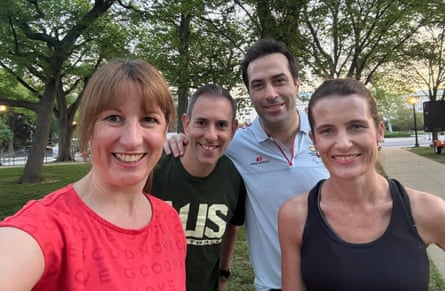
What makes the jogging metaphor particularly interesting from a communication studies perspective is its transparency. Unlike more subtle or sophisticated forms of political messaging, there's nothing especially clever or nuanced about depicting a politician engaged in cardiovascular exercise. Yet this very transparency might be part of its enduring appeal. In an era of sophisticated spin and carefully crafted political narratives, there's something almost charmingly direct about saying, through carefully staged imagery, "I am energetic, I am moving forward, I am literally running toward my political goals."
The practice also raises questions about authenticity and relatability in contemporary politics. Do ordinary voters respond positively to seeing their leaders in unflattering athletic wear, struggling with their fitness routines? Or does the obvious staging of these moments create a distance between politician and public, highlighting the gap between the carefully managed image and genuine human experience? The answers are likely complex and vary depending on audience demographics, political allegiances, and individual media consumption habits.
Furthermore, political imagery experts suggest that the effectiveness of such tactics has likely diminished over time as voters have become increasingly sophisticated consumers of political media. The proliferation of social media and digital platforms has made it easier for citizens to question, critique, and parody these carefully staged moments. A politician jogging in 2024 faces a very different media environment than one doing the same thing in 1994, where traditional news outlets exercised far greater control over which images reached the public and how they were framed.
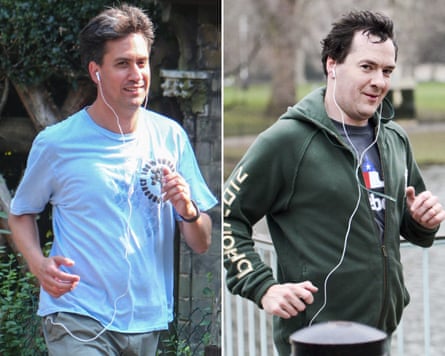
The broader context surrounding Burnham's jogging announcement also matters considerably. His entry into the race represents a significant moment in contemporary British politics, with implications for how power and influence flow within a major political party. Yet the framing of this announcement through the lens of a morning jog risks trivializing what might otherwise be a substantive political moment. It suggests that the visual shorthand of athletic endeavor is somehow more important or more communicative than detailed policy discussions or articulate explanations of his political vision and objectives.
Cultural commentators have long observed that modern politics often prioritizes image over substance, visual narrative over detailed policy analysis. The continued reliance on tactics like jogging photography—despite their obvious artificiality and increasingly outdated nature—suggests that political communications professionals believe these images still resonate with voters. Whether this belief is justified remains an open question, and one that will likely be debated extensively as this political cycle progresses.
As we consider the curious persistence of politicians jogging as a communication strategy, we might ask ourselves what this reveals about our political culture more broadly. Are we, as voters, truly persuaded by such imagery? Or have we become so accustomed to these performances that we barely register them anymore, filing them away as simply another expected part of the political theater? The answer likely involves elements of both, suggesting that for the foreseeable future, ambitious political figures will continue to lace up their trainers and hit the pavement, metaphors in motion.
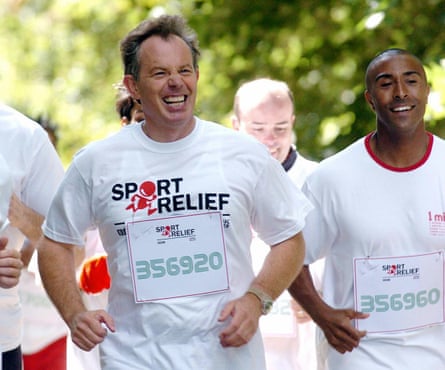
Ultimately, the phenomenon of jogging as political symbolism endures because it works on multiple levels simultaneously. It provides photographers with accessible, relatable imagery. It gives journalists an easy angle for their stories. It allows politicians to project carefully controlled messages about their energy, commitment, and forward momentum. And perhaps most importantly, it requires relatively minimal effort and cost to implement, making it an economical choice for political communications teams with limited budgets and time constraints. Whether voters find it persuasive or merely amusing, the trend shows no signs of disappearing anytime soon.
Source: The Guardian


