
Right-Wing Activist Tommy Robinson Hosted by Trump Administration

The Trump administration met with controversial UK far-right figure Tommy Robinson, who has convictions for assault and fraud, at the US State Department.
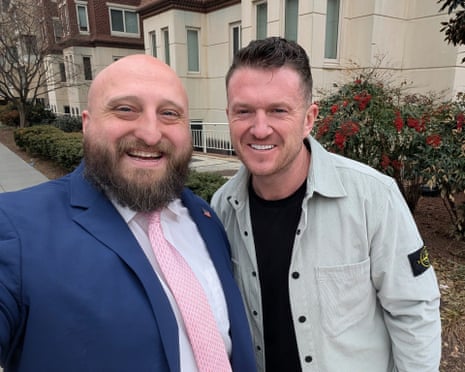
Tommy Robinson, a far-right activist from the UK whose real name is Stephen Yaxley-Lennon, was recently hosted by the Trump administration for a meeting at the US State Department in Washington, D.C. The meeting was facilitated by Joe Rittenhouse, a senior advisor at the State Department.
Rittenhouse took to social media to express his enthusiasm for the meeting, stating: "Honoured to have free speech warrior @TRobinsonNewEra at Department of State today. The world and the West is a better place when we fight for freedom of speech and no one has been on the front lines more than Tommy. Good to see you my friend!"
For his part, Robinson also acknowledged the meeting on social media, writing: "In America making alliances & friendships, today I had the privilege of an invite to the @StateDept."
Robinson is a controversial figure who has convictions for assault, using a fake passport, mortgage fraud, and contempt of court. Earlier this month, he claimed to have left the UK after being warned by police that he was named in a so-called Islamic State publication that encouraged violence against him.
The meeting between Robinson and the Trump administration has drawn criticism from those who view the activist as a purveyor of hate speech and Islamophobia. However, supporters of Robinson argue that he is a "free speech warrior" who is standing up for the rights of ordinary citizens.
The decision to host Robinson at the State Department has raised concerns about the Trump administration's approach to foreign policy and its willingness to engage with fringe, right-wing figures. Robinson's history of inflammatory rhetoric and criminal convictions have led many to question the appropriateness of such a meeting.
Ultimately, the Trump administration's decision to host Robinson at the State Department reflects the ongoing debate over the limits of free speech and the role of government in addressing extremist ideologies. As the controversy continues to unfold, it is likely to have far-reaching implications for both domestic and international politics.
Source: The Guardian


