
Robinson Rallies Thousands in London Street Protest

Far-right activist Tommy Robinson addressed tens of thousands at a London rally, calling for preparation for a 'battle of Britain' amid controversial demonstrations.
Far-right activist Tommy Robinson delivered an inflammatory address to tens of thousands of supporters gathered in central London on Saturday, urging attendees to ready themselves for what he described as the "battle of Britain." The event, which drew significant crowds to the streets of the capital, marked the second consecutive year that Robinson has organized a large-scale demonstration under the banner of what organizers are calling a mass mobilization movement.
Robinson, whose legal name is Stephen Yaxley-Lennon, has established himself as a prominent figure within far-right political activism in the United Kingdom. His rhetoric during Saturday's event continued his pattern of provocative and divisive messaging, with attendees reporting that his language centered on themes of national crisis and cultural conflict. The rally represented a significant show of force by Robinson's supporters, with attendance figures suggesting continued appeal among a particular segment of the British population concerned with immigration and cultural issues.
The demonstration was characterized by the distribution of materials containing Islamophobic and ethnonationalist messaging throughout the crowd. Observers documented various flyers and printed materials being handed out to participants, many of which featured inflammatory language and imagery designed to promote distrust of Muslim communities and highlight ethnic nationalist themes. This distribution of hate material underscored the ideological underpinnings of the rally and the explicit nature of the messaging being promoted at the event.
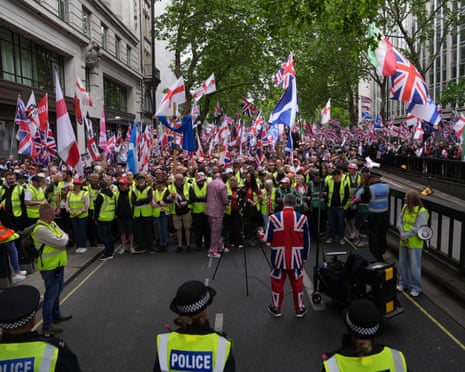
Notably, the turnout at this year's event appeared somewhat reduced compared to previous demonstrations organized by Robinson and his supporters. While still drawing tens of thousands of participants, the attendance figures suggested a potential shift in momentum or public interest in such gatherings. This variance in attendance could reflect changing public sentiment, increased awareness of the controversial nature of such events, or other socio-political factors influencing participation rates in far-right demonstrations.
The event generated significant concern among civil rights organizations and community groups that have long monitored Robinson's activities and warned about the dangers of his messaging. Such organizations have consistently documented the connection between Robinson's rhetoric and real-world incidents of discrimination and violence against minority communities. The Saturday rally further highlighted the ongoing tension between free speech protections and concerns about the spread of hate speech and discriminatory ideology in public spaces.
Robinson's call to prepare for a "battle of Britain" employed military and conflict-based language that critics argue functions to normalize and encourage confrontational approaches to social and political disagreement. The use of such terminology, combined with the distribution of hate material, created an environment that many observers characterized as explicitly designed to incite fear and division. This rhetorical strategy has become increasingly common among far-right political actors seeking to mobilize supporters and escalate tensions around immigration and cultural identity issues.
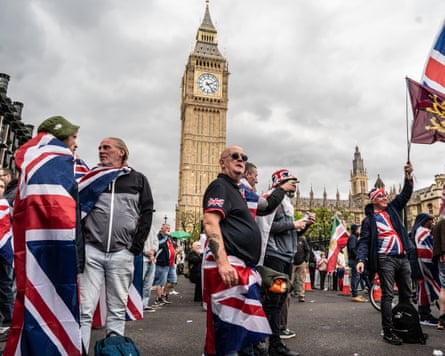
The second annual iteration of the Unite the Kingdom march demonstrated that Robinson continues to command significant popular mobilization capacity despite various legal challenges and public controversies. His ability to draw tens of thousands to central London reflects the existence of a substantial constituency receptive to his messaging about national identity and perceived threats to British culture. Understanding this constituency and the factors driving participation in such demonstrations remains a significant concern for those studying far-right political movements in contemporary Britain.
Law enforcement presence at the event was notable, with police monitoring proceedings and working to manage crowd control and prevent potential clashes between demonstrators and counter-protesters. The policing of such large gatherings involves balancing competing rights to assembly and expression while maintaining public order. Tensions between different groups attending Saturday's rally underscored the divisive nature of Robinson's activism and the broader polarization surrounding immigration and identity politics in the United Kingdom.
The distribution of hate materials and Islamophobic content at the rally represented a continuation of patterns documented at previous Robinson-organized events. Such material often contains conspiracy theories about Muslim populations, inflammatory imagery, and calls for preferential treatment based on ethnic or religious criteria. The explicit nature of this content and its distribution to crowds raises serious questions about the boundaries of lawful assembly and the tolerance for hate speech in British public discourse.
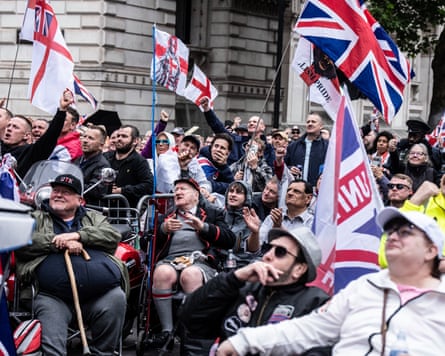
Political analysts have noted that Robinson's messaging taps into broader currents of anxiety about immigration and cultural change that have reshaped British politics in recent years. His ability to articulate these concerns through provocative language and explicit hateful messaging has resonated with segments of the population who feel alienated by mainstream political discourse. The Saturday rally thus represents not an isolated phenomenon but rather a manifestation of deeper divisions within British society regarding national identity, multiculturalism, and the future direction of the country.
Going forward, observers of far-right activism in Britain will continue to monitor Robinson's organizing efforts and the evolution of his movement. Questions about attendance trends, the sustainability of his mobilization capacity, and the potential for escalation or confrontation remain central to assessments of the threat posed by such activism. The balance between allowing lawful political expression and preventing the spread of hate speech and discrimination will continue to present challenges for British policymakers, law enforcement, and civil society organizations.
Source: The Guardian


