
Russian Su-27 Jet Near-Miss With RAF Spy Plane Over Black Sea

UK condemns 'dangerous and unacceptable' incident as Russian Su-27 fighter jet comes within six metres of unarmed RAF reconnaissance aircraft over Black Sea.
A significant aerial incident over the Black Sea has prompted stern warnings from the United Kingdom government after a Russian military jet engaged in what officials describe as reckless maneuvering near a British intelligence-gathering aircraft. The confrontation, which unfolded at high speed over international waters, has reignited tensions between Moscow and London and raised serious questions about airspace safety protocols in the contested region.
Defence Secretary John Healey issued a formal statement condemning the encounter, labeling it both "dangerous and unacceptable" in a carefully worded rebuke of Russian military conduct. The incident involved a Russian Su-27 fighter jet that executed six aggressive passes in front of an RAF Rivet Joint reconnaissance aircraft, bringing the military jets to within just six metres of one another while both aircraft were traveling at approximately 500 miles per hour. Such proximity at these velocities leaves virtually no margin for error, and even minor miscalculations or equipment malfunctions could have resulted in a catastrophic collision.
The RAF Rivet Joint, a sophisticated unarmed reconnaissance platform operated by the Royal Air Force, was conducting routine intelligence-gathering operations in the region when the Russian fighter made its approach. Unlike fighter jets, the Rivet Joint is a converted Boeing 707 airframe equipped with advanced surveillance and signals intelligence equipment, making it vulnerable in any physical confrontation. The aircraft was performing its designated monitoring duties when the Su-27 initiated its threatening maneuvers, with each pass bringing the Russian fighter closer to the slower, defenseless British aircraft.
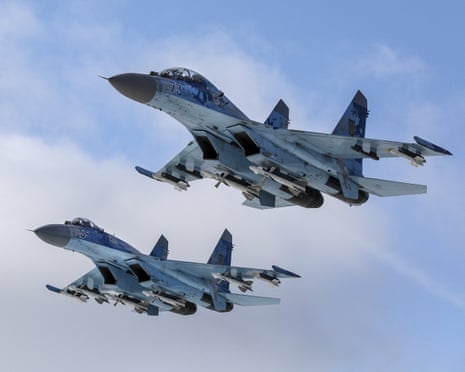
The incident marks one of two dangerous mid-air encounters that occurred in the same month, suggesting an escalating pattern of aggressive Russian military behavior in the region. RAF reconnaissance operations in the Black Sea have become increasingly common as Western nations seek to monitor Russian military movements and intentions. However, these missions are not without risk, as the recent encounter demonstrates. The Black Sea region has become a flashpoint for military tensions, particularly following Russia's invasion of Ukraine and the subsequent international response.
Military experts have expressed concern about the reckless nature of the Russian pilot's actions, noting that such close-proximity flying serves no legitimate operational purpose and appears designed purely as a show of force or intimidation. The six separate passes suggest deliberate and repeated attempts to provoke or unsettle the RAF crew rather than isolated aggressive behavior. This pattern of conduct raises questions about Russian military command's commitment to established international safety protocols and air traffic regulations that are designed to prevent exactly these types of dangerous encounters.
The UK government's formal response to the incident reflects the seriousness with which British officials view the situation. Diplomatic channels have been engaged to lodge formal protests against Russian military conduct, while the Ministry of Defence has opened an investigation into the specifics of the encounter. Such incidents, while occasionally occurring during Cold War-style surveillance operations, have become more frequent in recent years as geopolitical tensions have intensified in Eastern Europe and the surrounding maritime regions.
The RAF Rivet Joint aircraft performing the mission carries a crew of approximately 30 personnel, including pilots, navigators, and intelligence specialists who rely on their training and equipment to safely conduct operations in contested airspace. The proximity of the Russian fighter jet posed not only immediate physical danger to all personnel aboard but also represented a breach of internationally recognized protocols for professional military conduct. Aviation safety authorities worldwide emphasize the importance of maintaining safe separation distances between military aircraft, with the six-meter clearance achieved in this incident being extraordinarily dangerous.
International maritime and airspace law established under the United Nations and various bilateral agreements specifically addresses military aircraft operations in international waters and airspace. Russia's aggressive flying maneuvers appear to violate the spirit, if not the letter, of these agreements, which call for responsible behavior and respect for the safety of other aircraft. The incident comes at a time when British military aircraft are increasingly called upon to conduct surveillance missions in strategic regions, and such encounters underscore the risks inherent in these operations.
The timing of the incident, occurring amid broader European security concerns related to Russian military activities, adds particular significance to the confrontation. NATO allies have expressed solidarity with the United Kingdom, recognizing that aggressive military behavior toward one member nation's forces is a concern for the entire alliance. The incident serves as a reminder of the elevated security environment in which modern reconnaissance operations must be conducted and the professional discipline required of military pilots operating in such circumstances.
Defence Secretary Healey's public statement carries significant weight within diplomatic circles, signaling to Moscow that such behavior will not be tolerated without consequences. The UK has established a history of responding firmly to Russian military provocations while attempting to maintain professional communication channels with Russian counterparts. However, the increasing frequency of such incidents suggests that these diplomatic responses may have limited deterrent effect on Russian military command decisions.
The RAF continues to maintain its commitment to conducting necessary intelligence and surveillance operations throughout the region, prioritizing the safety and professionalism of its personnel while executing these challenging missions. Each sortie undertaken by RAF reconnaissance aircraft represents a careful calculation of operational necessity weighed against safety considerations. The incident over the Black Sea demonstrates that these calculations must account for the unpredictable behavior of potential adversaries, a reality that adds significant complexity to military operations in contested regions.
As investigations into the incident proceed and diplomatic protest channels are engaged, the broader question of airspace safety over international waters remains a pressing concern for Western military establishments. The near-collision incident serves as a stark illustration of the tensions simmering beneath the surface of international relations and the dangers faced by military personnel operating in contested regions during this period of heightened geopolitical uncertainty.


