
Scientists Still Struggling to Pinpoint 'Big G'

Despite centuries of efforts, physicists can't precisely measure the gravitational constant. NIST's latest attempt reveals why Big G remains elusive.
The gravitational constant, fondly referred to as "Big G" by the scientific community, stands as one of the most fundamental constants governing our universe. This crucial value quantifies the strength of the gravitational force exerted between two masses separated by a specific distance, or in relativistic terms, describes how a given mass warps the fabric of space-time itself. While physicists possess a reasonably accurate understanding of Big G's approximate value, they have devoted more than two centuries to refining its measurement with increasing precision, with each experimental attempt producing marginally different results that continue to perplex the scientific establishment.
The variations in measured values of Big G may seem trivial at first glance, fluctuating by approximately one part in 10,000 across different experiments. However, this level of uncertainty becomes deeply problematic when one considers that virtually all other fundamental constants have been determined with far greater accuracy and consistency. This distinction makes Big G the notorious outlier within the constellation of universal constants, earning it the unflattering designation as the "black sheep of the family" among physicists dedicated to precision measurement. The persistent imprecision surrounding this essential constant represents a significant frustration for the scientific community, particularly those specializing in precision metrology and fundamental physics research.
The root cause of this measurement challenge lies in the inherent weakness of gravity itself, which stands as the feeblest of the four fundamental forces recognized in physics. This characteristic weakness means that laboratory measurements of gravitational attraction must contend with overwhelming background noise generated by the Earth's own gravitational field, commonly referred to as "little g" in scientific circles. The interference from terrestrial gravitational background noise becomes exponentially more problematic in controlled laboratory environments, where scientists attempt to isolate and measure minute gravitational interactions between test masses.
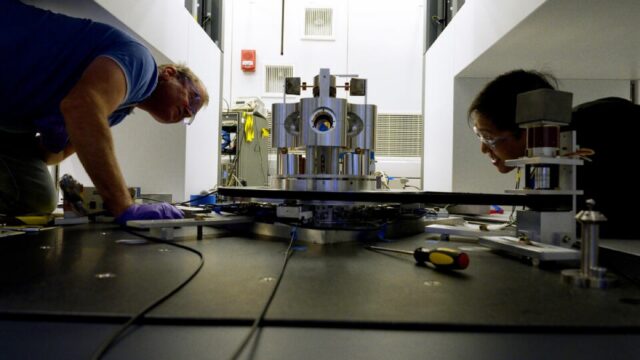
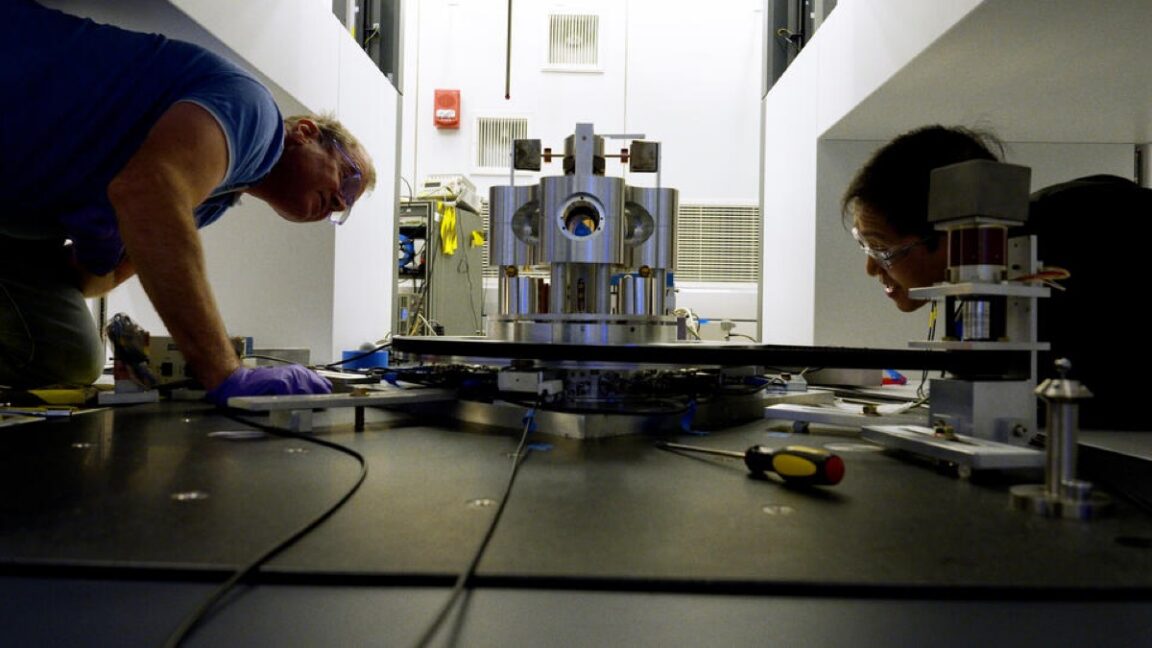
In their most recent endeavor to overcome these longstanding measurement obstacles, researchers at the prestigious National Institute of Standards and Technology (NIST) embarked on an ambitious decade-long project. This comprehensive effort focused on meticulously reproducing and validating one of the most anomalous recent experimental determinations of Big G, which had diverged noticeably from other contemporary measurements. The team's commitment to this rigorous replication process reflects the broader scientific community's determination to resolve the persistent discrepancies that have plagued gravitational constant measurements throughout recent decades.
The NIST team's comprehensive investigation represented a methodical attempt to either confirm or refute the controversial experimental results that had sparked considerable debate within the physics community. By carefully recreating the experimental conditions and protocols of the previous measurement, the researchers hoped to identify whether the divergent value resulted from genuine physical phenomena, subtle systematic errors, or procedural inconsistencies that had gone undetected. Their published findings in a peer-reviewed journal aimed to provide critical insights into why the measurement of Big G continues to yield such frustratingly inconsistent results compared to other fundamental constants.
The challenge of precisely determining Big G extends far beyond mere academic curiosity, as this constant plays a vital role in numerous applications ranging from astronomical calculations to satellite orbital mechanics and theoretical physics. Improved precision in measuring Big G would enable astronomers to refine their understanding of celestial mechanics and enhance the accuracy of gravitational models used throughout astrophysics. Additionally, more precise values contribute to testing the boundaries of Einstein's general relativity theory and exploring potential deviations that might hint at unknown physical phenomena.
Throughout history, numerous physicists have attempted to measure Big G using diverse experimental methodologies, from Henry Cavendish's groundbreaking 1798 torsion balance experiment to modern laser-based measurement systems employing quantum mechanics principles. Each generation of scientists has brought increasingly sophisticated instrumentation and refined techniques to bear on this problem, yet the fundamental challenge of isolating gravitational effects from background interference persists stubbornly. The accumulated experimental data from these centuries-long efforts reveals a consistent pattern of variation that continues to perplex researchers seeking convergence toward a definitive value.

The NIST investigation represents merely the latest chapter in this ongoing scientific saga, where each attempt to clarify the true value of Big G brings both incremental progress and new questions. The rigorous methodology employed by NIST scientists, including careful analysis of potential systematic errors and environmental factors, demonstrates the level of scrutiny now applied to gravitational constant measurements. Their results contribute valuable data points to the ongoing discussion about whether the variations stem from genuine limitations in measurement precision or indicate something more fundamental about gravitational physics itself.
Looking forward, the scientific community recognizes that achieving greater precision in measuring Big G may require revolutionary new experimental approaches and technologies yet to be developed. Some researchers propose utilizing space-based experiments to minimize the interfering effects of Earth's gravity, while others explore quantum technologies that might permit fundamentally new measurement methodologies. The pursuit of a more precise Big G value remains an active and challenging frontier in experimental physics, symbolizing both the remarkable precision modern science can achieve and the humbling reality that nature sometimes resists our attempts to measure her most fundamental properties.
Source: Ars Technica


